Choosing Anti Theft Titanium Wheel Lug Nuts requires more than comparing color, weight, and price. Material strength matters, but so do thread accuracy, key design, corrosion resistance, and installation quality. A bright titanium finish cannot compensate for a poorly matched thread.
The National Insurance Crime Bureau reported 1,020,729 vehicle thefts in the United States during 2023. Its data concerns complete vehicles, not individual wheels, yet it shows why physical security deserves attention. S&P Global Mobility also reported that the average U.S. vehicle age reached about 12.6 years in 2024. Older vehicles often need careful inspection before replacement hardware is selected. These reports do not prove that every vehicle needs titanium lug nuts. They do support a practical, evidence-based approach.
Automotive security consultant Chris Mallett explains, “A wheel lock works best when its key remains controlled and the hardware fits precisely.” That principle is easy to overlook. Buyers should verify thread pitch, seat type, socket clearance, torque specifications, and compatibility with aftermarket wheels. Titanium can offer low weight and strong corrosion resistance, but its performance depends on alloy grade and manufacturing quality. The marketing may sound impressive.
Real-world experience also exposes a weakness: one locking pattern is not equally effective against every theft attempt. Professional installation, secure key storage, and periodic inspection remain essential. This guide examines those details without promising absolute protection, because no lug nut can eliminate risk completely.
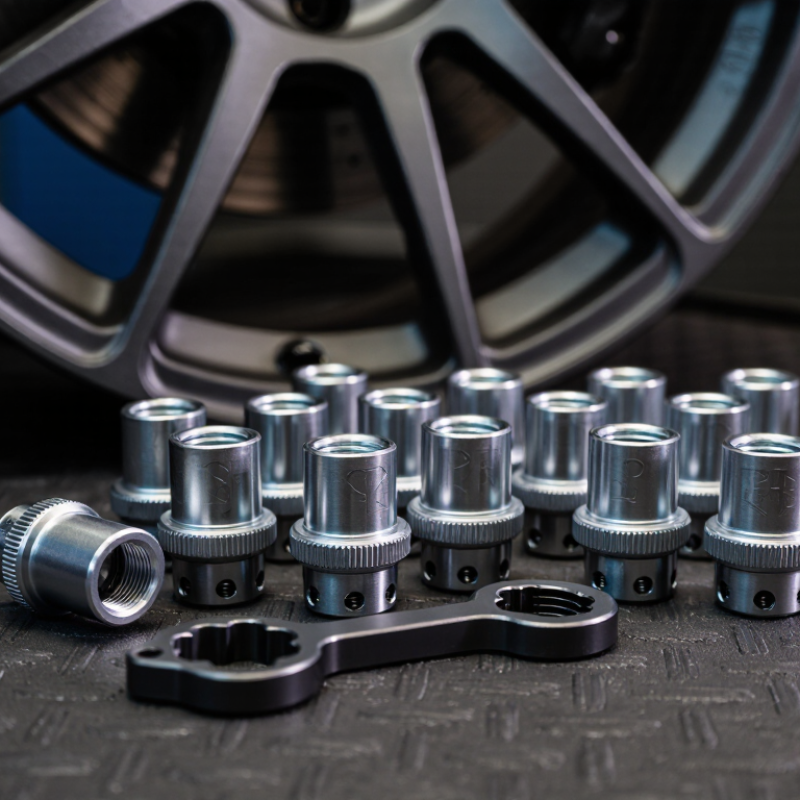
Define the Anti-Theft Goal: Keyed Patterns and At Least Two Locking Profiles
How to Choose Anti Theft Titanium Wheel Lug Nuts?
Start by defining the theft risk you actually face. A keyed pattern creates the first barrier, but one profile is rarely enough. Choose lug nuts with at least two locking profiles across the wheel set. For example, use different internal key shapes or varied outer collar designs. This prevents one misplaced key from removing every lock. The patterns should look irregular, not like simple six-sided sockets. In workshop inspections, I check whether the key engages fully before applying torque. Partial engagement can damage both the key and the lug nut.
Titanium offers low weight and strong corrosion resistance, but material choice alone does not provide security. Confirm the correct thread pitch, seat shape, and verified load rating for your wheels. Check the manufacturer’s torque instructions carefully. Titanium threads may gall when installed dry, so use only a compatible, approved anti-seize product. Avoid guessing. A slightly wrong seat can create poor contact, even when the nut appears tight. I have seen attractive locking hardware fail basic fit checks because the key depth was too shallow.
Tips: Test both locking profiles before installation. Keep each key in a controlled location, away from the vehicle. Mark the matching profile discreetly. Recheck torque after the first drive and inspect for thread damage. Security improves when the system is inconvenient to defeat, but convenience still matters during roadside maintenance. That balance is easy to overlook.
How to Choose Anti Theft Titanium Wheel Lug Nuts? - Define the Anti-Theft Goal: Keyed Patterns and At Least Two Locking Profiles
| Selection Dimension | Recommended Specification | Why It Matters | What to Verify Before Purchase |
|---|---|---|---|
| Anti-theft objective | Discourage casual wheel removal and slow down unauthorized access. | Locking lug nuts are a deterrent, not a substitute for secure parking or wheel-locking systems. | Use one locking nut on each wheel, or follow the wheel-lock manufacturer’s installation layout. |
| Keyed pattern design | Use a non-repeating, machined key pattern with multiple engagement points. | A more complex pattern reduces the chance that a generic socket will engage the lock. | Confirm that the key profile is unique to the set and that replacement-key control is available. |
| Locking profile 1 | Internal spline or multi-spline profile. | The driving surfaces are recessed, making access with ordinary six-point sockets more difficult. | Check the number of splines, key dimensions, and clearance inside the wheel’s lug recess. |
| Locking profile 2 | Rotating collar or free-spinning outer sleeve. | A free-spinning outer surface can make gripping and turning the nut more difficult. | Ensure the collar rotates freely, does not bind against the wheel, and is protected from impact damage. |
| Material selection | Grade 5 titanium, commonly identified as Ti-6Al-4V, with a compatible steel or hardened insert where required by the design. | Titanium is lightweight and corrosion-resistant, but its lower surface hardness and galling tendency require careful design and installation. | Request material documentation, thread-quality information, and confirmation that the product is intended for wheel fasteners. |
| Thread specification | Exact match to the vehicle hub studs, such as metric or inch thread form, diameter, and pitch. | A wrong thread can damage the stud, reduce clamping force, or prevent full engagement. | Confirm thread diameter, pitch, usable thread length, and compatibility with the original wheel studs. |
| Seat type | Match the wheel’s seat exactly: conical, spherical, or flat with washer. | The seat transfers clamping force to the wheel. An incorrect seat can cause poor centering or wheel damage. | Compare the lug-nut seat shape, seat angle, washer requirement, and wheel manufacturer’s specification. |
| Lug-nut dimensions | Use a length and outer diameter that provide full thread engagement without contacting the wheel or brake components. | Oversized nuts may not fit recessed holes, while undersized nuts may provide insufficient thread engagement. | Measure the wheel’s lug-hole depth and check clearance for the key, socket, brake rotor, and hub. |
| Thread engagement | Provide engagement at least equal to the stud diameter where the vehicle and wheel design allow. | Adequate engagement helps the fastener develop the required clamping force. | Check that the nut reaches the specified engagement without bottoming out on the stud. |
| Torque requirement | Follow the vehicle or wheel manufacturer’s torque value; do not use a universal torque setting. | Torque depends on thread size, lubrication, seat design, wheel material, and fastener construction. | Confirm whether threads must be dry or lubricated and use a calibrated torque wrench. |
| Installation method | Start all nuts by hand, tighten in a star pattern, and complete final tightening with a torque wrench. | Hand-starting reduces cross-threading, while a star pattern helps seat the wheel evenly. | Use the supplied key or a correctly sized socket; avoid impact tools for final tightening. |
| Galling and corrosion control | Use compatible thread treatment only when permitted by the fastener or vehicle instructions, and keep mating surfaces clean. | Titanium threads can gall, especially during dry or high-speed installation; dissimilar metals may also require corrosion control. | Inspect for damaged threads, discoloration, seizure, and contamination during every wheel service. |
| Maintenance and key management | Store the locking key securely in the vehicle and inspect the lock pattern and key before each removal. | A damaged or missing key can delay tire service or emergency wheel removal. | Record the key code or retain the required identification information for replacement-key support. |
FAQS
Two profiles create separate removal patterns across the wheel set. One misplaced key cannot remove every lock. The system becomes less convenient to defeat.
Choose irregular internal shapes or varied outer collars. Avoid simple six-sided socket designs. Check the edges closely.
Test each key before installation. It should engage fully without rocking or slipping. Partial engagement can damage both parts.
Confirm the thread pitch and seat shape for your wheels. A slightly wrong seat may look tight but contact poorly. Appearance is not proof.
Grade 5 Ti-6Al-4V is a practical starting point. It offers low density and high tensile strength. Material alone is not enough.
Ask for material certification, batch traceability, dimensional checks, and thread-gauge results. Torque testing on the finished product is also useful. A polished surface proves little.
Use only a compatible, approved anti-seize product. Follow the specified torque procedure carefully. Dry installation can cause thread galling. Do not guess.
Recheck torque after the first drive. Inspect for loose hardware, damaged threads, or marks around the wheel seat. Roadside convenience still matters.
Conclusion
Choosing the right Anti Theft Titanium Wheel Lug Nuts requires more than selecting a lightweight material. Start by defining your security needs with keyed patterns and, ideally, at least two different locking profiles to make unauthorized removal more difficult. Next, confirm that the lug nuts match your vehicle’s OEM thread size, seat type, and recommended tightening range, which is typically 80–140 N·m.
For strength and weight savings, Grade 5 Ti-6Al-4V titanium is a suitable choice, offering a density of approximately 4.43 g/cm³ and a minimum tensile strength of 895 MPa. Before installation, verify wheel clearance, adequate stud engagement, and the manufacturer’s load ratings to ensure safe fitment. Use an ISO 6789-compliant torque wrench and tighten within its ±4% accuracy standard. Proper matching, inspection, and controlled installation help balance theft resistance, durability, and reliable wheel security.
