Choosing Motorcycle Titanium Disc Brake Rotor Bolts is not just a matter of finding the lightest hardware. These small fasteners work beside hot rotors, road spray, and repeated braking forces. A suitable bolt must match the motorcycle’s make, model, year, rotor, thread size, and required length. Check those details before comparing finishes or prices. Fitment errors can cause serious problems.
Details matter. Titanium alloys vary, and a polished surface alone does not prove a bolt is suitable for brake service. Look for clear material specifications, accurate dimensions, and product guidance that identifies compatible applications. Review the manufacturer’s torque instructions, too. Titanium fasteners can behave differently from the original steel bolts, so copying an old torque value may not be appropriate. Use the specified installation method, including any required washers or thread treatment.
This guide examines ten options through practical buying criteria: fit, material information, finish, seller documentation, and value. It also considers trade-offs. Titanium can resist corrosion and reduce weight, but it may cost more and is not automatically the best choice for every bike. A bolt that looks excellent in a listing may still lack useful technical details. That deserves caution.
Take a moment. Confirm every specification against your service manual or a qualified motorcycle technician before installation. Product rankings can narrow the search, but they cannot verify your individual setup. Brakes are not a place for guesswork.
What Motorcycle Titanium Disc Brake Rotor Bolts Are and How They Work
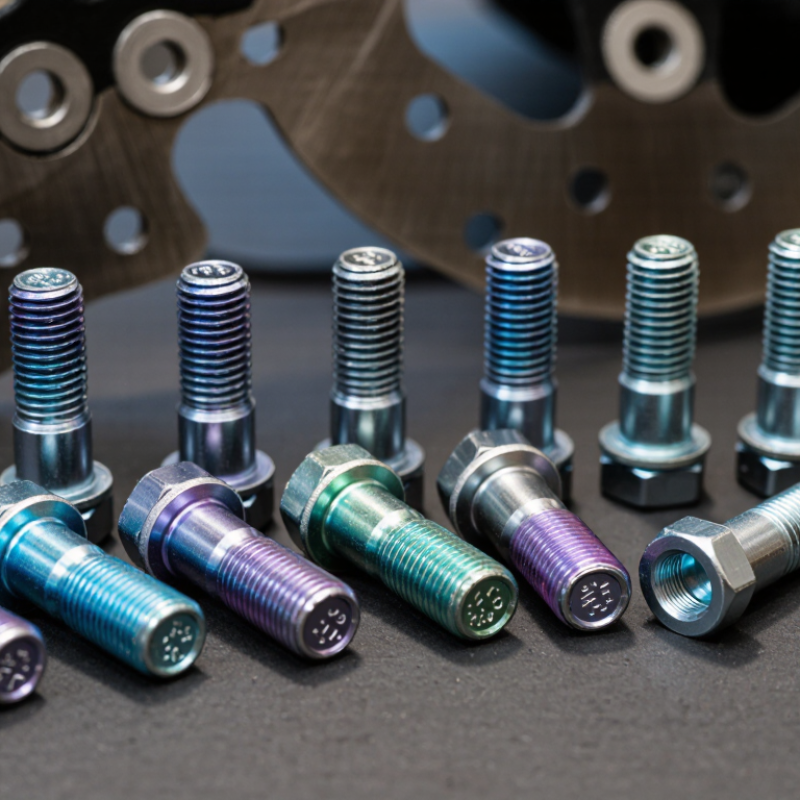
Motorcycle titanium disc brake rotor bolts secure the rotor to the wheel hub, keeping the braking surface correctly positioned as the wheel turns. When the caliper clamps the rotor, braking force passes through the rotor and its mounting points into the hub. These small fasteners are not decorative hardware. Small parts. Serious consequences.
Titanium’s main practical advantage is lower mass. ASM International’s materials references list titanium at about 4.5 g/cm³, compared with roughly 7.8 g/cm³ for steel. That difference can reduce fastener weight, though a few bolts alone will not transform handling. Titanium alloys also vary in strength and stiffness, so “titanium” by itself does not confirm suitability for a specific motorcycle. I would not assume lighter means safer or better.
Correct installation matters more than appearance. NASA’s Fastener Design Manual, Reference Publication 1228, explains how friction affects the relationship between tightening torque and bolt tension. Use the motorcycle maker’s specified bolt type, tightening sequence, and torque; lubricant or anti-seize can change clamping force at the same torque reading. Check threads and seating faces for damage, and never substitute a bolt based only on matching dimensions. A clean, dry fit is easier to assess. Imperfectly, even careful installation cannot compensate for incompatible hardware.
Key Factors for Choosing Titanium Rotor Bolts
Top 10 Motorcycle Titanium Disc Brake Rotor Bolts to Buy
Choosing titanium rotor bolts starts with exact fitment, not appearance. Check the motorcycle’s service manual for thread diameter, pitch, under-head length, and required bolt count. A bolt that bottoms out or leaves too few engaged threads can compromise clamping. Measure carefully.
Titanium alloys differ in strength and hardness, so confirm the alloy and intended use rather than assuming every titanium bolt performs alike. Compare the specified torque and installation method with the vehicle manufacturer’s instructions. Titanium can gall during tightening, especially on dry or damaged threads. Use only an approved lubricant if the instructions call for one; lubrication can change the torque-to-clamp relationship. Small detail. Big consequence.
Inspect the rotor and mounting threads before installation. Look for corrosion, flattened thread crests, or debris around the bolt seats. Tighten with a calibrated torque wrench, following the prescribed sequence and value. Don’t guess by feel. If the bolts are being replaced after repeated removal, or the rotor does not sit flush, have a qualified motorcycle technician check the assembly. Titanium can reduce fastener weight, but it cannot correct worn threads, poor fitment, or an incorrect torque procedure.
Top 10 Motorcycle Titanium Disc Brake Rotor Bolts to Consider
Top 10 Motorcycle Titanium Disc Brake Rotor Bolts to Consider
When comparing titanium rotor bolts, start with fit, not color or weight. The shortlist should include OEM-dimension bolts, verified Grade 5 titanium, correct thread pitch, correct shoulder length, and head styles that clear the caliper and rotor. Also compare kits with documented material specifications, consistent machining, compatible washers, corrosion-resistant finishes, and clear installation guidance. Those details matter more than a shiny surface. Fit matters most.
Titanium can reduce unsprung weight, but it is not automatically a better choice for every motorcycle. Rotor fasteners face heat, vibration, and repeated braking loads. Check the service manual and confirm that titanium fasteners are approved for your exact rotor and hub. A bolt that is too long may interfere with nearby parts; one with poor thread engagement can loosen or damage threads. Titanium can also gall during installation, especially when threads are dry. Use only the specified lubricant and torque procedure, since lubrication can change clamping force. I would still be cautious about vague listings that omit grade or dimensions. After installation, inspect the fasteners as directed by the manufacturer. Never guess on brakes.
How to Check Fitment and Install Rotor Bolts Safely
Top 10 Motorcycle Titanium Disc Brake Rotor Bolts to Buy
How to Check Fitment and Install Rotor Bolts Safely
Before buying, match each bolt to your motorcycle’s service manual and rotor specifications. Check thread diameter, pitch, length, head shape, and the rotor’s mounting pattern. A bolt that is too long can interfere with nearby parts; one with incorrect threads can damage the hub. Titanium does not make a mismatch safer. Confirm the material and strength are approved for that application, and replace damaged or stretched fasteners. NHTSA’s 2022 Traffic Safety Facts reported 6,218 motorcyclist fatalities in the United States. That figure does not link crashes to rotor bolts, but it underlines why brake components deserve careful checks.
Installation needs a stable motorcycle, a cool rotor, clean mating surfaces, and a calibrated torque wrench. Follow the model-specific torque value and tightening sequence; there is no safe universal torque figure. Apply threadlocker only when the service instructions specify it. Lubrication can also change clamping force, so do not add it by habit. Tighten evenly, then check that the rotor turns without rubbing and that the brake lever feels normal before riding. If threads feel rough, stop. Guessing is the shortcut I would rethink.
Tips: Lay the original bolts beside the replacements and compare length and thread pitch. Keep the wheel unloaded and secure while working. After installation, spin the wheel by hand and inspect for contact or uneven movement. If fitment remains uncertain, ask a qualified motorcycle technician to verify it.
Top 10 Motorcycle Titanium Disc Brake Rotor Bolts to Buy
Metric coarse-thread pitch reference for checking rotor-bolt fitment
The chart shows standard metric coarse-thread pitches, not motorcycle-specific fitment. Before buying, confirm the OEM-specified diameter, pitch, bolt length, head or seat type, and quantity. Install using the motorcycle manufacturer’s torque specification and tightening sequence; do not substitute a generic torque value, since bolt material and lubrication affect clamping force.
Maintenance and Inspection of Titanium Rotor Bolts
Inspect titanium rotor bolts whenever the wheel is removed, and at the interval specified in the motorcycle service manual.
Look for cracked heads, damaged threads, dark fretting marks, or shiny movement around the bolt seats. Check cold. A bolt that feels loose is not a torque measurement. Use a calibrated torque wrench and the exact tightening sequence and value for that motorcycle.
ISO 6789-1:2017 sets requirements for hand torque tools, but it does not provide motorcycle-specific rotor-bolt torque values. Do not substitute a generic steel-bolt chart. Lubricant can change clamping force at the same torque, so follow the manual’s instructions on dry or lubricated threads.
Titanium fasteners can gall, especially when threads are dirty or forced together; stop if a bolt binds.
Clean threads gently, avoid cutting tools that remove material, and replace bolts with damaged threads or seats. Confirm whether the service manual requires replacement after removal.
NHTSA’s 2022 Traffic Safety Facts reported 6,218 motorcyclist fatalities that year. That figure does not measure rotor-bolt failures, but it reinforces why brake hardware deserves careful inspection, not guesswork. I would also record the torque check and any replacement date; it is easy to forget what was done after a busy repair.
A soft click is not proof of correct tightening.
Conclusion
Motorcycle Titanium Disc Brake Rotor Bolts secure the brake rotor to the wheel hub, helping keep the braking system properly aligned under demanding riding conditions. This guide explains how these fasteners work and what to consider when choosing them, including material quality, dimensions, thread compatibility, strength, and resistance to corrosion. It also presents ten types of rotor bolts worth considering for different motorcycles and riding needs, while emphasizing that suitability depends on the exact vehicle specifications rather than appearance alone.
Before purchase or installation, check the motorcycle’s service information and confirm the required bolt size, pitch, length, and tightening procedure. Install bolts carefully with clean, undamaged threads and the specified torque; incorrect fitment or tightening can compromise braking safety. Regularly inspect the fasteners and surrounding rotor area for looseness, damage, corrosion, or unusual wear, and replace any questionable parts before riding.