High-Performance Custom Titanium Fasteners Showcase
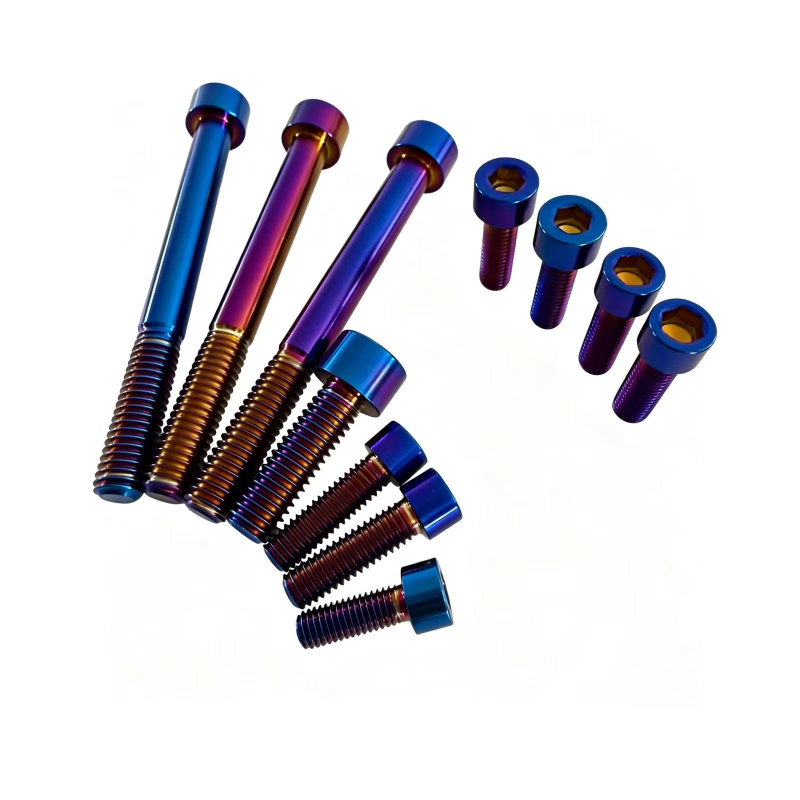
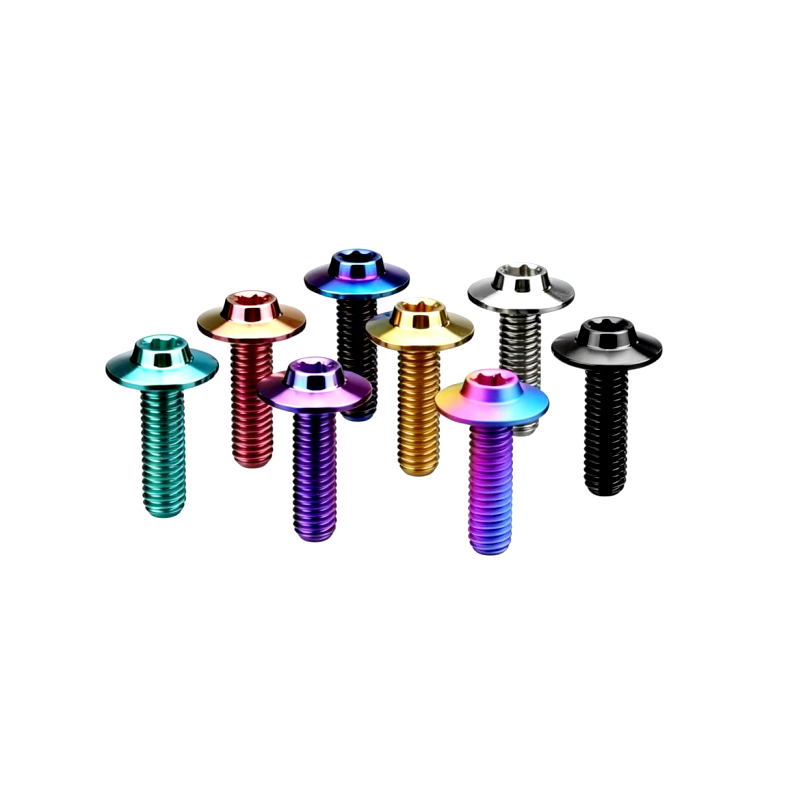
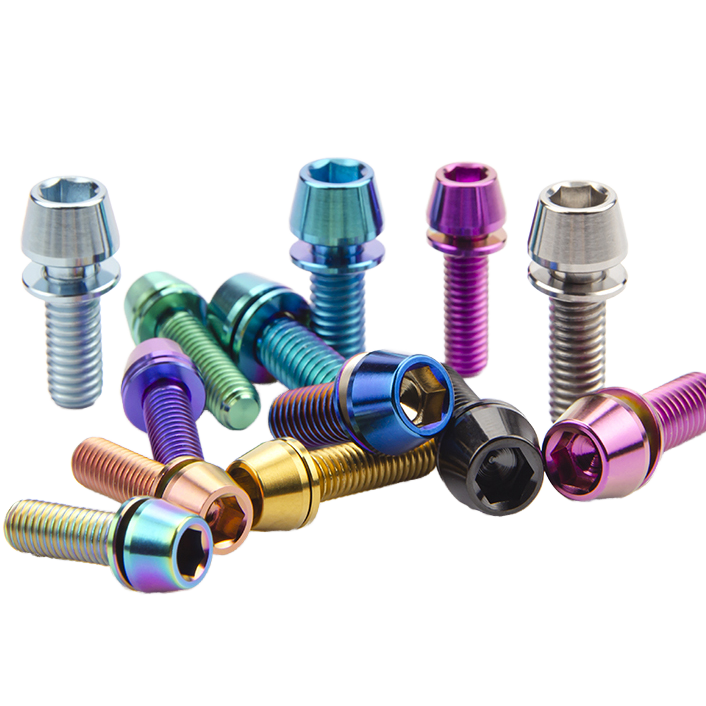
Direct manufacturer supply of CNC machined and cold-headed Ti-6Al-4V GR5 bolts, featuring class 10.9/12.9 strength ratings, rolled threads, and ultra-durable PVD/anodized surface finishes.
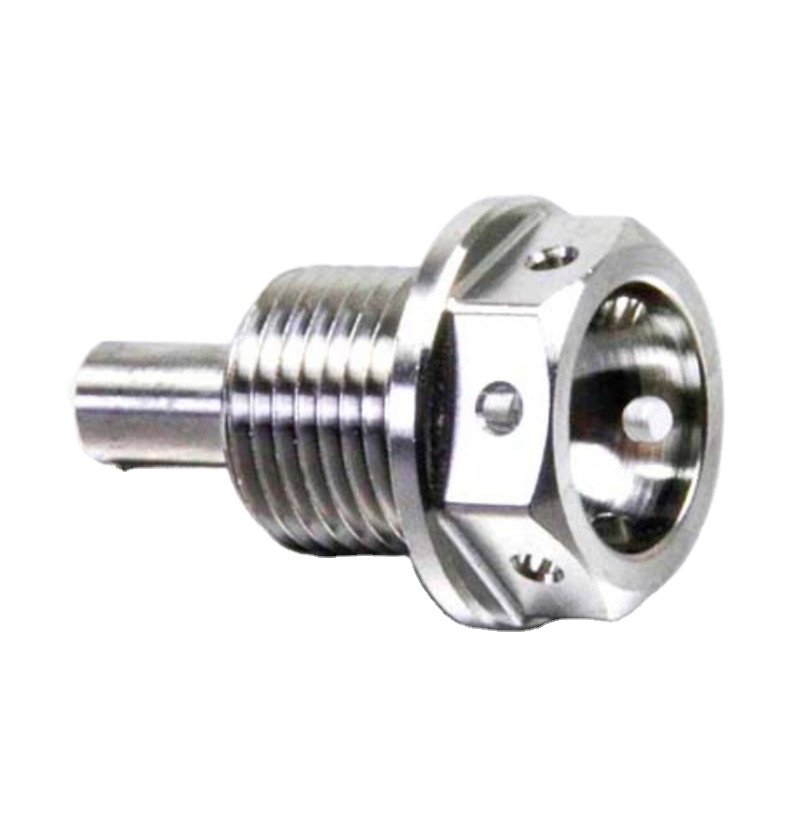
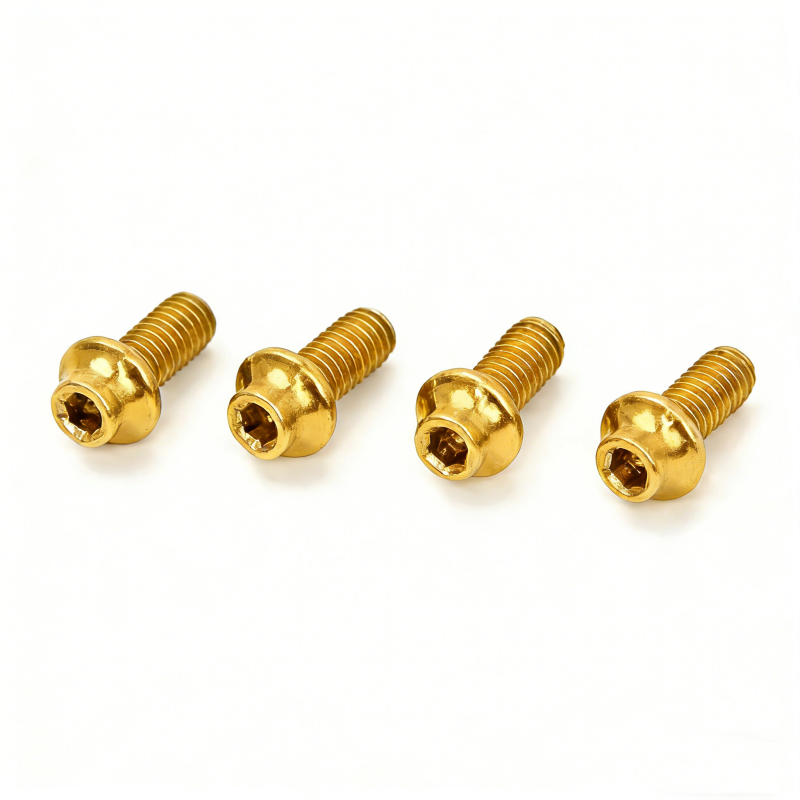
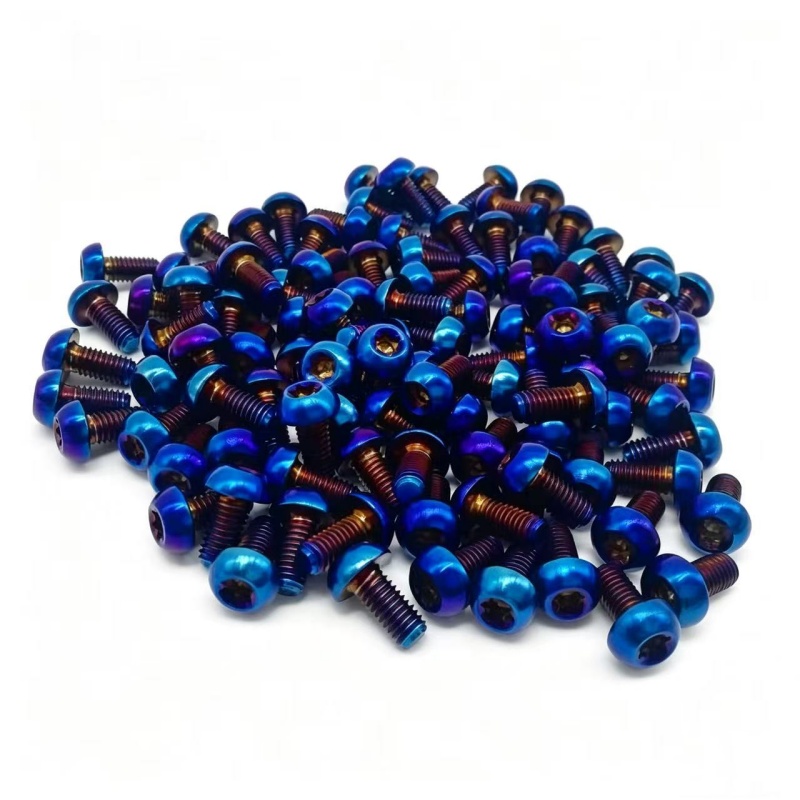
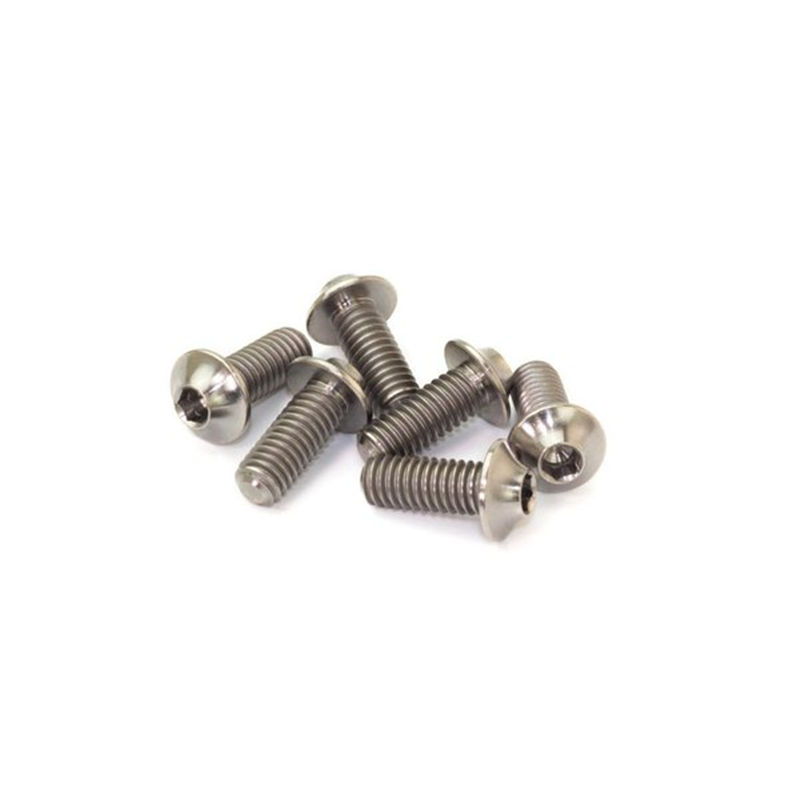
Metallurgical Architecture: Selecting Titanium Grades for Critical Bolting
In precision engineering, transitioning from conventional carbon steel or stainless steel to titanium fasteners is driven by two fundamental engineering imperatives: strength-to-weight optimization and complete galvanic / chemical inertness. Titanium alloy fasteners manufactured from premium Ti-6Al-4V (Grade 5, UNS R56400) deliver a tensile yield capacity equivalent to quenched-and-tempered Class 10.9 structural bolts, while eliminating 43% of un-sprung, rotational, or structural mass.
| Alloy & Material Class | Yield Strength (Rp 0.2, MPa) | Tensile Strength (Rm, MPa) | Density (g/cm³) | Strength-to-Weight Ratio (kN·m/kg) | Corrosion Resistance in Marine / Salt Spray |
|---|---|---|---|---|---|
| GR5 Titanium (Ti-6Al-4V Annealed) | 828 – 910 | 895 – 1050 | 4.43 | 202 – 237 | Total Immunity (> 2,000 hrs ASTM B117) |
| GR2 Titanium (Commercially Pure) | 275 – 350 | 345 – 450 | 4.51 | 76 – 100 | Total Immunity (Non-Structural Trim Only) |
| Alloy Steel Class 10.9 (Quenched) | 940 – 1000 | 1040 – 1200 | 7.85 | 132 – 152 | Severe Oxidation Without Zinc/Phosphate Plating |
| Stainless Steel (A2-70 / AISI 304) | 450 – 500 | 700 – 800 | 7.90 | 88 – 101 | Moderate (Subject to Crevice / Pitting Attack) |
Fatigue Resistance & Notch Sensitivity
Unlike standard stainless hardware that suffers micro-crack propagation under cyclical resonance, certified Grade 5 titanium exhibits a remarkably flat S-N endurance curve, tolerating high vibration frequency in superbike caliper brackets and RC drive systems.
Cold Heading vs. 5-Axis Precision Turning
We provide two distinct manufacturing methodologies: continuous grain-flow thread rolling and cold heading for volume orders, or ultra-tight tolerance (±0.005mm) multi-axis Swiss CNC turning for complex multi-bore hollow bolts and race-spec safety wire designs.
Rolled vs. Cut Threads Reliability
Cut threading disrupts the metallurgical grain matrix, inducing microscopic stress risers. Our custom manufacturing facility insists on cold thread rolling, which hardens thread roots and crowns, amplifying dynamic shear strength by over 30%.
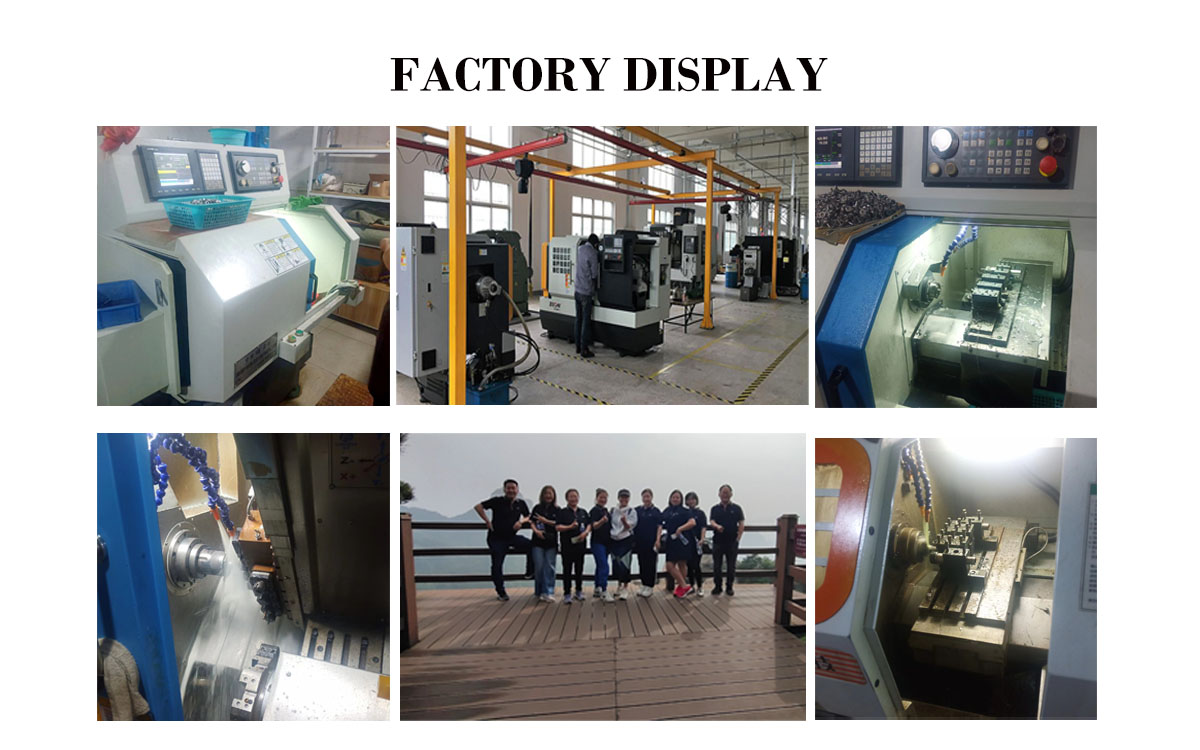
Baoji Titanium Valley Manufacturing Ecosystem & Factory Infrastructure
Located directly in Baoji, Shaanxi Province—globally renowned as China's Titanium Valley—our manufacturing facility leverages direct access to premium sponge titanium reduction facilities and vacuum arc remelting (VAR) plants. By eliminating upstream raw material middlemen, our factory guarantees 100% genuine aerospace-grade Ti-6Al-4V bar stock with verifiable EN 10204 3.1 chemical and mechanical test certifications.



Certified Material Traceability
Every single production batch is matched with optical emission spectrometry (PMI) and ultrasonic flaw detection. No scrap recycling, ensuring absolute tensile dependability.
Tight Micron-Level Tolerances
High-precision Japanese multi-axis CNC lathes and thread formers enforce dimensional limits within ±0.005mm and thread accuracy compliant with ISO 965 Class 4h/6h.
In-House Surface Finishing
Equipped with computerized Type II anodizing and cleanroom PVD (Physical Vapor Deposition) magnetron sputtering systems for flawless Burnt Blue, Oil-Slick, Gold, and DLC Black.
Agile OEM / ODM Tooling
Low tooling friction allows low MOQ starting at only 10–50 pieces for prototypes, with scalable ramp-up exceeding 500,000 custom bolts per month for global OEM tiers.
Global Sourcing Trajectory: Titanium Fastener Purchasing Trends (2025–2030)
Procurement directors and mechanical hardware engineers are shifting away from commoditized supply channels toward high-transparency direct manufacturer partnerships. Four transformative macroeconomic and technological dynamics are shaping titanium procurement over the next five years:
1. Electric Mobility Light-Weighting
With electric platforms such as Surron, Talaria, high-end e-bikes, and hyper-EVs prioritizing watt-hour range extension, replacing chassis and suspension fasteners with titanium provides immediate un-sprung mass savings without sacrificing safety margins.
2. Supply Chain Direct Integration
Global distributors are bypassing export brokers to partner directly with primary Baoji manufacturing hubs. Factory-direct API ordering, digital quality inspection records, and standardized EN 10204 3.1 data eliminate unnecessary tariff and margin markups.
3. Additive + CNC Hybrid Fasteners
Complex, internal-channeled bolts (such as integrated sensor ports and fluid passageways for high-performance cooling or lubrication) are being produced through additive selective laser melting (SLM) coupled with final Swiss CNC thread rolling.
4. PVD Vacuum Wear-Resistant Coatings
Demand is accelerating for ultra-hard PVD Titanium Nitride (TiN) and Diamond-Like Carbon (DLC) finishes over conventional soft anodizing, reducing sliding friction coefficients, eliminating anti-seize paste requirements, and preventing thread galling.
Cutting-Edge Development Trends in Titanium Hardware Engineering
Engineering specifications for performance bolts are evolving rapidly beyond standard DIN 912 socket or DIN 6921 flange designs. Modern applications demand sophisticated structural geometry that simultaneously reduces mass while increasing load dispersion:
UFO & Low-Profile Aerodynamic Geometries
Popularized by RC competition cars, racing drones, and track bicycles, umbrella and UFO cone heads dramatically lower aerodynamic drag and surface snagging while offering a broad contact bearing surface to prevent carbon fiber panel crush.
Bi-Hexagonal (12-Point) Race Flanges
For high-torque wheel lug nuts and engine cylinder head studs, 12-point bi-hex head architectures allow higher torque transfer without tool slippage, dramatically reducing corner rounding risks compared to traditional hexagonal designs.
Micro-Arc Oxidation & Hybrid PVD
State-of-the-art surface engineering pairs micro-arc oxidation (MAO) barrier layers with vacuum magnetron sputtered coats. This produces ceramic-grade exterior hardness (> 1,200 HV) that resists extreme abrasion from road debris and repeated wrenching.
Frequently Asked Questions for B2B Titanium Hardware Sourcing
Detailed technical guidance compiled by our senior metallurgical engineers to address the most critical questions posed by purchasing managers, racing teams, and design engineers.