Featured Precision Titanium Fasteners & Micro Hardware
Precision-machined from certified Baoji Grade 5 (Ti-6Al-4V) titanium bar stock. Engineered for zero thermal distortion, high strength-to-weight ratios, and extreme corrosion resistance across micro-electronics, motor racing, and remote control chassis.
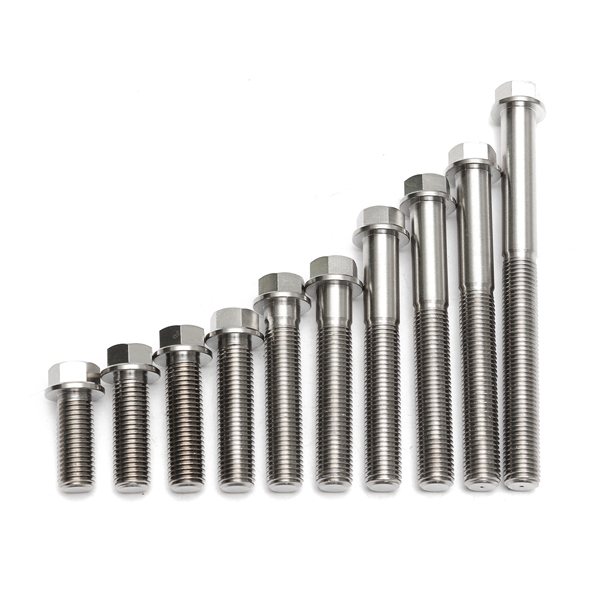
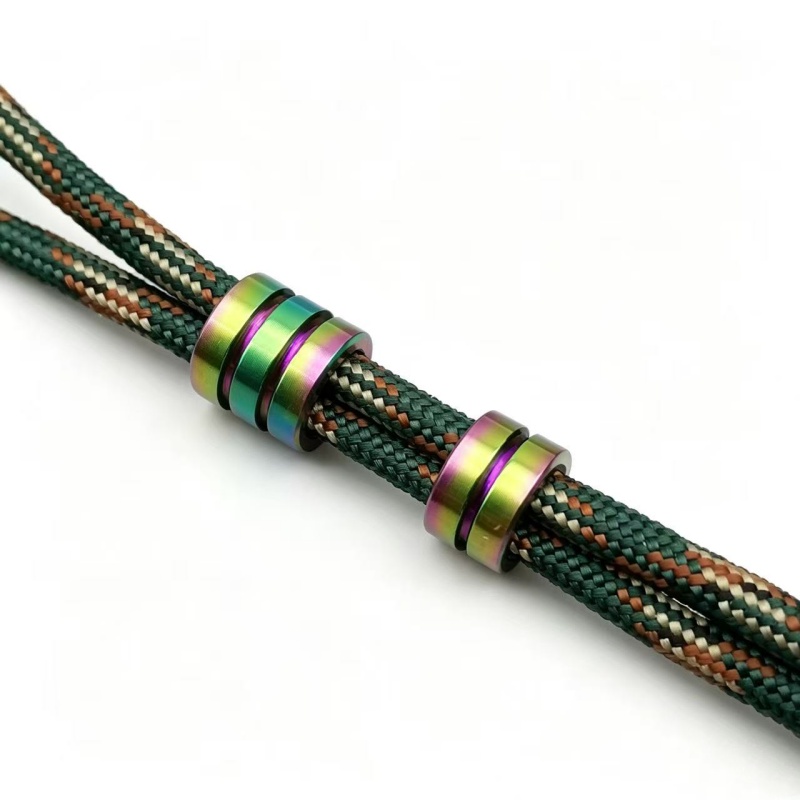
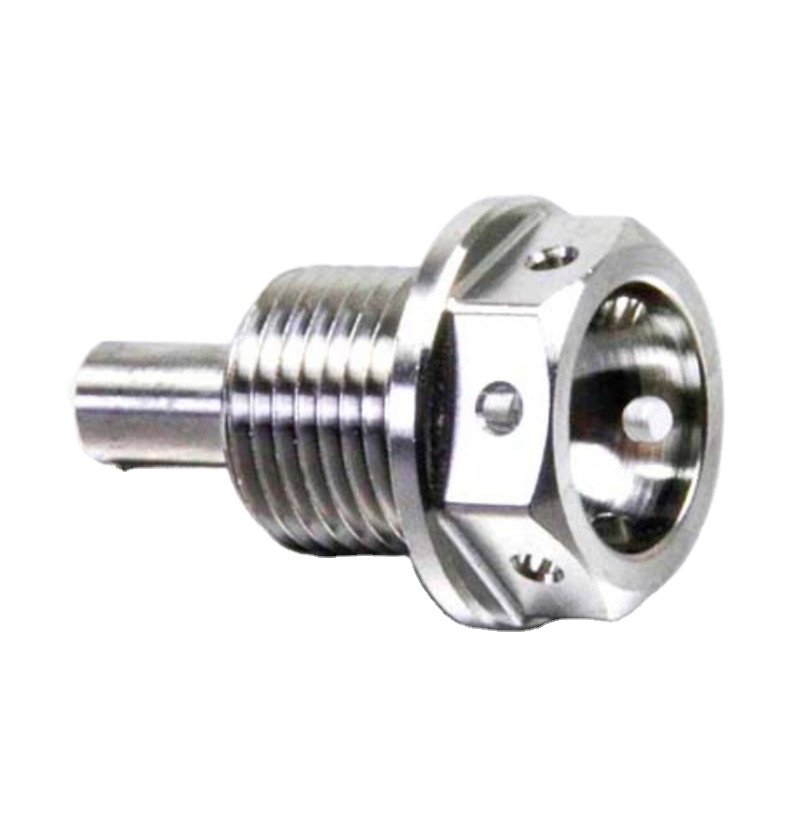
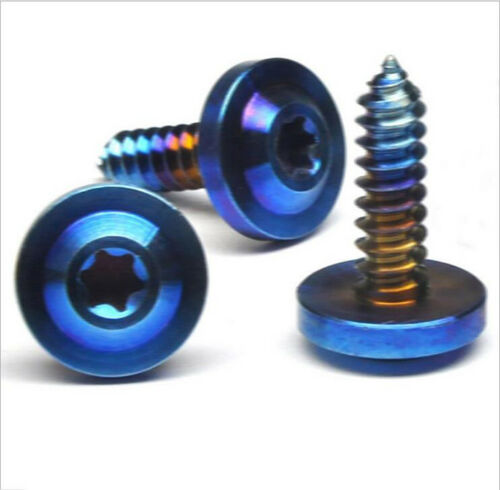
1. Metallurgy & Mechanical Engineering of Titanium Micro Screws
In the vanguard of sub-miniature mechanical fastening, micro screws—typically characterized as threaded fasteners possessing major thread diameters from M0.8 up to M3.0—represent a profound convergence of metallurgical integrity and precision machining. Selecting China's best titanium micro screws manufacturers and exporters demands a granular understanding of how titanium behaves at sub-millimeter cross-sections. While commercial pure titanium (GR2) serves adequate decorative and corrosive functions in consumer eyewear, mission-critical micro assemblies require alpha-beta phase Grade 5 (Ti-6Al-4V / UNS R56400 / ASTM B348) or medical-grade Grade 23 ELI (Ti-6Al-4V ELI / ASTM F136).
Grain Flow & Micro-Shear Strength
At thread pitches below 0.35mm, conventional thread-cutting introduces microscopic stress risers and micro-notches. Verqo utilizes high-precision cold rolling dies that deform the crystalline lattice continuously along the thread profile, enhancing micro-shear strength by up to 35% and mitigating premature shank fatigue.
Density vs. Tensile Elasticity
With a nominal density of 4.43 g/cm³, GR5 titanium yields a mass reduction of roughly 43% compared to Grade 10.9 alloy steel. Simultaneously, its lower modulus of elasticity (~114 GPa versus ~210 GPa in steel) allows micro bolts to absorb cyclic vibrational energy without self-loosening under high harmonic frequencies.
Spontaneous Oxide Passivation
Upon atmospheric exposure, titanium instantly synthesizes a self-healing, adherent TiO₂ (titanium dioxide) ceramic passivation film measuring 2–10 nm. This microscopic barrier provides near-absolute immunity to saltwater chloride pitting, galvanic perspiration corrosion, and ambient chemical oxidation.
When designing miniature assemblies for medical prosthetics, tactical micro-drones, surgical instrumentation, or high-vibration RC car components, structural failure predominantly originates at the thread runout or the junction between the socket recess and the head. By maintaining rigorous grain size control (ASTM Grain Size Class 7 or finer) during primary melting and wire rod drawing in Baoji, our exported micro screws prevent brittle intergranular shear under rapid dynamic torque spikes.
2. Engineering Benchmark: Titanium Micro Screws vs. Alternative Alloys
Procurement engineers continually evaluate trade-offs between yield strengths, corrosive susceptibility, and unladen mass. Below is an empirically validated material comparison designed for technical procurement teams specifying miniature fasteners:
| Mechanical & Physical Property | Verqo GR5 (Ti-6Al-4V) | Commercial Pure GR2 (Ti) | 316L Stainless Steel | 7075-T6 Aluminium | Alloy Steel (Class 10.9) |
|---|---|---|---|---|---|
| Nominal Density (g/cm³) | 4.43 (Optimized) | 4.51 | 8.00 | 2.81 | 7.85 |
| Ultimate Tensile Strength (MPa) | 895 – 1050 | 345 – 480 | 580 – 680 | 520 – 570 | 1040 |
| Yield Strength 0.2% (MPa) | 828 – 950 | 275 – 380 | 290 – 320 | 460 – 500 | 940 |
| Strength-to-Weight Ratio (kN·m/kg) | 202 – 237 (Leader) | 76 – 106 | 72 – 85 | 185 – 202 | 132 |
| Vibrational Damping & Fatigue | Exceptional | Moderate | Moderate | Poor (Notch Sensitive) | Good |
| Chloride & Acid Immersion Resistance | Virtually Impervious | Excellent | Prone to Pitting | Severely Degraded | Requires Zinc/Cad Plating |
| Magnetic Permeability (µr) | 1.00005 (Non-Magnetic) | 1.00005 (Non-Magnetic) | 1.005 – 1.015 (Slight) | 1.00002 (Non-Magnetic) | Ferromagnetic (High) |
| Biocompatibility / Tissue Integration | ASTM F136 / Highly Biocompatible | ASTM F67 Compliant | Nickel Release Risk | Toxic in Vivo | Non-Biocompatible |
As demonstrated by quantitative mechanical analysis, GR5 titanium exhibits the highest strength-to-weight ratio among industrially viable cold-headed and Swiss-turned alloys. While 7075-T6 aluminum offers alluring mass savings, its structural susceptibility to stress corrosion cracking (SCC) and rapid thread stripping under modest preload torques eliminates it from safety-critical electronic gimbal, aerospace sensor, and surgical tool assemblies.
3. Precision Manufacturing Architecture: Swiss Lathes & Micro-Threading
Achieving dimensional consistency on micro fasteners where thread pitches fall between 0.20mm and 0.45mm demands an entirely different manufacturing setup compared to standard M8–M20 bolts. Verqo’s factory floor employs a dual-path production architecture engineered to balance volumetric cost-efficiency with high-precision tolerances.
Swiss-Type CNC Multi-Axis Lathes
For complex micro geometries—such as UFO low-profile cone heads, drilled safety-wire flanges, and wafer-thin Phillips/Torx drive recesses—sliding headstock Swiss CNC lathes provide simultaneous 7-axis turning with sub-spindle pickoff, maintaining geometric true-position within ±0.005mm.
Rotary Planetary Thread Rolling
Rather than using chip-cutting tools that slice grain boundaries, micro threads from M1.2 to M3.0 are cold-worked using planetary micro-dies under synchronized cryogenic coolant floods. This work-hardens the thread root radius and yields a root finish of Ra 0.2µm, virtually eliminating stress cracking.
100% High-Speed Optical Vision Sorting
High-volume automated assembly lines cannot tolerate a single malformed thread or choked socket recess. Our facility routes every micro screw batch through automated glass-disk optical sorters with multi-angle Keyence CCD cameras, inspecting pitch diameters, head perpendicularity, and burr removal at up to 800 ppm.
4. Nanometer Surface Engineering: Anodizing & Vacuum PVD
In miniature fasteners, coating thickness is critical: an uncalibrated coating exceeding 5 µm will choke an M1.6x0.35 thread, leading to binding or cross-threading during assembly. Verqo applies two distinct surface treatment paradigms engineered to sub-micron tolerances:
Polished Ra ≤ 0.2µm
Centrifugal disc finishing eliminates micro-burrs and ensures clean metal-to-metal seating.
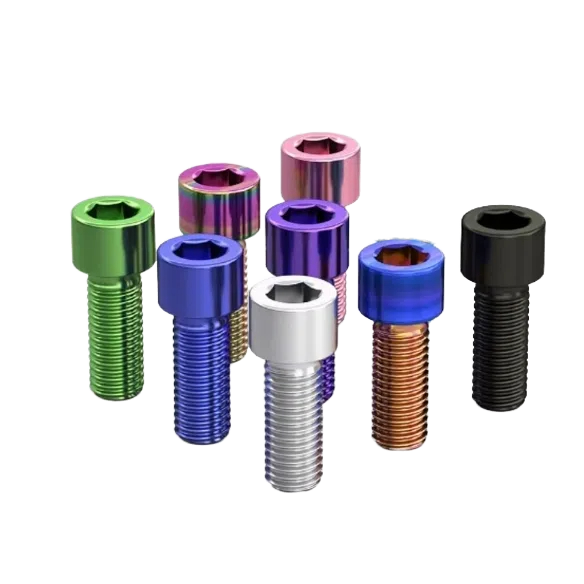
Type II Anodized Gold/Blue
Electrolytic refraction generates vivid tones without pigments, maintaining a sub-micron oxide thickness.
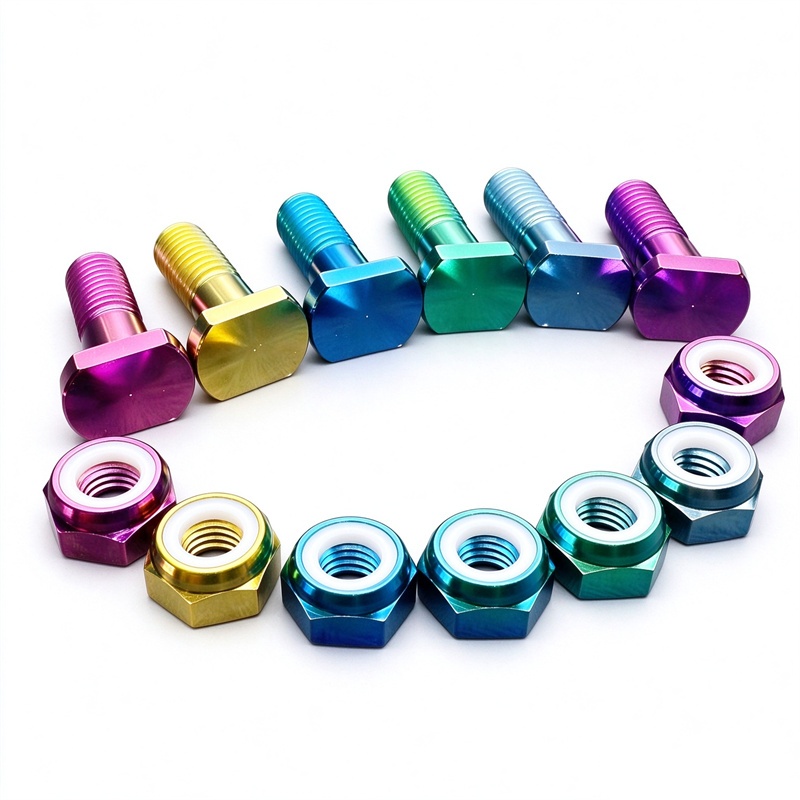
PVD Burnt Blue / Rainbow
Physical Vapor Deposition produces vibrant neo-chrome finishes with an ultra-thin 1.5–2.5µm layer.
PVD Diamond-Like DLC
Hardness over 2200 HV with a 0.08 friction coefficient, preventing galling under high-cycle torque loads.
Preventing Micro-Fastener Galling: Titanium threads mated with titanium female taps are prone to cold welding under high installation speeds. Our vacuum PVD coatings (such as DLC or Titanium Nitride) alter surface interface dynamics to resist galling, ensuring stable assembly even without wet anti-seize pastes in cleanroom environments.
5. Corporate Advantages: The Verqo Baoji "Titanium Valley" Advantage
Operating out of Baoji, Shaanxi Province—globally acknowledged as "China's Titanium Valley"—Verqo Titanium Products Co., Ltd. sits at the heart of the world's most concentrated titanium supply network. This strategic location directly benefits our international OEM/ODM clients:
Pure Sponge Titanium Supply
Sourcing directly from certified ingot-melting centers in Baoji guarantees zero scrap adulteration, low interstitial gases (O < 0.15%, H < 0.01%), and complete MTC EN 10204 3.1 traceability.
1,001–2,000 m² Dedicated Facility
Equipped with high-precision Swiss-type lathes, multi-station cold headers, continuous passivation baths, and a certified dimensional metrology lab staffed by senior machining specialists.
Fast Turnaround & Response
With an average technical response time of ≤ 2 hours and an overall response rate of 98.62%, our in-house engineering team provides rapid DFM feedback on custom drawings and samples.
Flexible Sourcing MOQs
Low initial tooling thresholds support client R&D with pilot runs from 10–50 pieces, scaling seamlessly into recurring production batches exceeding 500,000 units.
6. Strategic Procurement & Technology Trends (2025–2030)
The international supply chain for miniature fasteners is entering a transitional phase shaped by miniaturization, automated assembly lines, and geopolitical diversification. B2B buyers must navigate three core market developments:
Sub-Millimeter Sensor Integration
Miniaturization across medical wearables, surgical robotics, and EV LiDAR modules is driving demand from M2/M3 fasteners down to micro M0.8–M1.4 sizes. These ultra-small components require tighter drive recess tolerances, such as Torx Plus, to support automated, high-speed vacuum feeding.
Direct Factory Partner Sourcing
To minimize supply chain risks, tier-1 OEMs are bypassing regional intermediaries in favor of direct collaboration with technical manufacturers. Direct engineering communication ensures faster prototyping cycles and transparent compliance with DFARS, RoHS, and REACH standards.
High-Volume Cold Forging Integration
While micro screws were traditionally turned on Swiss lathes, tooling advancements have enabled multi-station micro cold heading for titanium. This hybrid process delivers the high-speed output of cold heading alongside the ultra-precise thread geometries of Swiss CNC machining.
7. Technical Procurement FAQ: Titanium Micro Screws
Straightforward technical answers to the most common engineering and sourcing questions regarding precision titanium micro fasteners.
Cut threads are made by physically carving away material, which cuts through the titanium grain flow and leaves microscopic notches that act as stress concentration points—a frequent cause of failure in sizes below M3. Rolled threads are formed by plastically displacing the alloy using precision dies under controlled pressure. This work-hardens the thread profile, creates continuous longitudinal grain flow, and delivers a smoother root finish (Ra ≤ 0.2µm) with up to 35% higher fatigue strength.
Thread galling occurs when friction breaks down titanium's thin oxide layer, leading to cold welding at the contact points. Verqo helps prevent this by utilizing high-precision planetary thread rolling to minimize surface roughness, maintaining thread pitch tolerances to ISO 965 Class 4h/6h to eliminate tight interference, and applying low-friction PVD coatings like Diamond-Like Carbon (DLC) or TiN (friction coefficients ≤ 0.12). For uncoated applications, we also provide torque-tension specifications paired with compatible anti-seize pastes.
We strongly recommend Torx (hexalobular / ISO 10664) or Torx Plus drives for micro titanium screws at or below M2. Traditional cross-recess (Phillips) drives generate axial cam-out forces that can easily strip the softer drive walls of micro screws under automated high-torque assembly. In contrast, Torx drives direct torque radially at a 15-degree engagement angle, enabling reliable torque transfer without tool slippage.
Yes. Custom OEM/ODM manufacturing accounts for over 65% of our operations. We work directly from STEP, IGES, DXF, or PDF engineering drawings to produce custom head profiles, unique collar steps, specialized thread pitches (including UNC/UNF), and tailored safety-wire features. Tooling feasibility and DFM reviews are returned within 2 hours of RFQ submission.
Every shipment includes an EN 10204 3.1 Material Test Certificate detailing chemical composition (ICP-AES) and tensile test data traceable to the raw material ingot. Additional reports, including dimensional optical inspection logs, salt spray corrosion test records, and RoHS/REACH compliance documentation, are provided upon request.
For stocked metric micro screws (such as standard M2, M2.5, and M3 sizes in common lengths), orders typically ship within 48 to 72 hours. Custom CNC Swiss-turned or custom-anodized orders usually carry an initial prototype lead time of 7 to 10 working days, with full production runs taking 15 to 20 days. Minimum order quantities start at just 10 to 50 pieces for prototypes, scaling up to mass production volumes as needed.
Request an Immediate Engineering Review & Quotation
Submit your part dimensions, CAD drawings, or target specifications. Our senior fastener engineers in Baoji will evaluate tolerances, advise on surface treatments, and deliver a comprehensive factory-direct quote within 2 hours.
Get a Quote