Featured Custom Titanium Fasteners & Hardware Series
Engineered directly within China's titanium manufacturing epicenter, our mission-critical fasteners leverage certified Ti-6Al-4V Grade 5 alloy to deliver extreme tensile thresholds, anti-corrosive endurance, and superior weight reduction for motorsports, e-mobility, aerospace, and precision robotics.
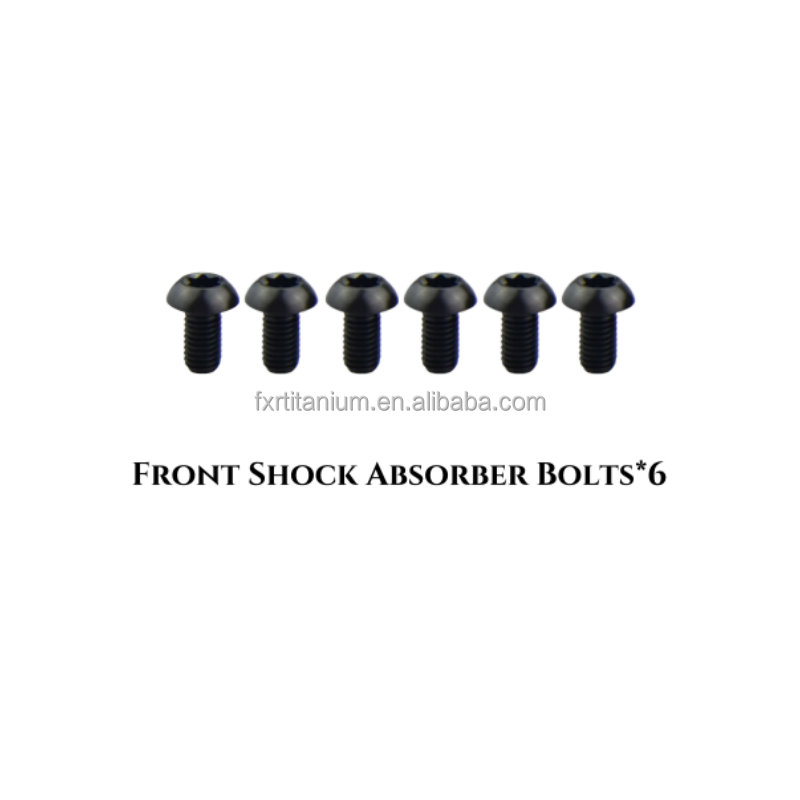
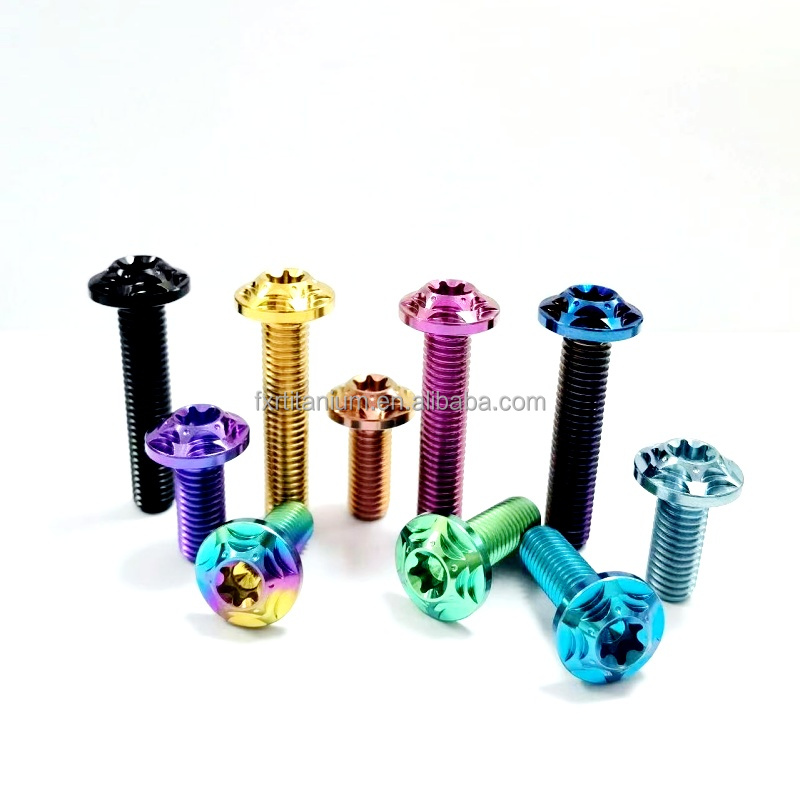
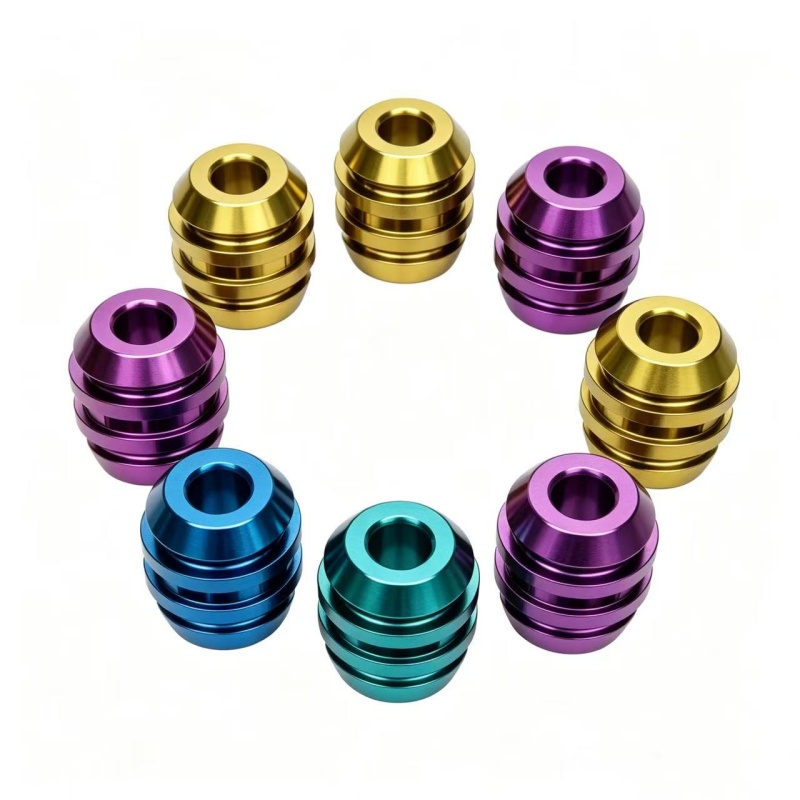
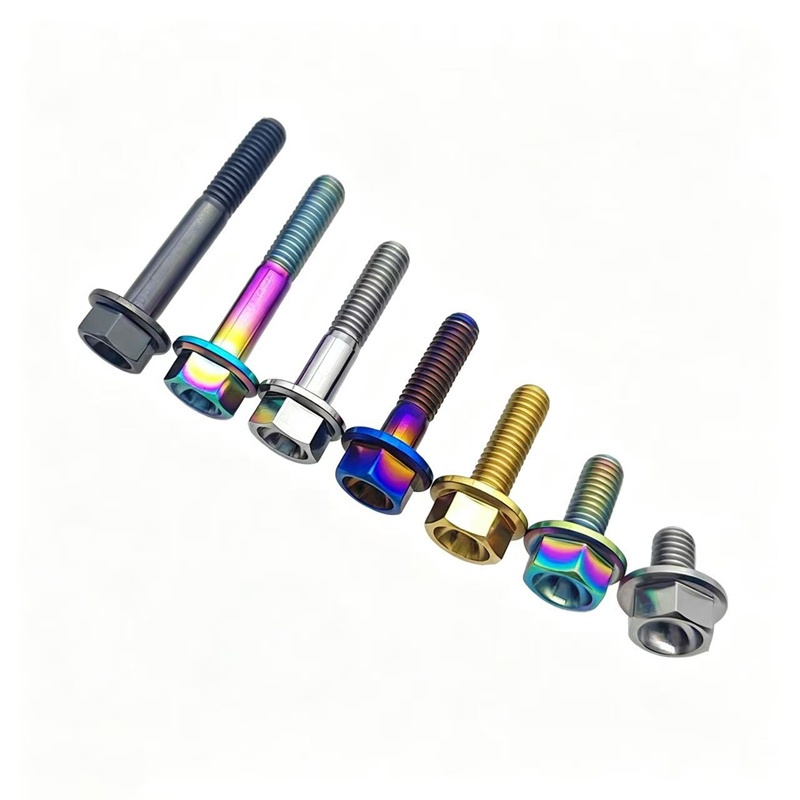
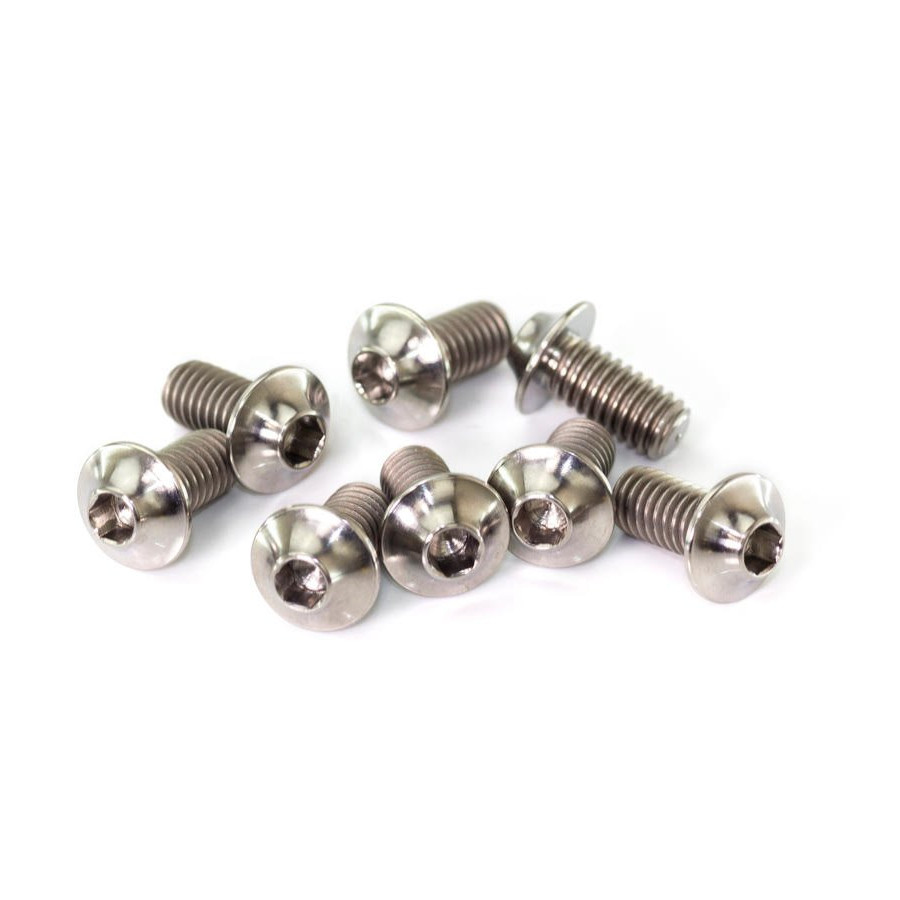
Engineering Grade 5 (Ti-6Al-4V) Fasteners: Mechanical Dominance
Why leading tier-1 mobility, aerospace, and robotics contractors systematically replace carbon steel Class 10.9 and 7075-T6 aluminum fasteners with certified titanium alloy solutions.
| Mechanical & Physical Property | GR5 Titanium (Ti-6Al-4V) | Alloy Steel (Grade 10.9) | Stainless Steel (A2-70 / 304) | Aluminum (7075-T6 Hardened) |
|---|---|---|---|---|
| Density (ρ) (g/cm³) | 4.43 (43% lighter than steel) | 7.85 (Baseline heavy) | 7.93 (Baseline heavy) | 2.81 (Extremely light) |
| Ultimate Tensile Strength (Rm) | 950 – 1050 MPa | 1040 MPa | 700 MPa | 570 MPa |
| Yield Strength (Rp0.2) | ≥ 880 MPa | 940 MPa | 450 MPa | 505 MPa |
| Strength-to-Weight Ratio (kN·m/kg) | 214 (Industry Dominant) | 132 | 88 | 202 (Poor shear longevity) |
| Elastic Modulus (Young's E) (GPa) | 114 (Superior dampening) | 210 (Stiff, brittle shock) | 193 | 71.7 (Low fatigue limit) |
| Chloride Pitting & Salt Spray Life | > 2,000 hrs (Zero degradation) | Requires Zn/Ni plating; flakes | Susceptible to crevice pitting | Requires hard anodize; oxidizes |
| Continuous Thermal Window | -250°C to +420°C | -40°C to +200°C | -196°C to +300°C | Capped at +120°C |
Thread Rolling vs. Single-Point Threading
While budget Chinese workshops cut threads with single-point lathe bits, Verqo enforces high-precision thread rolling. Rolling cold-forms threads under high pressure, maintaining unbroken metallurgical grain lines that flow parallel to the root profile, increasing thread fatigue resistance by over 35% and preventing notch stress embrittlement.
Elimination of Hydrogen Embrittlement
High-tensile carbon steels (Class 10.9 and 12.9) risk catastrophic delayed cracking caused by acid pickling and electroplating hydrogen diffusion. GR5 titanium fasteners naturally resist atomic hydrogen migration, completely nullifying delayed brittle fracture under high cyclic shear stress environments like brake caliper mounts and suspension pivots.
Passivation & Bi-Metallic Galvanic Isolation
Titanium creates an instant, continuous TiO2 (rutile/anatase) passive oxide layer within milliseconds of oxygen exposure. When bolting titanium into carbon fiber or aluminum housings, our precision engineering incorporates fluoropolymer washers, ceramic isolation, or specific micro-arc anodizing to neutralize galvanic potential differences.
Global Procurement Trends: Custom Titanium Fasteners (2025–2035)
How supply chain directors, procurement leads, and mechanical engineers are de-risking lead times, securing alloy pricing stability, and configuring direct factory collaborations in Baoji, China.
1. Cluster-Direct Sourcing (The Baoji Advantage)
Procurement managers are bypassing multi-tier trading brokers to connect directly with specialized manufacturing plants situated in Baoji, Shaanxi ("China's Titanium Valley"). Concentrating sponge melting, vacuum arc remelting (VAR), extrusion, Swiss-type CNC machining, and automated PVD coating in a single localized 15 km radius cuts transport overheads and shortens sampling cycles from 6 weeks to 8 business days.
2. Digital Thread & Full Heat Traceability
Modern buyers demand complete material verification reports (MTR) meeting EN 10204 3.1 standards. Sourcing protocols now mandate positive material identification (PMI) via optical emission spectrometry (OES) and XRF hand-scanners for every wire coil before lathe feeding, protecting B2B buyers against counterfeit Grade 2 commercial pure titanium falsely labeled as aerospace-grade Ti-6Al-4V.
3. Low-Volume High-Mix (LVHM) Agility
The rise of niche electric dirt bikes (Surron, Talaria), track-focused hypercars, and bespoke surgical robotic arms requires high-frequency modifications. The previous paradigm of 10,000-piece Minimum Order Quantities (MOQ) has been superseded by flexible CNC cell manufacturing, accommodating pilot production runs as small as 50 to 100 units without tooling penalties.
4. Near-Zero Scrap & Sustainable Metallurgy
Corporate ESG metrics are enforcing lifecycle sustainability. Modern titanium turning generates recyclable vacuum-grade titanium turnings and chips, which are re-smelted into master alloys. This closed-loop recycling framework reduces embedded carbon emissions per bolt by up to 28% compared to European and North American forging houses reliant on virgin ingot stock.
Future Hardware Technologies: Next-Gen Titanium Screws
Cutting-edge developments in multi-axis sliding-head turning, vacuum-arc plasma vapor deposition, and drive head geometries reshaping mechanical fastening integrity.
Dual-Drive & Torx Plus (IP) Geometries
Traditional socket cap and Phillips drives strip rapidly when paired with low-friction coatings. Forward-thinking manufacturers are standardizing on Torx Plus (IP) and hybrid dual-drive head profiles (external hex with internal Torx or drilled safety-wire bores). These provide up to 25% higher torsional transfer limits, completely eliminating tool cam-out during automated assembly robot lines.
Advanced PVD & Diamond-Like Carbon (DLC)
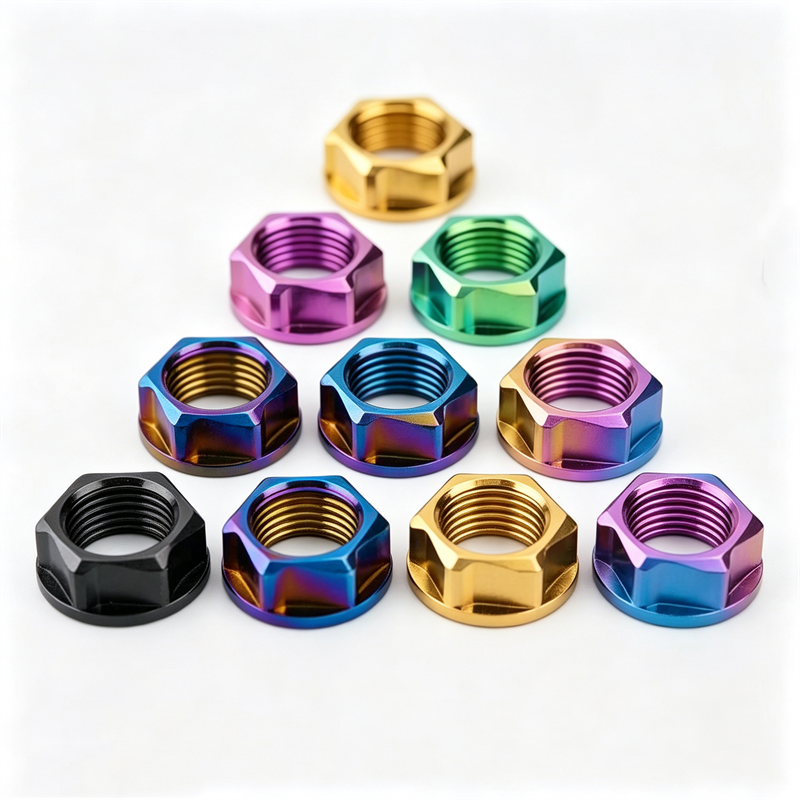
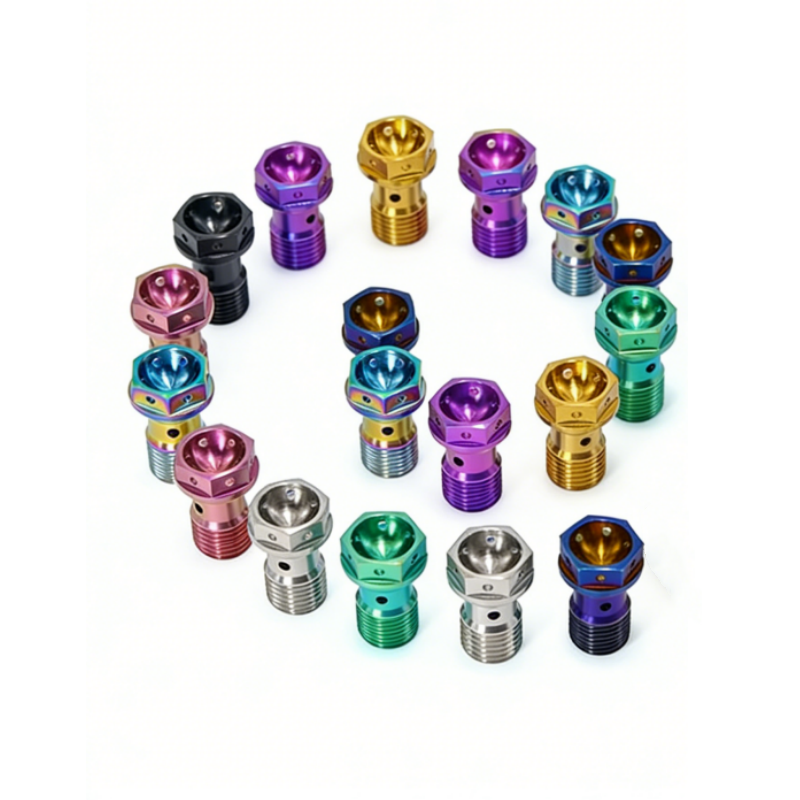
Electrochemical anodizing yields vibrant decorative hues (blue, gold, purple, burnt rainbow) by modifying light refraction through titanium dioxide films. However, for extreme tribological applications, factories now apply PVD (Physical Vapor Deposition) Titanium Nitride (TiN) or Diamond-Like Carbon (DLC), providing micro-hardness exceeding 2,500 HV and dropping friction coefficients to 0.08 to permanently cure thread galling.
Sub-Micron Swiss-Type Machining Tolerances
With the integration of multi-axis CNC Swiss lathes featuring live high-frequency tooling, custom titanium bolts are produced in single setup operations. Complex contours like drilled cross-holes, lightened dish heads, and hydraulic banjo channels maintain pitch concentricity tolerances within ±0.005 mm and thread accuracy meeting ISO 965 Class 4h/6g standards.
Why Global OEM/ODM Buyers Choose Verqo Titanium
Rooted in Baoji, Shaanxi since 2015, Verqo combines advanced metallurgical engineering with rigorous zero-defect quality systems to serve demanding clients across North America, Europe, Oceania, and Southeast Asia.
Dedicated Baoji Production Facility
Operating a 1,001–2,000 m² precision workshop staffed by 11 to 50 seasoned machining specialists, we sit at the core of China's titanium supply lines. Direct raw billet allocation guarantees immediate raw material availability without broker markups.
Comprehensive Precision Range (M2 to M26)
From micro M2/M3 titanium screws for competitive RC cars, drones, and medical optics to heavy-duty M26 magnetic oil sump drain plugs, wheel lug bolts, and aerospace chassis studs, our continuous tooling supports both metric and imperial (UNC/UNF) threads.
Rapid Turnaround & 98.62% Response Metric
Time to market is vital. Our multilingual engineering desk maintains an average response turnaround under 2 hours, delivering formal DFM analysis, 3D CAD modeling, and transparent pricing in record time, supported by a 27% reorder rate among global partners.
Custom OEM / ODM Engineering from Your Drawings or Physical Samples
Have a custom flange geometry, unusual pitch, hollowed weight-reduction bore, or laser logo requirement? Our CNC engineers inspect STEP, IGES, DXF, or physical master parts, verifying fitment tolerances, head radii, and torque ratings prior to prototype runs.
Frequently Asked Sourcing & Engineering Questions
Essential technical answers addressing mechanical torque limits, thread galling mitigation, chemical grades, and procurement lead times.
Q1 What specific titanium alloy grade is used for critical load-bearing bolts?
We use certified GR5 (Ti-6Al-4V, Werkstoff 3.7165) titanium alloy across all high-stress bolts, nuts, and studs. GR5 features a minimum tensile strength of 895–1000 MPa and yield strength ≥828 MPa, delivering an equivalent tensile threshold to Grade 10.9 heat-treated alloy steel while slashing weight by 43%. For non-structural decorative applications, Grade 2 commercially pure titanium can be specified.
Q2 How do engineers prevent titanium thread galling during high-torque assembly?
Titanium has a high friction coefficient and can cold-weld (gall) under extreme tightening pressures without proper lubrication. We strongly recommend applying a nickel- or copper-based anti-seize paste, Ti-specific molybdenum disulfide (MoS2) grease, or selecting our PVD / TiN coated hardware, which reduces dry sliding friction to ≤0.12 and ensures smooth, consistent torque-tension translation.
Q3 What are the standard torque calculation specs for titanium screws?
Tightening torque is calculated via T = K · D · F, where T is torque, K is the nut factor, D is nominal diameter, and F is target clamp preload (typically 65–70% of proof load). Because titanium's elastic modulus (114 GPa) is roughly half that of steel (210 GPa), titanium fasteners elongate double under equal stress, providing superior resistance to vibration-induced loosening in high-frequency motorbike and race engines.
Q4 What thread sizing spectrum and standard pitches are available?
Our CNC and rolling lines manufacture metric threads from ultra-micro M2, M2.5, and M3 up to heavy-duty M24 and M26. We support both standard coarse pitch and precision fine pitch configurations, including M10×1.0, M10×1.25, M12×1.25, M12×1.5, and M14×1.5 for automotive wheel hubs and Brembo brake calipers, alongside standard UNC and UNF imperial options.
Q5 How does anodizing differ from PVD vacuum coating on titanium hardware?
Anodizing is an electrochemical process that grows a controlled transparent titanium dioxide (TiO2) layer. Interference with visible light creates vivid colors (burnt blue, gold, purple, green) without adding thickness or weight. PVD (Physical Vapor Deposition) is a high-vacuum plasma method that deposits a distinct thin ceramic micro-layer (such as Titanium Nitride or DLC) offering enhanced surface hardness (>2000 HV) and extreme scratch resistance.
Q6 What are the typical MOQs, prototyping cycles, and mass production lead times?
For stocked items (such as standard hex flange bolts, M3 RC aircraft screws, and M14 lug nuts), the MOQ starts at just 10 to 20 pieces. For custom CNC components manufactured to proprietary CAD drawings, prototype samples are completed in 7 to 10 working days with an MOQ of 50 to 100 units. Full production batches generally ship within 18 to 25 days depending on PVD coating complexity.
Q7 Can you customize fasteners from 2D/3D CAD drawings or physical broken samples?
Yes. We specialize in custom OEM and ODM execution. Clients can supply 3D files (STEP, IGES), 2D drawings (DWG, PDF with complete geometric dimensioning and tolerancing), or ship physical components to our Baoji metrology laboratory. We perform coordinate measuring machine (CMM) inspection, pitch gauge profiling, and hardness testing to replicate or upgrade OEM specifications.
Q8 What quality assurance documentation is provided with export shipments?
Every export batch is accompanied by an EN 10204 3.1 Mill Test Certificate validating chemical alloy composition (Titanium, Aluminum, Vanadium, Iron, Oxygen, Carbon limits) and mechanical tensile/yield properties. We also supply dimensional inspection records, salt spray testing documentation, and RoHS/REACH compliance declarations upon request.