Top Recommended Titanium Hardware & Custom Wheel Lug Fasteners
Directly engineered and manufactured in Baoji—China's premier Titanium Valley—these high-tensile Grade 5 (Ti-6Al-4V) components offer unyielding fatigue resistance, lightweight performance, and extreme corrosion immunity across automotive, motorcycle, and industrial applications.
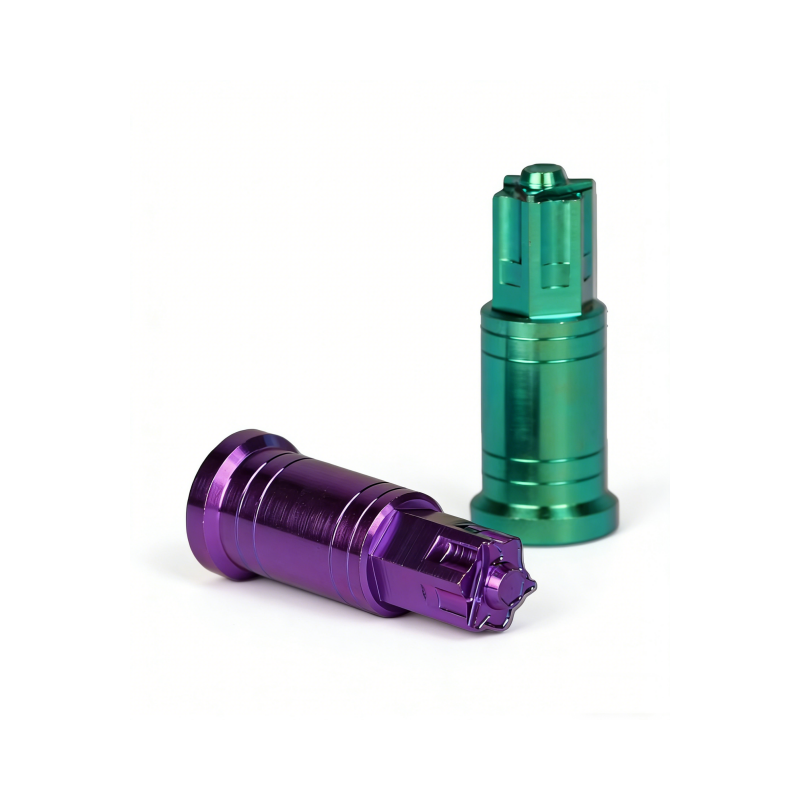
Factory Customized Color Size M6 M8 M10 GR5 Hex Head Polished Motorcycle Titanium Alloy Knurled Extended Nut Grade 10.9/12.9
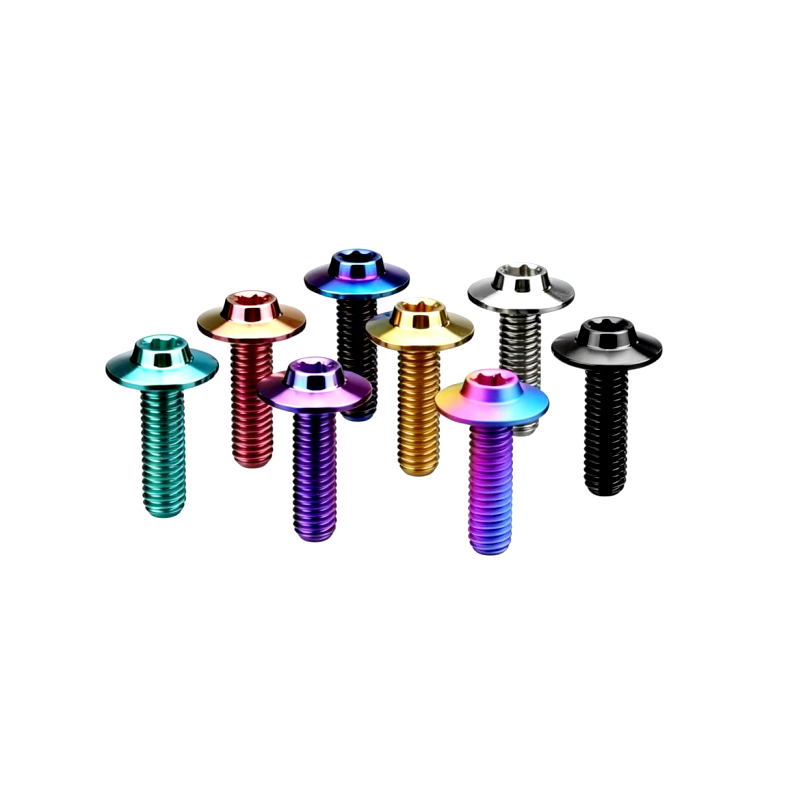
Grade 5 Colorful M6*6/8/10/12/15/20/25/30/35/40/45/50 Motorcycle Automatic Titanium Umbrella Torx Head Bolts
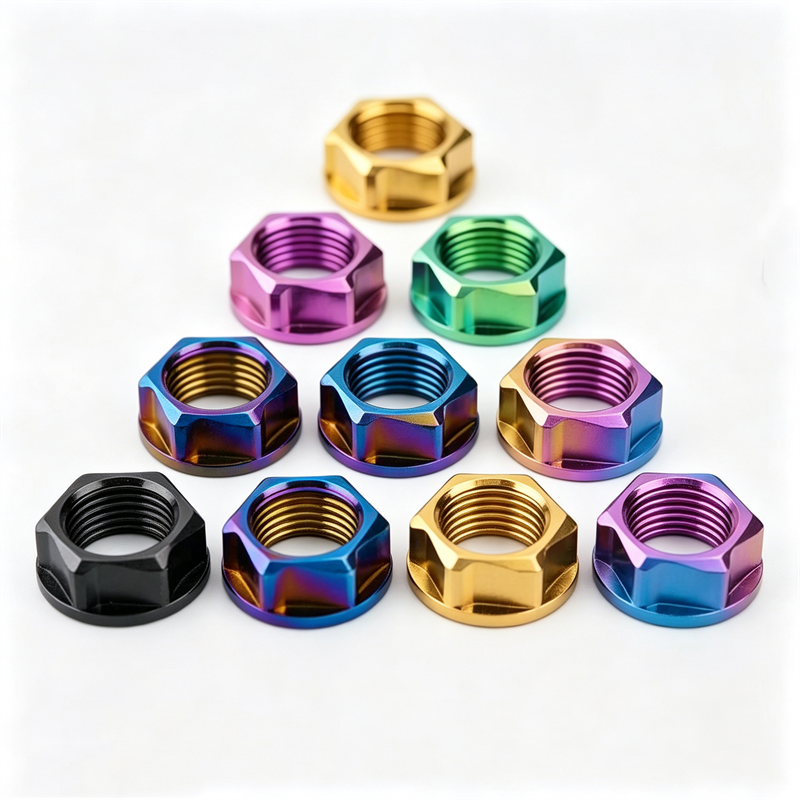
High Strength GR5 Polished/Coated Titanium Alloy CNC Machined M5/M6/M8/M10/M12 Flange Lock Nut for Motorcycle/Bicycle
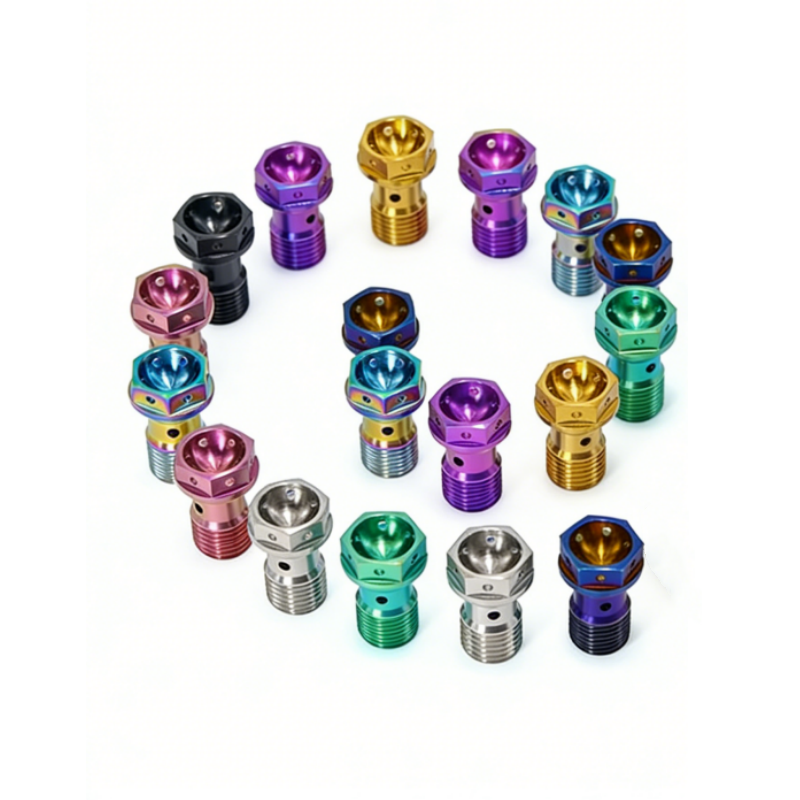
Customized M10 *1.0/1.25* 19mm Motorcycle Brake Calipers GR5 Titanium Banjo Bolts Baut for Brembo
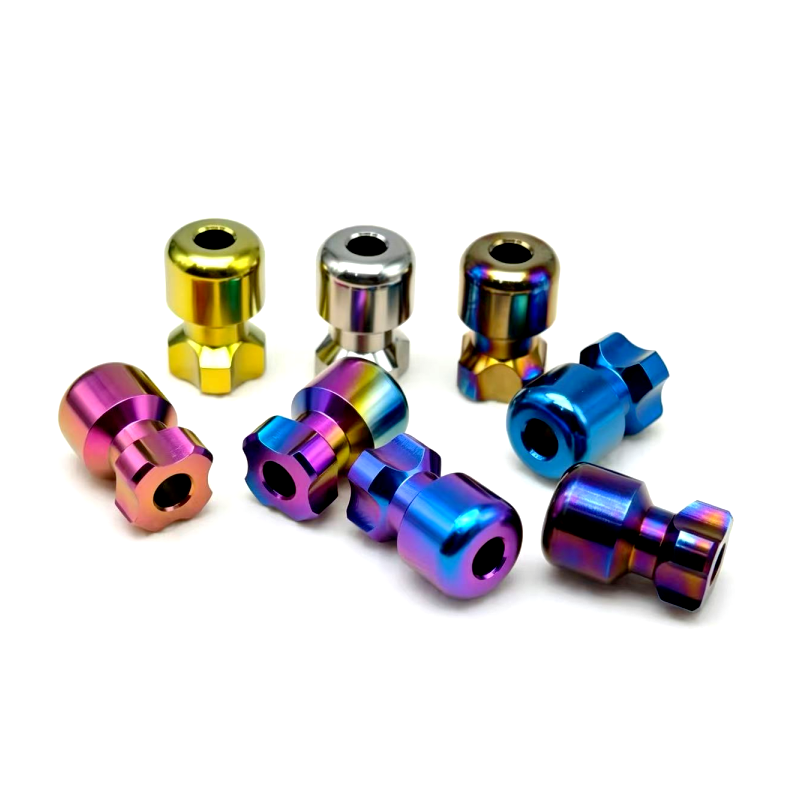
FOXTI Factory Custom Colorful Titanium Paracord Gr5 Grade Torpedo-shaped EDC Lanyard 5mm Hole PVD Coated Pendant Beads Knife
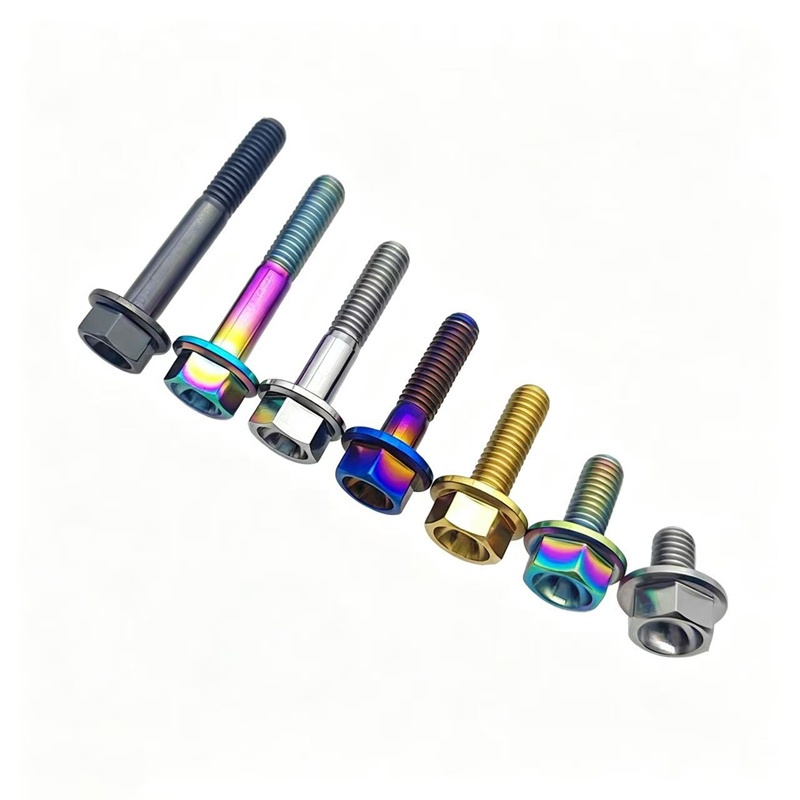
Factory Director 6X20 M5/M6 /m8/m10/m12/m14 Hex Head Flange Titanium Bolts for Motorcycle Automotive
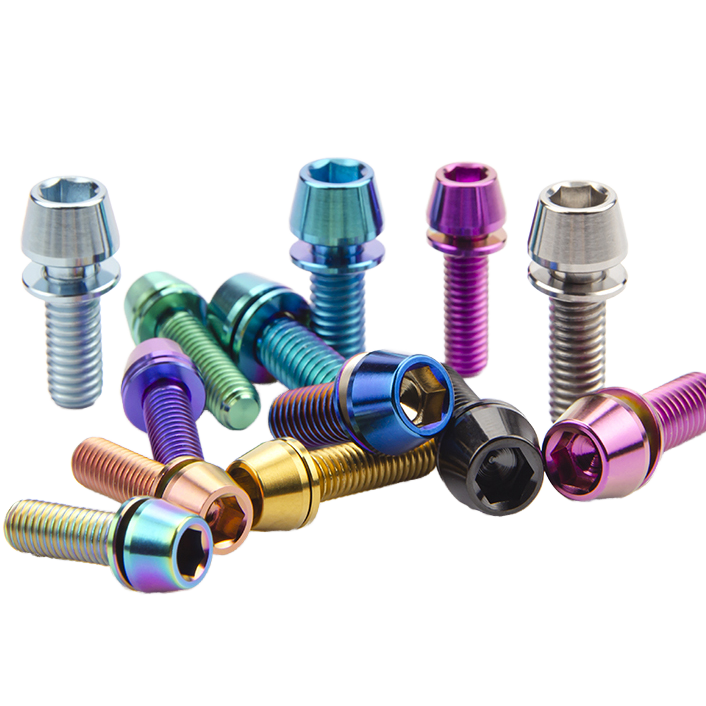
M5*16/18 M6*16/18/20 Class 10 UNC Thread Anodized Taper Head Colorful Titanium Bolt Screw Washer for Bicycle Water Bottle Cage
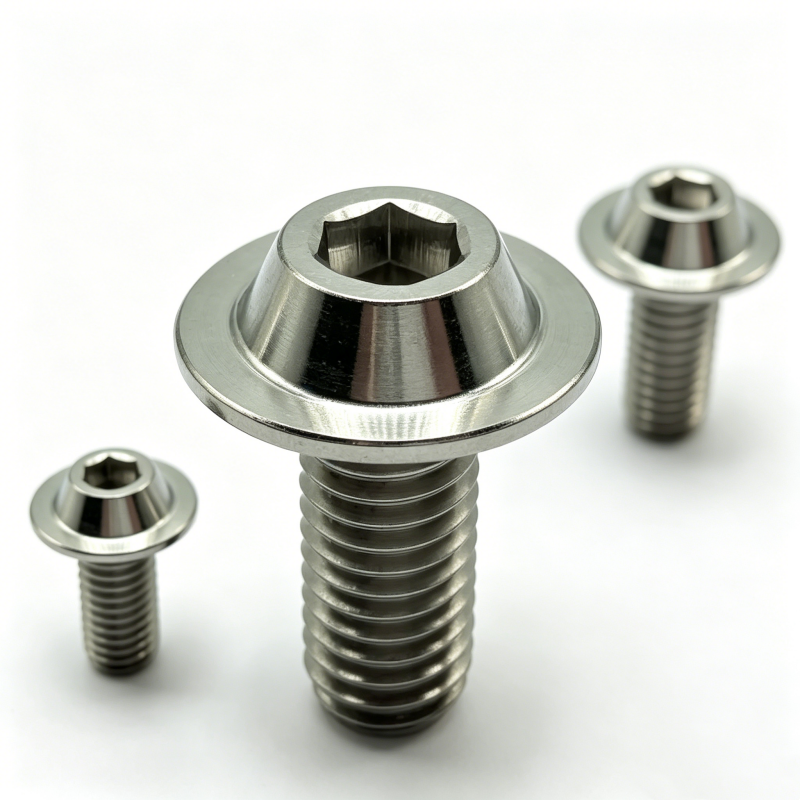
Factory Wholesale GR5 Titanium Alloy Screws M4 M5 M6 M8 M10 Titanium Bolts with Hex Socket UFO Head
Architectural & Metallurgical Deep-Dive: Why Grade 5 Titanium (Ti-6Al-4V) Dominates Modern Wheel Hardware
In high-performance automotive tuning, competitive motorsport engineering, and premium OEM vehicle manufacturing, wheel lug nuts are far more than simple threaded fasteners—they are critical structural safety nodes subject to complex cyclic dynamic forces. Traditional steel lug nuts (Class 8.8, 10.9, or 12.9) offer adequate tensile strength but suffer from heavy unsprung mass and vulnerability to atmospheric oxidation and galvanic corrosion. Conversely, 7075-T6 aluminum lug nuts offer weight savings but introduce catastrophic risks of thread shearing, thermal expansion mismatch, and stress-corrosion cracking under sustained track loads.
Grade 5 Titanium (Ti-6Al-4V / UNS R56400) represents the ultimate engineering compromise, delivering an extraordinary strength-to-weight ratio that fundamentally elevates vehicle dynamics, wheel assembly integrity, and long-term fatigue durability.
| Mechanical & Physical Property | Ti-6Al-4V (Grade 5 Titanium) | Alloy Steel (Grade 10.9) | 7075-T6 Aluminum Alloy |
|---|---|---|---|
| Density (g/cm³) | 4.43 (43% lighter than steel) | 7.85 (Baseline heavy) | 2.81 (Extremely light) |
| Ultimate Tensile Strength (MPa) | 950 – 1050 MPa | 1040 MPa | 570 MPa (Sub-par fatigue limit) |
| Yield Strength 0.2% Proof (MPa) | 880 – 920 MPa | 940 MPa | 505 MPa |
| Strength-to-Weight Ratio (kN·m/kg) | 214 (Industry Leader) | 132 | 202 |
| Corrosion & Rust Resistance | Impervious (Self-healing TiO2 Film) | Poor (Requires zinc/cadmium plating) | Moderate (Prone to galvanic oxidation) |
| Melting Point / Thermal Stability | 1660°C (High brake heat tolerance) | 1420°C | 477°C (Risk of soft annealing) |
Dynamic Benefits of Unsprung Mass Reduction
Every component positioned downstream of a vehicle's suspension springs—including wheels, brake rotors, hubs, and lug nuts—constitutes unsprung weight. Because lug nuts rotate directly around the wheel hub center, they also contribute to rotational inertia ($I = m \cdot r^2$). Transitioning a 20-lug automotive setup from standard steel (approx. 1,200g total weight) to custom precision-machined Grade 5 titanium lug nuts (approx. 680g total weight) saves over 520 grams of unsprung rotational mass. This directly enhances damper valving control over rough surfaces, reduces acceleration parasitic losses, and maintains consistent clamping force across high-temperature brake rotor thermal cycles.
China's Titanium Valley: Why Baoji Manufacturing Controls Global Fastener Quality
When international Tier-1 automotive suppliers, aftermarket tuning brands, and wholesale distributors seek high-volume, precision-crafted titanium lug nuts and custom hardware, China stands as the global production epicentre. Specifically, over 80% of China's titanium melting, forging, and precision CNC finishing capacity is clustered in Baoji City, Shaanxi Province ("China's Titanium Valley").
Vertical Raw Material Traceability
Baoji manufacturers utilize double and triple Vacuum Arc Remelting (VAR) processes to transform premium sponge titanium into high-purity Ti-6Al-4V ingots. Every mill lot undergoes ultrasonic flaw detection and spectrographic analysis to guarantee zero internal voiding or alpha-case contamination.
Advanced Precision CNC Tooling
Equipped with multi-axis Swiss-type automatic lathes and 5-axis CNC turning centers, China's premier factories achieve strict dimensional tolerances within ±0.01mm. This guarantees flawless 60° conical, ball seat, or mag seat concentricity against the wheel lug bore.
Cold Thread Rolling Excellence
Rather than cutting threads—which severs grain structure and creates stress concentration notches—top Chinese factories cold-roll threads. This grain-alignment cold-work process increases thread fatigue life by over 300% and prevents thread stripping under high torque.
Future Procurement & Sourcing Trends in the Global Titanium Fastener Market
As global supply chains re-align around performance electrification, sustainability, and ultra-high-precision manufacturing, B2B buyers must anticipate several structural macro trends when procuring titanium lug nuts and custom hardware over the next decade:
1. Accelerated EV Weight-Reduction Imperatives
Electric Vehicles (EVs) carry massive battery pack weights, forcing automotive OEMs and aftermarket tuners to aggressively shed mass from secondary chassis components. Titanium lug nuts are transitioning from niche supercar luxuries to standard lightweighting solutions for high-performance EVs seeking extended battery range and sharper suspension response.
2. Adoption of Advanced Physical Vapor Deposition (PVD)
While traditional electrochemical anodizing provides brilliant decorative colors (gold, blue, purple, burnt rainbow), future industrial demand favors PVD Vacuum Physical Vapor Deposition coatings (such as TiN, TiCN, and DLC Black). PVD creates a microscopic ceramic surface layer exceeding 2,500 HV hardness, providing extreme scratch resistance against impact sockets.
3. Proprietary Anti-Theft Lock Keying Geometries
High-value forged wheels require maximum theft deterrence. Modern Chinese factories now integrate 3D laser-scanning and multi-spline floating key design patterns directly into custom titanium lug nut production, enabling private-label brands to offer unique, un-copiable key socket patterns to end users.
4. Circular Material Economy & Scrap Reclamation
Sustainable B2B procurement strategies mandate zero-waste manufacturing. Leading Chinese mills are implementing closed-loop recycling for titanium CNC turnings and chips, remelting clean scrap into non-critical industrial grade ingots while maintaining virgin billet purity for aerospace and automotive wheel hardware.
Technological Development Trends in Titanium Fastener Manufacturing
To stay competitive, top Chinese titanium fastener manufacturers are continually upgrading their production methodologies. Key technical shifts include:
Cold Forging + CNC Hybrid Production
Historically, complex titanium lug nuts were turned entirely from solid bar stock, resulting in 60%+ material scrap rates. Next-generation factories utilize warm/cold hydraulic heading to pre-form lug nut blanks, followed by high-speed CNC finish turning. This drastically reduces unit costs while refining the internal crystalline grain boundary.
Anti-Galling Surface Coatings
Titanium alloys possess a micro-structural tendency toward thread galling (cold welding) when torqued dry against steel studs. Advanced manufacturers overcome this by applying micro-thin dry film lubricants, molybdenum disulfide coatings, or specialized anti-friction micro-arc oxidation (MAO) layers directly inside internal threads.
Automated Optical Quality Inspection
Zero-defect quality control is achieved via 100% automated optical sorting machines. Laser inspection cameras instantly verify thread pitch, overall length, head concentricity, cone angle taper, and surface finish at speeds exceeding 200 parts per minute, eliminating human error.
Partnering with Verqo Titanium Products Co., Ltd.
Situated in the heart of Baoji's Titanium Valley, Verqo Titanium Products Co., Ltd. is a premier manufacturer specializing in the design, engineering, and mass production of Grade 5 (Ti-6Al-4V) titanium fasteners, custom lug nuts, wheel studs, and precision CNC components ranging from M2 to M26 thread sizes.
- 10+ Years Dedicated OEM/ODM Experience: Proven track record supporting global aftermarket racing brands, motorcycle manufacturers, and bicycle builders with custom solutions.
- Integrated Production Facility: Operating 1,000–2,000 m² of state-of-the-art CNC machining, thread rolling, polishing, anodizing, and laser engraving lines under one roof.
- Rapid Response & High Efficiency: Average customer response time ≤ 2 hours with a verified 98.62% response rate, ensuring seamless international communication.
- Rigorous ISO Quality Assurance: Full material spectrographic test reports (MTR), ultrasonic flaw testing, and CMM dimensional certification provided with every shipment.
- Flexible B2B Sourcing Terms: Low MOQs for standard stocked catalog items (from 10-20 pcs) and flexible custom prototyping programs with rapid 7-day turnaround.
- Global Logistics Capabilities: Experienced export handling via express air courier, sea freight, and DDP terms directly to distributors across North America, Europe, and Asia.
Frequently Asked Questions (FAQ) for Titanium Lug Nut Sourcing
Address key technical, mechanical, and commercial queries required during supplier evaluation and procurement vetting.
Request Custom Quotation & Technical Engineering Consultation
Send your CAD drawings, required thread specs, color preferences, and volume requirements directly to our engineering team. We deliver complete factory pricing and technical feedback within 2 hours.