1. Metallurgical Engineering & Mechanical Performance of Titanium Steering Posts
In high-stress vehicular dynamic systems, steering posts (or steering stems, steering columns, and linkage shafts) are subject to combined torsional, bending, and dynamic impact loading. Replacing traditional 4130 Chromoly steel or 7075-T6 aluminum steering posts with aerospace-grade Ti-6Al-4V (Grade 5 Titanium Alloy) delivers an unprecedented balance of unsprung weight optimization, fatigue resistance, and structural integrity.
Grade 5 titanium is an alpha-beta alloy containing 6% aluminum and 4% vanadium. When processed through vacuum arc remelting (VAR) and hot precision forging, its microstructure yields exceptional specific strength (strength-to-density ratio). For global automotive OEMs, ATV/UTV manufacturers, motorcycle chassis builders, and karting teams, sourcing precision-machined titanium steering stems directly from China's premier manufacturing hubs provides a strategic competitive edge in both performance and bill-of-materials (BOM) cost efficiency.
| Material Specification | Density (g/cm³) | Tensile Strength (MPa) | Yield Strength (MPa) | Shear Strength (MPa) | Young's Modulus (GPa) |
|---|---|---|---|---|---|
| Titanium Grade 5 (Ti-6Al-4V) | 4.43 | 950 – 1050 | 880 – 920 | 550 | 114 |
| 4130 Chromoly Steel (Quenched/Tempered) | 7.85 | 970 | 850 | 500 | 205 |
| Stainless Steel 316L | 8.00 | 620 | 290 | 420 | 193 |
| Aluminum Alloy 7075-T6 | 2.81 | 572 | 503 | 331 | 71.7 |
Technical Advantage Insight: Fatigue Strength & Vibration Damping
Unlike aluminum alloys which suffer from finite fatigue life thresholds under continuous cyclic load, Grade 5 titanium exhibits a distinct endurance limit. Furthermore, its lower Modulus of Elasticity (~114 GPa versus 205 GPa in steel) allows titanium steering posts to absorb harsh high-frequency vibrations from rough terrain without permanent deformation, reducing driver fatigue and preventing steering housing shear failures.
2. Precision CNC Manufacturing Protocols for Hollow & Solid Steering Shafts
Manufacturing high-tolerance titanium steering shafts requires rigorous control over thermal expansion, cutting speeds, tool wear, and thread forming. China's top titanium manufacturing enterprises leverage state-of-the-art 5-axis CNC Swiss machining centers and deep-hole gundrilling technologies to manufacture lightened hollow titanium steering posts with wall thickness tolerances controlled within ±0.02 mm.
- Gun Drilling & Weight Reduction: Axially drilled hollow shafts reduce overall weight by up to 35% compared to solid titanium posts without compromising torsional stiffness.
- Cold Thread Rolling vs. Thread Cutting: For external threads on steering stems (e.g., M18x1.0 or M20x1.5 upper locknut threads), thread rolling is mandatory. Rolled threads compress the titanium grain flow radially, eliminating micro-notches and increasing thread fatigue resistance by over 300%.
- Precision Centerless Grinding: Bearing seat surfaces and triple-tree clamping zones are centerless ground to Ra 0.4 μm surface roughness, eliminating stress concentrations and guaranteeing perfect interference fitment with sealed cartridge bearings.
3. Future Procurement Trends in Titanium Steering Posts & Fasteners
As the automotive and motorsport industries pivot toward electrification and high-efficiency power-to-weight ratios, the global demand for titanium steering components is experiencing structural growth. Procurement executives should anticipate several key technological and supply chain shifts:
Additive-Hybrid Manufacturing
Integrating 3D printed (SLM/DMLS) topology-optimized titanium steering knuckles directly with CNC-machined hollow steering posts to eliminate mechanical joint hardware entirely.
PVD DLC Tribological Coatings
Deposition of Diamond-Like Carbon (DLC) coatings over anodized titanium steering shafts to achieve ultra-low friction coefficients (<0.1) at bearing contact interfaces, preventing galling.
100% Non-Destructive Testing (NDT)
OEM contracts increasingly specify mandatory Ultrasonic Testing (UT) per ASTM A388 and Eddy Current testing on raw titanium bar stock prior to machining to guarantee zero internal void defects.
4. Industry Development Trends & Application Vectors
The application spectrum for titanium steering hardware has expanded beyond traditional Formula/GT racing into mainstream electric vehicles (EVs), unmanned aerial vehicles (UAVs), electric motocross (e-Dirtbikes like Surron/Talaria), and marine outboard steering links:
- Electric Motocross & E-Bikes: Weight reduction directly enhances battery range and handling agility. Titanium steering posts and clamp bolts are standard OEM upgrades for premium performance e-motos.
- Off-Road Racing & UTVs: Extreme shock loads in desert racing demand materials that will not snap brittlely under sudden impact. Titanium Grade 5 offers superior fracture toughness (K1c ≈ 55 MPa·m½) compared to high-strength aluminum.
- Marine & Corrosion Environments: Titanium is virtually immune to pitting and crevice corrosion in chloride and salt spray environments, eliminating rust completely in marine steering helm linkages.
5. Enterprise Strategic Advantage: Verqo Titanium Products Co., Ltd.
Rooted in Baoji, Shaanxi Province — widely recognized as "China's Titanium Valley" — Verqo Titanium Products Co., Ltd. stands as a premier specialized OEM/ODM manufacturer of Grade 5 titanium bolts, nuts, studs, wheel lug nuts, and custom CNC components ranging from M2 to M26.
Baoji Supply Chain Integration
Direct sourcing from top-tier sponge titanium smelters ensures 100% material traceability. Mill Test Certificates (EN 10204 3.1) are supplied with every order.
Advanced Surface Finishing
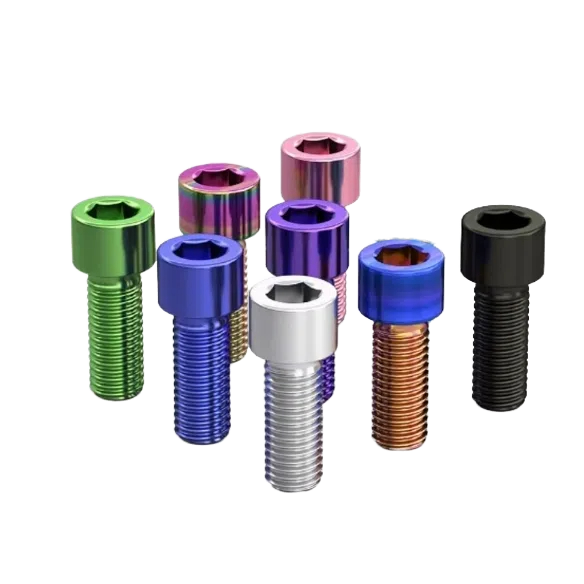
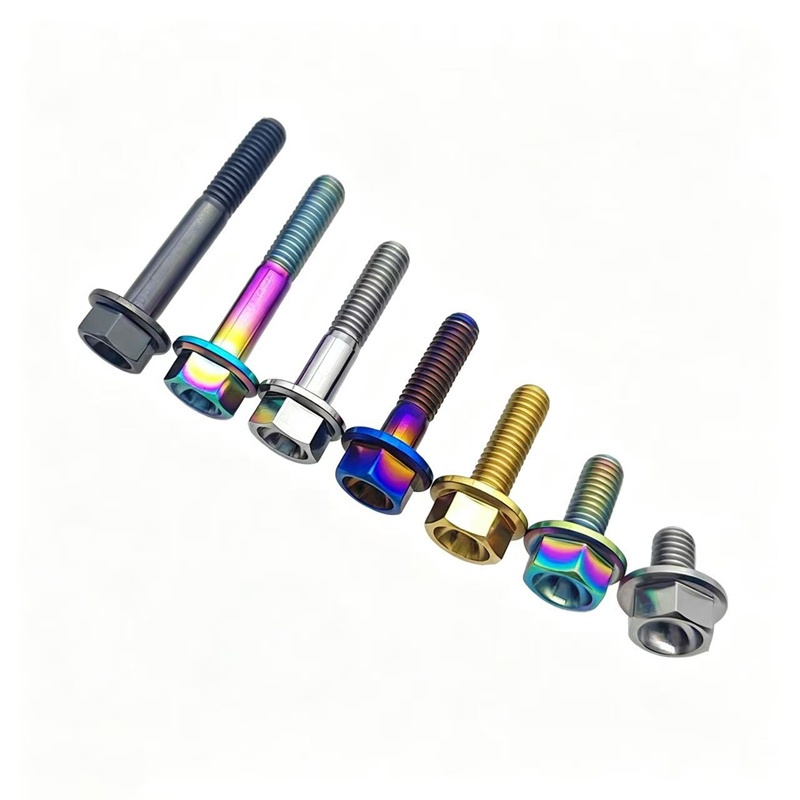
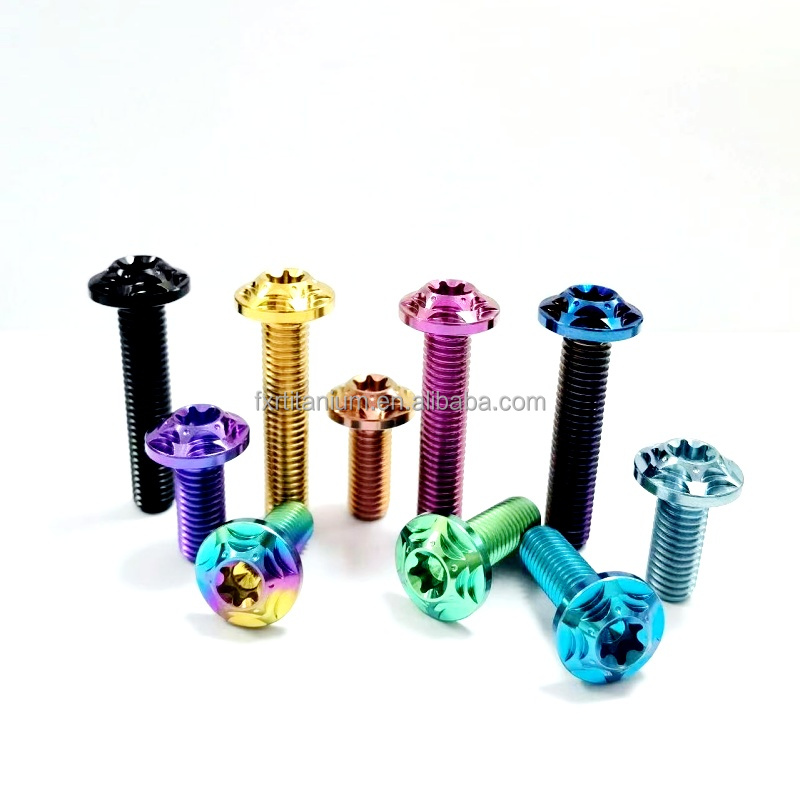
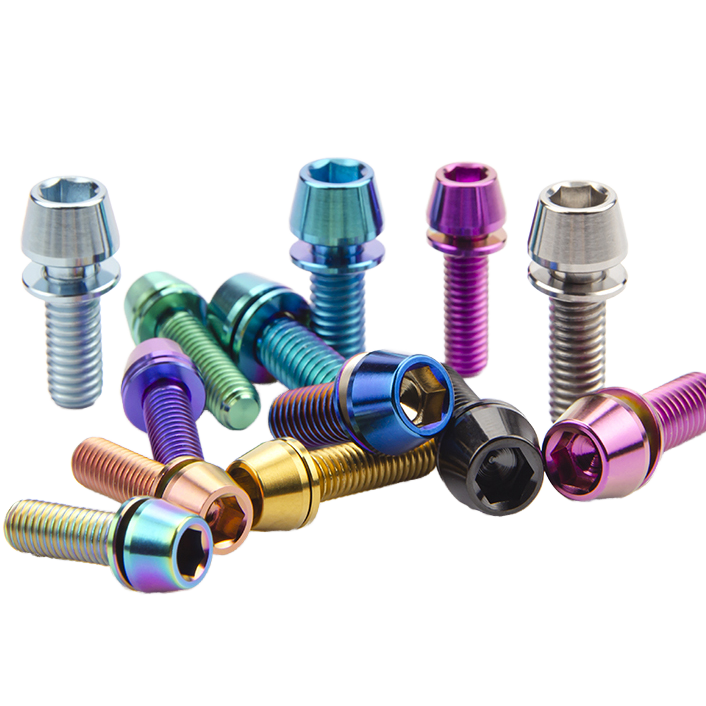
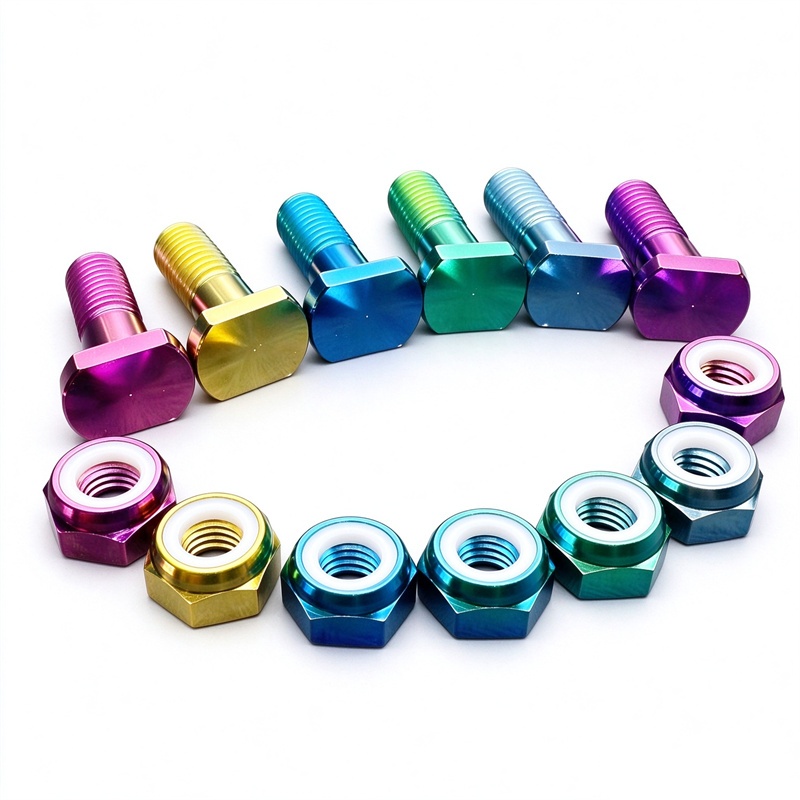
In-house anodizing (gold, blue, purple, burnt blue, rainbow) and physical vapor deposition (PVD black, oil-slick, vacuum nitriding) guarantee flawless visual appeal and coating adhesion.
Agile OEM/ODM & Fast Response
With an average inquiry response time under 2 hours, 10+ years of engineering export expertise, and flexible MOQs starting from 10-100 pcs, Verqo accelerates your time-to-market.
6. Frequently Asked Questions (FAQ) for B2B Titanium Procurement
For all structural and safety-critical steering applications, Grade 5 Titanium (Ti-6Al-4V) or Grade 23 (Ti-6Al-4V ELI) is required due to its high yield strength (>880 MPa) and fatigue resistance. Commercially Pure (CP) titanium grades like Grade 2 or Grade 3 lack sufficient tensile capacity and must never be used in load-bearing steering assemblies.
Titanium alloys have a natural tendency to cold-weld or gall when mated against titanium or stainless steel under high torque. We recommend applying an anti-seize paste (such as copper-based or nickel-based anti-seize) or ordering our PVD nitride or DLC-coated hardware, which drastically lowers friction and eliminates galling.
Yes. We specialize in custom OEM and ODM manufacturing. You can provide STEP, IGES, DWG, or PDF engineering drawings. Our engineering team conducts a manufacturing feasibility review (DFM) within 24 hours to confirm tolerances, thread specs, and tool access before production.
For standard stocked items (such as metric titanium flange bolts, nuts, and washers), MOQs start as low as 10 to 50 pieces. For custom CNC titanium steering posts, the typical MOQ ranges from 50 to 100 pieces. Sample prototypes can be produced within 7-10 working days, while bulk production generally takes 15-25 days.
Anodizing is an electrochemical process that grows a transparent oxide film on the titanium surface; light refraction creates vibrant colors (blue, gold, purple, green). PVD (Physical Vapor Deposition) deposits a thin layer of hard metal ceramic (like Titanium Nitride or Carbonitride) in a vacuum chamber, providing superior scratch resistance and deep metallic black or rainbow finishes.
Every shipment includes a Material Mill Test Certificate (MTC) conforming to EN 10204 3.1, dimensional CMM inspection reports, thread gauge pass reports, and full chemical analysis verifying alloy composition (Al 5.5-6.75%, V 3.5-4.5%, Fe ≤ 0.30%, O ≤ 0.20%).