Shock Assembly
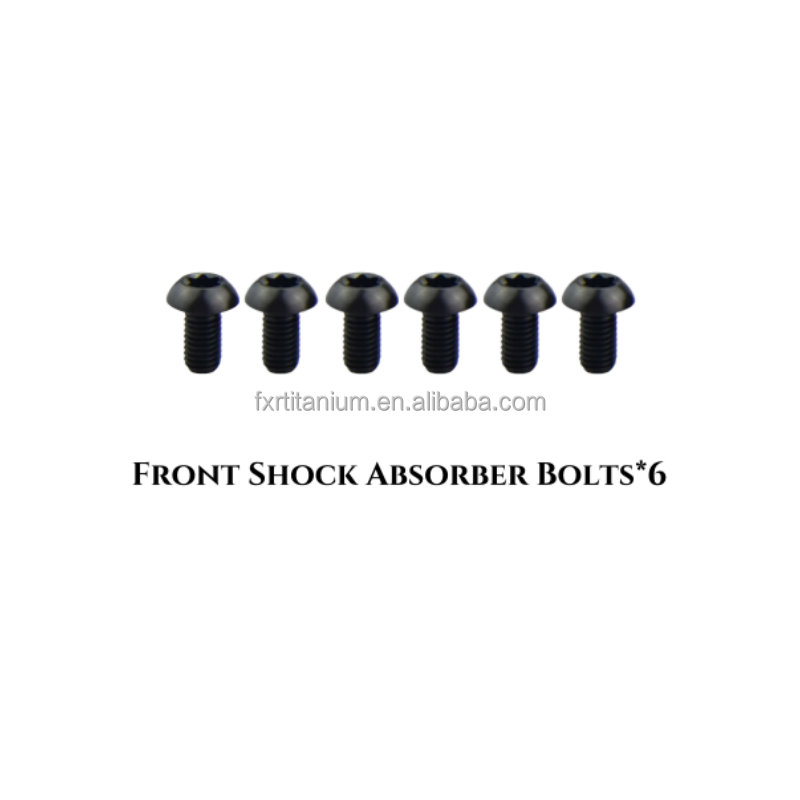
Every component is forged and CNC-machined from certified Ti-6Al-4V Grade 5 alloy, offering exceptional strength-to-weight performance, non-magnetic neutrality, and immunity to galvanic and atmospheric corrosion.
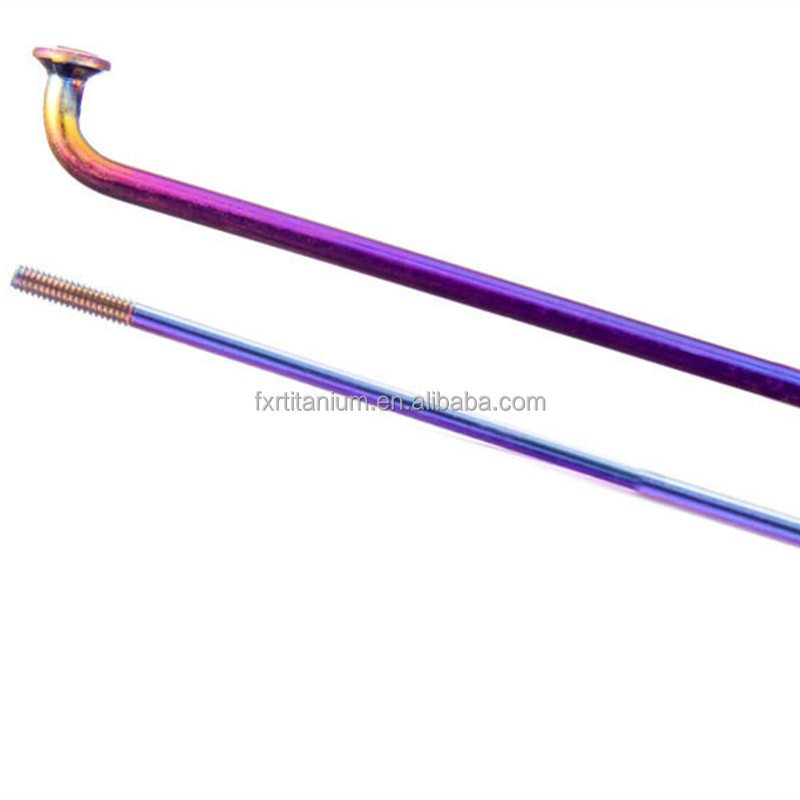
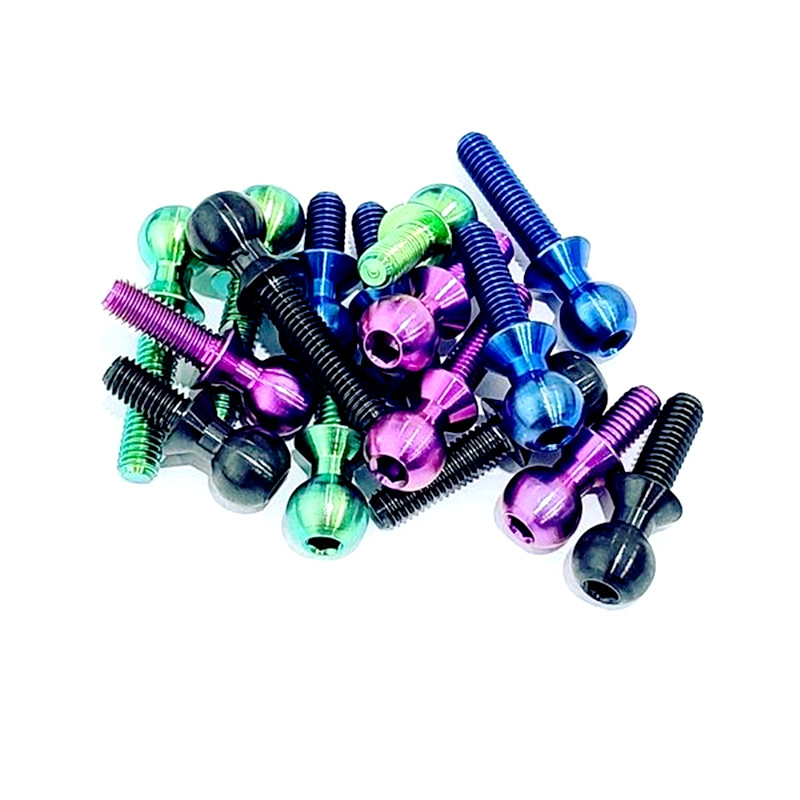
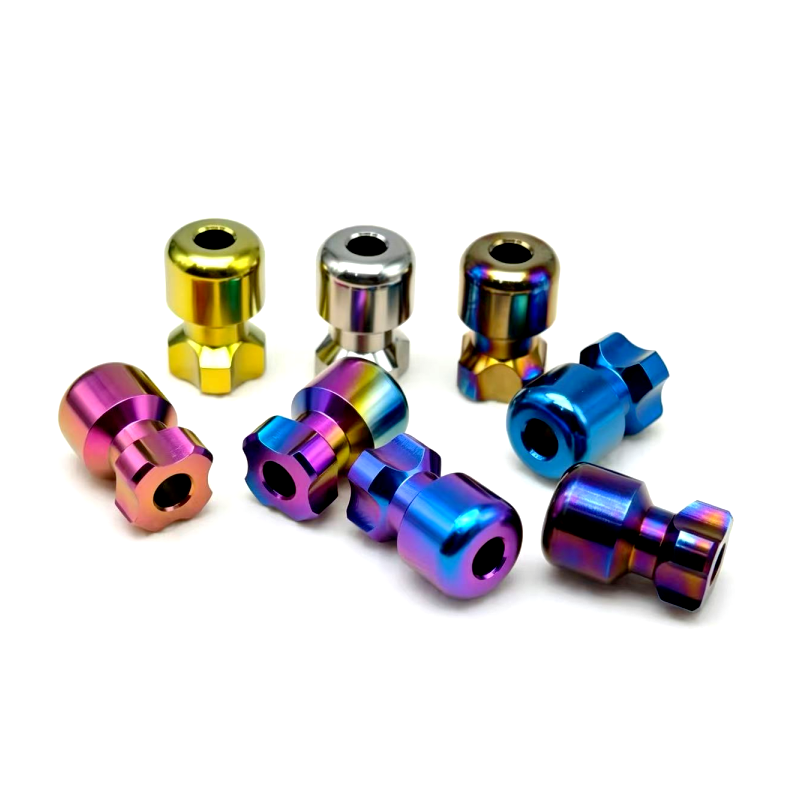
As commercial aviation, electric vehicles (EVs), competitive motorsports, and performance cycling demand strict weight optimization, international procurement teams are shifting how they specify and buy titanium kits.
The rapid transition toward high-voltage performance electric motorcycles (such as Surron, Talaria, and Stark VARG) and hyper-EV platforms has shifted unsprung mass reduction from a track luxury to a range-extending necessity. Procurement buyers are replacing standard Class 8.8 and 10.9 steel fasteners with Grade 5 Titanium (Ti-6Al-4V) assemblies to shed 42%–45% of unsprung hardware weight across wheel hubs, brake disc mounts, and suspension pivots, directly improving damper response, battery efficiency, and dynamic handling.
Global distributors and professional racing teams are actively phasing out bulk, loose fastener sourcing. Supply chain operations now mandate complete, machine-tailored OEM hardware kits—packaged in compartmentalized blister packs or laser-engraved foam trays sorted by chassis sub-assembly. This eliminate bin-sorting overhead, reduces assembly line staging errors by over 92%, and ensures correct thread pitches (including ultra-fine metric pitches like M10×1.25 and M12×1.25) are installed without risk of cross-threading.
Industrial procurement departments now hold commercial aftermarket suppliers to aerospace-grade metallurgical standards. Buyers demand full heat-lot traceability, ASTM B348 Grade 5 certification, and EN 10204 3.1 Material Test Reports (MTRs) validating chemical composition (strictly monitoring interstitial elements like Oxygen ≤ 0.20%, Nitrogen ≤ 0.05%, and Hydrogen ≤ 0.015%). Verifiable proof against brittle commercial purity (GR2) substitutes has become a baseline qualification criterion.
From grain-flow preservation in thread manufacturing to diamond-like carbon PVD coatings, engineering practices are redefining the endurance threshold of titanium alloy hardware.
Traditional cut threads disrupt the continuous metal grain flow of the titanium bar, introducing microscopic notch stress concentrations that severely degrade dynamic fatigue limits. State-of-the-art titanium production utilizes multi-die cold thread rolling. Under intense continuous radial pressure, the alpha-beta grain structure of Ti-6Al-4V is burnished and plastically deformed rather than severed. This process produces unbroken, burnished root radii with work-hardened flank surfaces, boosting fatigue endurance limits by up to 35% under cyclical shearing stress.
Due to its high chemical reactivity and naturally thin passive oxide film ($TiO_2$), bare titanium under severe mechanical clamp loading can exhibit microscopic adhesive wear and thread galling (cold-welding). Modern OEM production mitigates this via advanced cathodic arc Physical Vapor Deposition (PVD). Applying sub-micron coatings of Titanium Nitride (TiN), Titanium Carbo-Nitride (TiCN), or Diamond-Like Carbon (DLC) imparts a surface micro-hardness of 2,500 to 3,200 HV, drastically lowering friction coefficients down to μ ≈ 0.12 and eliminating galling risks without requiring excessive wet assembly lubricants.
Head architecture is moving away from basic external hex bolts to dual-drive hybrid systems—such as drilled hex heads containing internal Torx (Star) drives or 12-point bi-hex profiles. These geometries deliver dual functional utility: enabling rapid pneumatic staging during vehicle assembly via hex sockets while facilitating precision final torque-angle tightening through Torx keys. Furthermore, cross-drilled heads provide ready wire-locking provisions for track-mandated safety compliance across Formula, Superbike, and sprint car classes.
Compare Grade 5 (Ti-6Al-4V) titanium against conventional high-tensile alloy steels, commercial grade 2 titanium, and motorsport-grade 7075 aluminum alloys.
| Property / Characteristic | Verqo GR5 (Ti-6Al-4V) | Commercially Pure GR2 | Alloy Steel (Class 10.9) | Aluminum 7075-T6 |
|---|---|---|---|---|
| Nominal Density ($g/cm^3$) | 4.43 | 4.51 | 7.85 | 2.81 |
| Ultimate Tensile Strength ($MPa$) | ≥ 895 – 1,020 | ≥ 345 – 450 | 1,040 – 1,100 | 520 – 570 |
| Yield Strength (0.2% Offset) ($MPa$) | ≥ 828 – 940 | ≥ 275 – 380 | 940 – 970 | 460 – 500 |
| Specific Strength ($kN\cdot m / kg$) | 214 (Supreme) | 88 | 132 | 195 |
| Mass vs. Structural Steel | ≈ 43.6% Weight Reduction | ≈ 42.5% Weight Reduction | Reference Baseline (0%) | ≈ 64.2% Weight Reduction |
| Corrosion Resistance (Chloride/Salt Spray) | Immune (> 2,000 hrs Salt Fog) | Immune | Poor (Requires Zinc/Phosphate) | Moderate (Prone to Pitting) |
| Fatigue Endurance Limit ($10^7$ cycles) | 510 MPa (Rolled Threads) | 190 MPa | 480 MPa | 160 MPa |
| Thermal Expansion Coeff. ($10^{-6}/K$) | 8.6 (Low Thermal Stress) | 8.6 | 11.7 | 23.4 (Extreme Expansion) |
| Ideal Application Zone | Caliper bolts, disc rotors, lug nuts, axles | Low-load aesthetic trim, fairings | Heavy industrial framing | Low-shear aerodynamic fairings |
Headquartered in Baoji, Shaanxi Province—China's titanium manufacturing epicentre—Verqo Titanium Products Co., Ltd. brings together aerospace-grade raw bar inventories, Japanese multi-axis CNC machines, and turn-key export logistics.
Located in the heart of China's Titanium Valley, we source select vacuum-arc remelted (VAR) Ti-6Al-4V bar stock directly from verified mill sources. Every batch undergoes ultrasonic internal defect testing and rigorous emission spectrometry.
Our workshop houses over 40 high-precision multi-axis Swiss-type lathes and CNC turning-milling centers capable of holding geometric tolerances within ±0.005 mm and thread run-out profiles according to ISO 965 Class 6g and 6H standards.
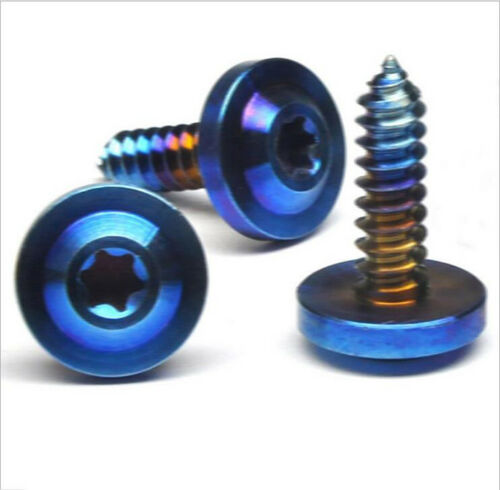
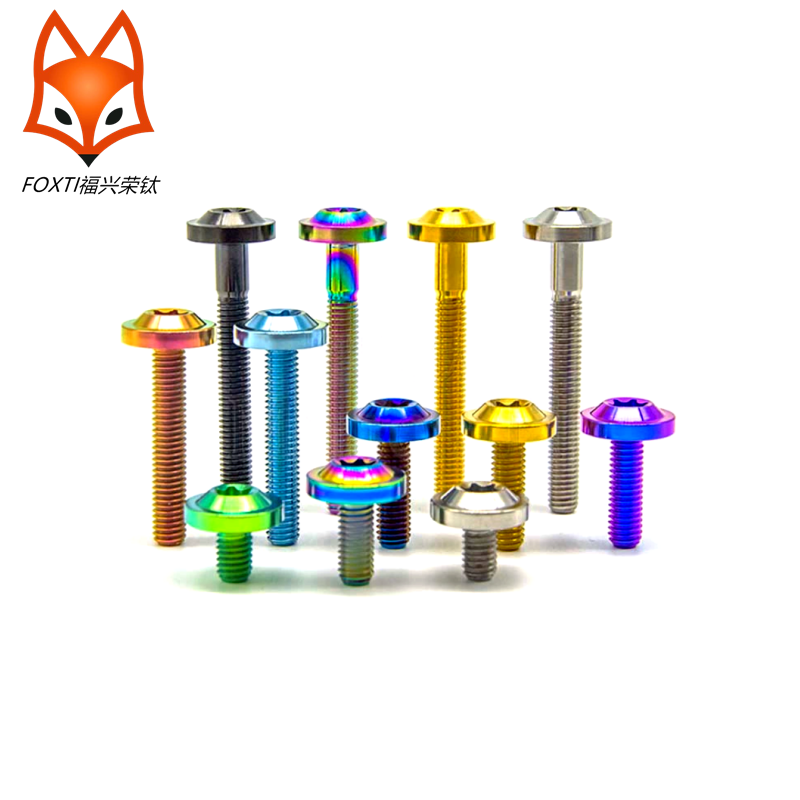
We operate cleanroom multi-stage electrolytic anodizing tanks and high-vacuum cathodic arc PVD coaters. Color uniformity (including Burned Blue, Rainbow, Gold, Purple, and Obsidian Black) is monitored via spectrophotometers to ensure batch-to-batch consistency.
Every production run passes 100% thread ring/plug gauge verification, optical projector dimension checks, tensile load failure analysis, and salt spray testing. Comprehensive inspection documentation accompanies each shipment.
Whether you require bespoke reverse-engineered hardware kits, race-spec safety wire bolt arrays, or specialized CNC components from M2 micro-screws up to M26 heavy-duty wheel studs, our engineering department provides rapid CAD verification, rapid prototyping, and scalable low-MOQ production.
Authoritative answers addressing mechanical properties, torque engineering, surface finishes, galling prevention, quality protocols, and B2B ordering terms.
Grade 5 (Ti-6Al-4V) titanium exhibits an elastic modulus of approximately 114 GPa, roughly half that of structural steel (210 GPa). When tightening a titanium bolt to achieve the required pre-load clamping force, the fastener will stretch more under equivalent elastic loading. As a baseline engineering practice, Grade 5 titanium bolts can safely handle torque values similar to standard Class 10.9 steel fasteners (and well beyond Class 8.8). However, because titanium’s friction coefficient against aluminum or steel interfaces is slightly higher, we recommend applying an anti-seize paste (containing copper, nickel, or molybdenum disulfide) and tightening to approximately 85% to 90% of the dry OEM steel torque rating. This prevents localized thread binding while ensuring the assembly remains firmly clamped under operational vibration.
Thread galling occurs when two titanium surfaces rub under high clamping loads without an adequate lubricating barrier, breaking the microscopic $TiO_2$ passive layer and causing micro-welds between the threads. Verqo counters this issue through three manufacturing measures: First, our cold-rolled thread manufacturing produces smooth root and crest surface finishes down to Ra ≤ 0.4 μm, minimizing microscopic asperities. Second, our PVD coatings (such as TiN, TiCN, and DLC) deposit an ultra-hard ceramic barrier layer that keeps raw titanium metals from touching directly. Third, we provide anti-galling thread dry-lubrication films or high-pressure assembly pastes on demand for our custom-packaged pre-assembled automotive and motorcycle hardware kits.
Anodizing titanium is an electrochemical oxidation process that alters the thickness of the transparent titanium oxide ($TiO_2$) surface layer. The perceived colors (such as Gold, Purple, Electric Blue, and Green) result from light-wave refraction and interference without any added pigments or dyes. While anodizing is cost-effective and provides clean aesthetic results, it does not significantly increase surface hardness. In contrast, Physical Vapor Deposition (PVD) is a high-vacuum plasma deposition process that bonds ceramic vapor molecules (like Titanium Nitride or Carbon) directly onto the workpiece. PVD creates hard, durable films (over 2,500 HV) that resist scratches, gravel strikes, brake dust abrasion, and harsh road cleaners. We typically recommend PVD finishes for high-wear areas like wheel lug nuts, brake rotor disc bolts, and footpeg hardware.
Yes. OEM and ODM customization is our core manufacturing specialty. Our technical engineering division routinely handles custom production directly from CAD files (STEP, IGES, SolidWorks, DWG, PDF). In cases where formal CAD data is unavailable, overseas clients can send original OEM hardware samples to our Baoji facility. Our metrology lab utilizes coordinate measuring machines (CMM), optical video measuring projectors, and thread pitch micrometers to reverse-engineer the component's geometry, thread profiles, and tolerances. We typically provide digital 2D production drawings within 24 hours for customer approval before machining prototypes.
Because we operate flexible CNC production cells alongside high-volume continuous thread rolling setups, our MOQ policy accommodates both boutique custom builders and large wholesale distributors. For standard catalog fastener sizes kept in regular warehouse inventory, the MOQ can start as low as 10 to 20 pieces. For custom CNC machined parts, special thread designs, or unique head profiles, the standard MOQ typically runs between 50 and 100 units. Prototype sample batches are normally manufactured and shipped within 5 to 7 working days, while full OEM mass production orders are typically completed and dispatched within 15 to 25 business days, backed by express air or sea freight arrangements.
Titanium is very noble on the galvanic scale. When bare titanium hardware touches less noble metals (such as 6061 or 7075 aluminum alloys) in the presence of an electrolyte like salt water, the aluminum can experience accelerated galvanic corrosion while the titanium remains unaffected. Conversely, pairing steel bolts with carbon fiber composites often leads to severe rust, whereas titanium is naturally safe and compatible with carbon fiber because their electrode potentials are closely matched. To prevent galvanic issues when threading titanium into raw aluminum housings, we recommend applying a barrier sealant, an anti-corrosion paste, or specifying our PVD-coated bolts, which create an insulating ceramic layer between the dissimilar metals.
Every commercial production batch is accompanied by comprehensive quality records. This includes an EN 10204 3.1 Material Test Report (MTR) detailing the specific chemical melt composition (Al, V, Fe, C, O, N, H levels) and mechanical test metrics (Yield Strength, Tensile Strength, Elongation Percentage, Hardness). Furthermore, we provide dimensional inspection sheets, optical thread gauge pass/fail certificates, and salt spray test documentation on request. Full heat-lot tracking numbers are laser-engraved or indexed onto our master packaging boxes, enabling transparent supply chain verification from the raw bar mill all the way to end installation.
Verqo supports standard international commercial trade terms, including EXW, FOB, CFR, CIF, and DDP (Delivered Duty Paid directly to your distribution center). For financial settlements, we accept international Wire Transfers (T/T), Irrevocable Letters of Credit at sight (L/C), and secure digital portals (PayPal or credit cards) for sample prototypes and initial pilot runs. For qualified long-term B2B contractual distributors, open account and credit-deferred settlement terms are open for review through our commercial finance department.
Download our complete product series catalog or start a direct technical consultation with our engineering team in Baoji.
Get Catalog