High-Performance Titanium Hardware & Articulating Linkage Solutions
From aerospace-spec spherical rod ends and Heim joints to extreme-duty disc rotor bolts and knurled structural locknuts, each component is CNC machined from premium mill-certified Grade 5 (Ti-6Al-4V) bar stock to guarantee zero-defect field reliability.
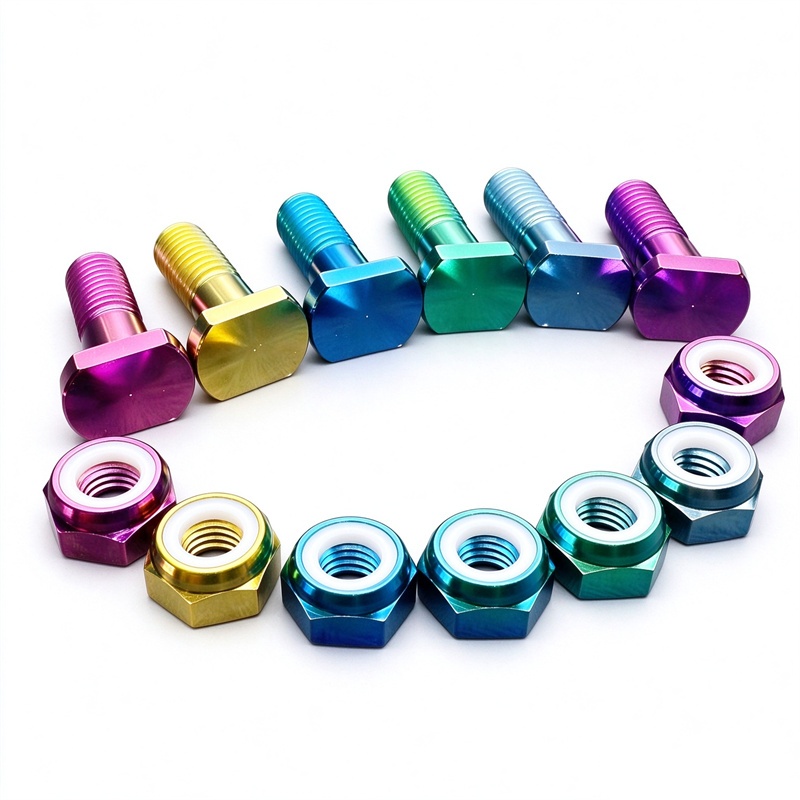
Custom Factory Polished Colorful Gr5 Titanium Alloy Motorcycle Disc Rotor Bolt and Nut Colorful for Ducati
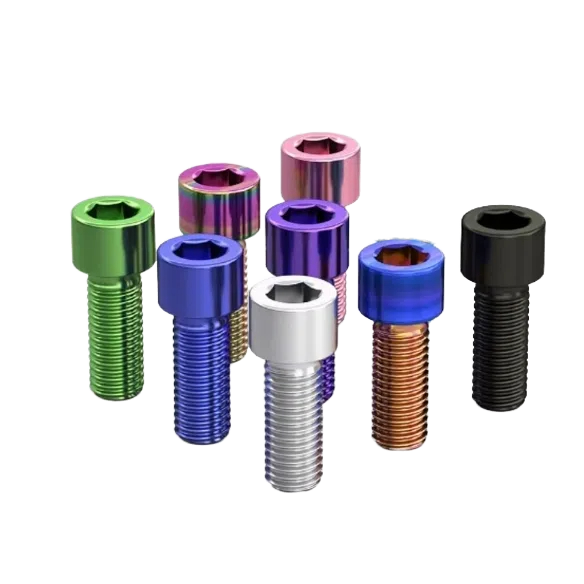
Gr5 Anodized Colored M3-M8 Titanium Alloy CNC Cap Socket Bolts for Motorcycle Bicycle RC Car Automobile
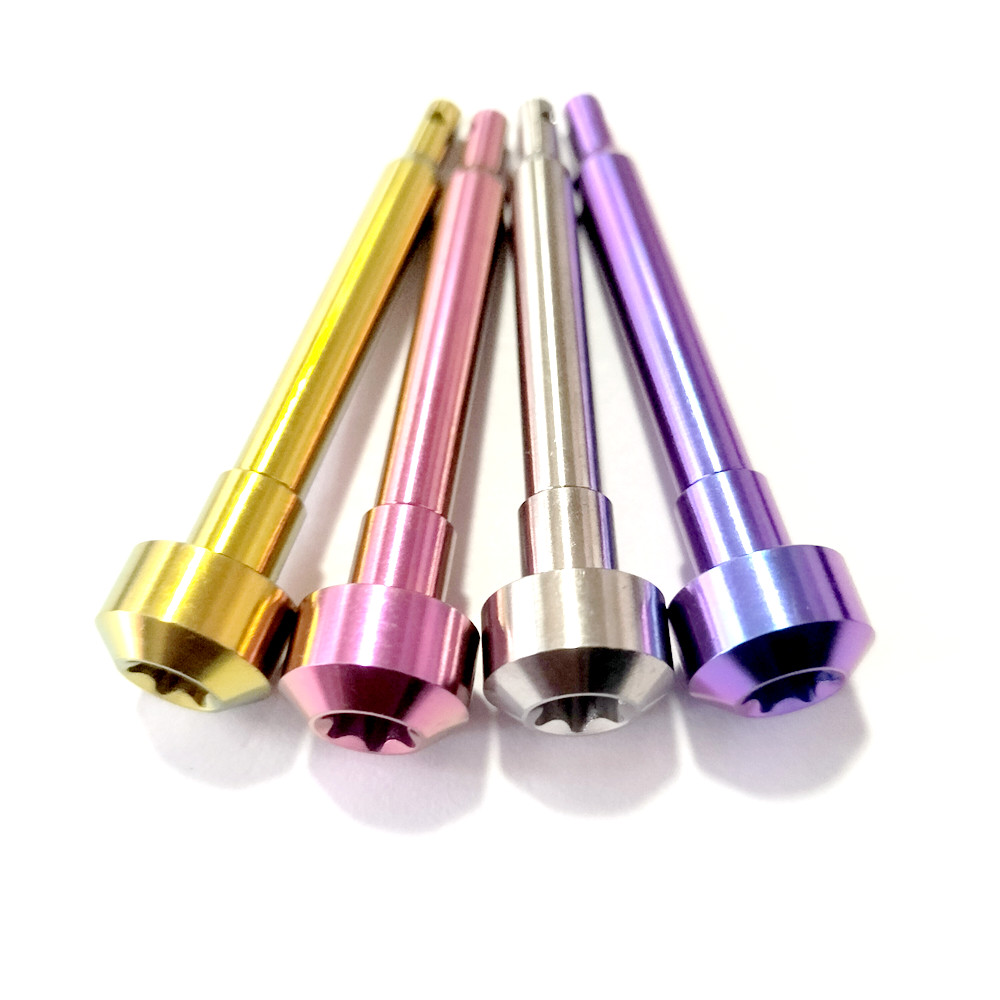
Best Price Baut Titanium Alloy Grade 5 Socket Head M8x20 Motor Race Parts Screws Bolts PVD Finish
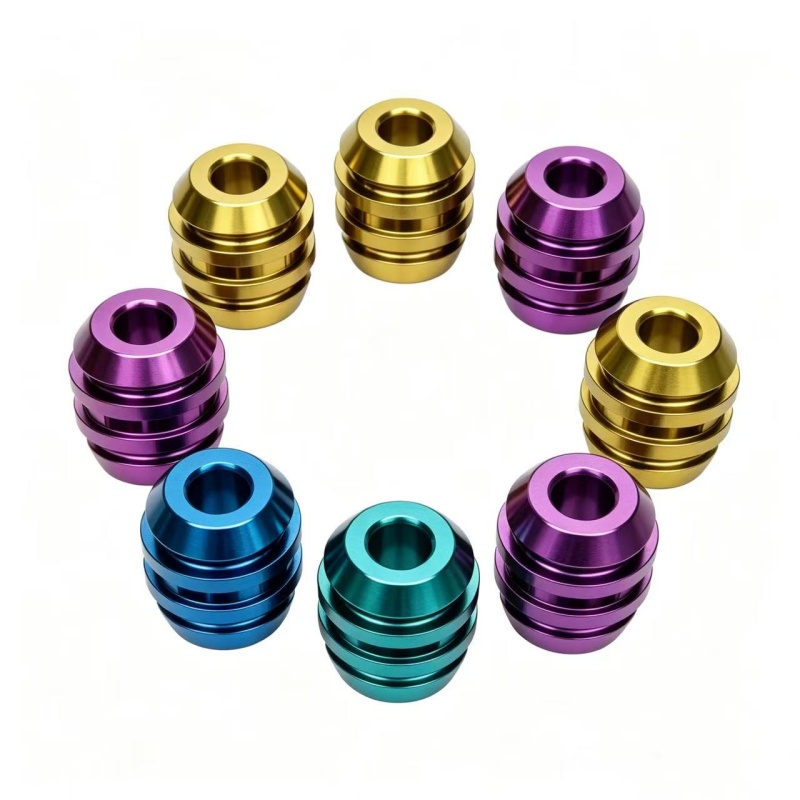
FOXTI Gr5 Titanium Alloy Custom Colorful PVD Coated Corrosion Resistant EDC Lanyard Beads 6mm/8mm Hole Pendant Beads for Knife
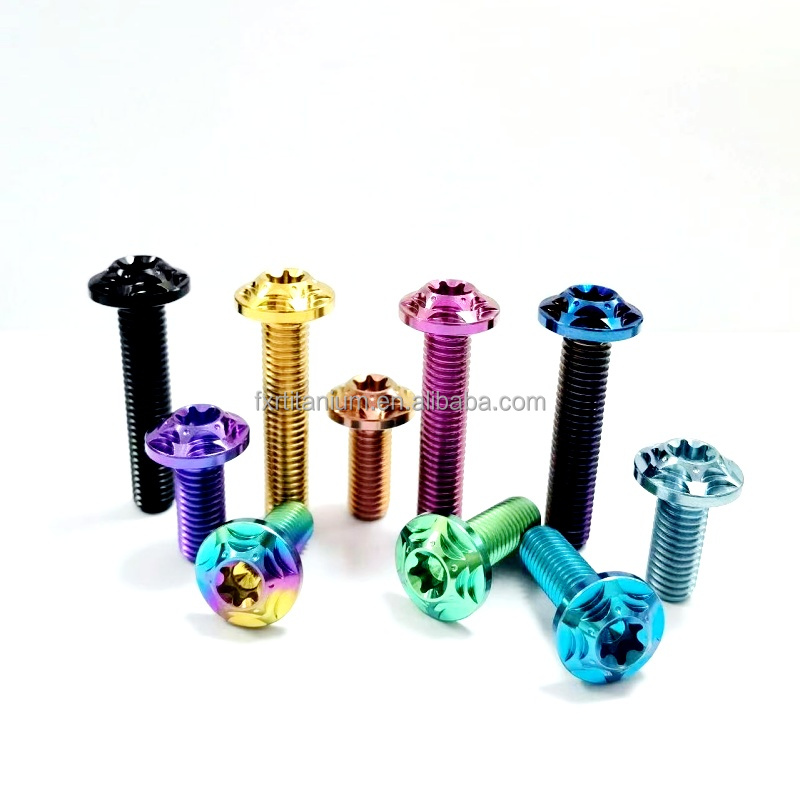
GR5 Titanium Bolt Big Head Bike Motorcycle Accessories Fancy Torx Titanium Baut Screw Disc CNC Umbrella Head Ti Bolts
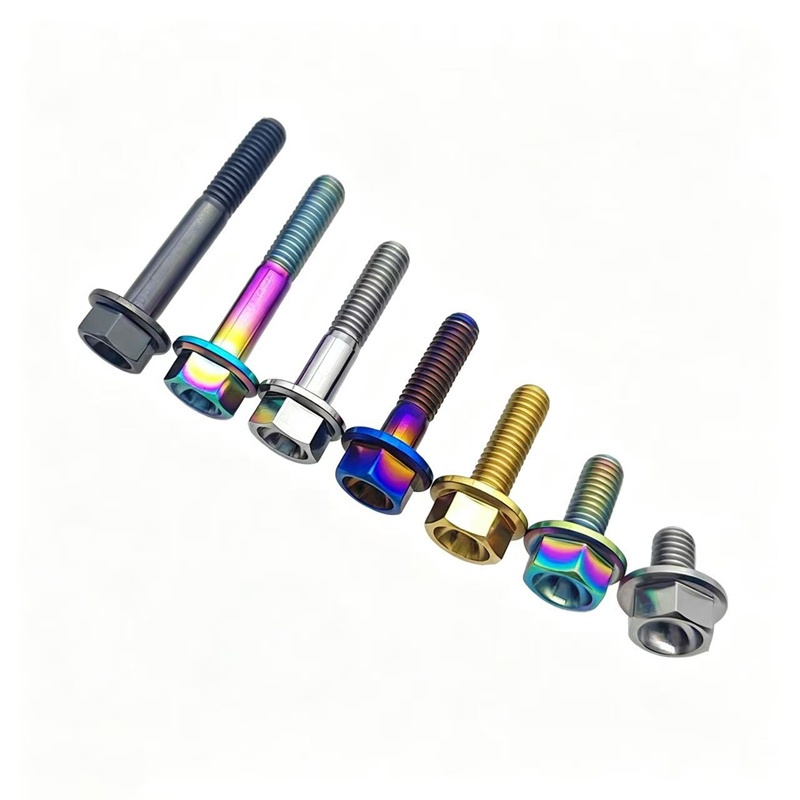
Factory Director 6X20 M5/M6 /m8/m10/m12/m14 Hex Head Flange Titanium Bolts for Motorcycle Automotive
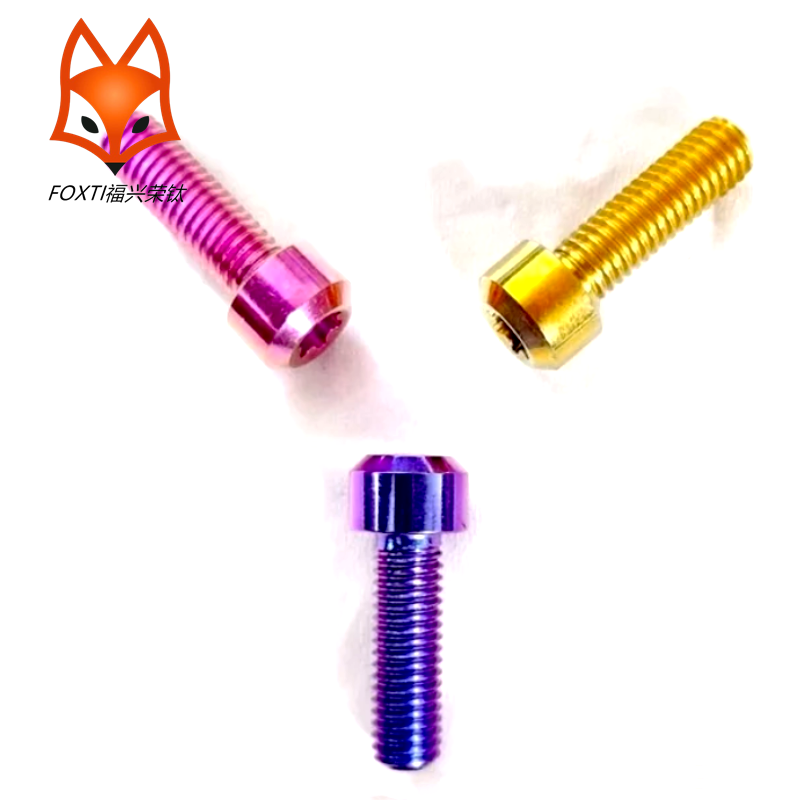
Factory Customized SHSC Head Small Motorcycle Modification Bolts ISO Standard Baut Ducati for Honda Yamaha GR5 Steel Plain
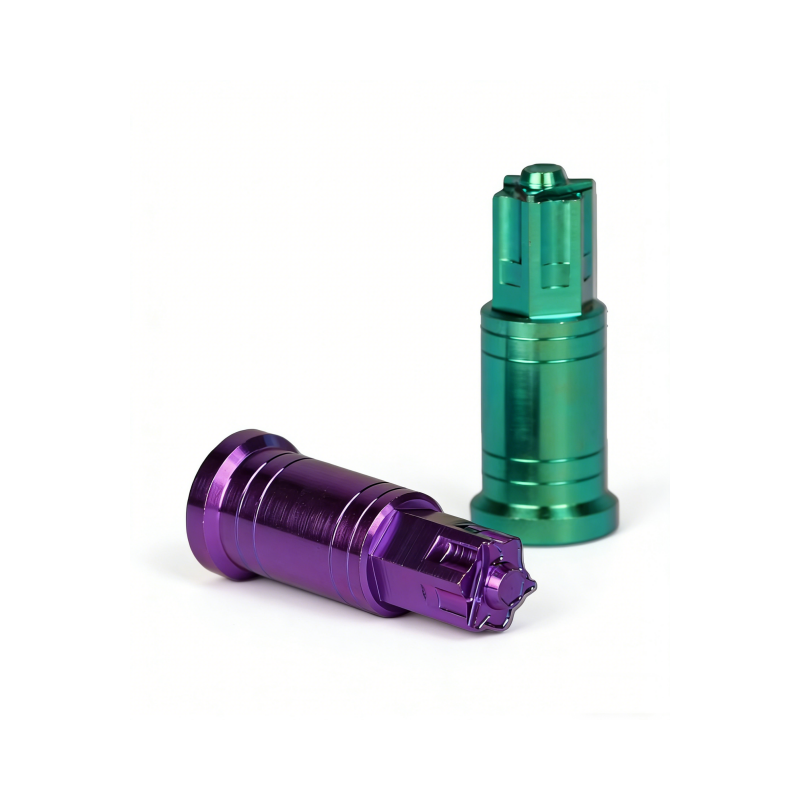
Factory Customized Color Size M6 M8 M10 GR5 Hex Head Polished Motorcycle Titanium Alloy Knurled Extended Nut Grade 10.9/12.9
Engineering Whitepaper: Tribology & Mechanical Integrity of Titanium Rod Ends
Precision spherical rod ends, commonly designated as Heim joints or rose joints, serve as critical mechanical articulation junctures in high-deflection steering, suspension wishbones, sway bar end-links, and aerospace actuation systems. In severe dynamic environments characterized by high-frequency oscillatory motion, cyclic shock loading, and harsh atmospheric exposure, conventional alloy steel or chromoly (4130/4340) components exhibit severe weight penalties and progressive galvanic or pitting oxidation. Verqo Titanium engineers spherical rod ends utilizing aerospace-grade Ti-6Al-4V (Grade 5, annealed to AMS 4928 standards), delivering an unmatched strength-to-weight ratio coupled with extreme fatigue endurance.
The operational longevity of a titanium rod end hinges on two core tribological and metallurgical factors: body structural integrity under combined tension-bending loads, and the interface friction coefficient between the inner spherical ball and the outer housing raceway. Our precision CNC multi-axis Swiss turn machining protocols allow dimensional tolerances maintained within ±0.005 mm (±0.0002 in), eliminating micro-lash play while accommodating maximum angular misalignment angles up to 24 degrees without structural bind.
| Material Designation | Yield Strength (MPa) | Tensile Strength (MPa) | Density (g/cm³) | Fatigue Limit (10&sup7; cycles) | Corrosion Resistance |
|---|---|---|---|---|---|
| Ti-6Al-4V Grade 5 (Verqo Spec) | 828 – 910 | 895 – 1000 | 4.43 | 510 MPa (Smooth) | Immune to Salt Spray & Road Brine |
| 4130 Chromoly (Heat Treated) | 780 – 860 | 900 – 980 | 7.85 | 420 MPa | Susceptible to Rust; Requires Cadmium/Zinc |
| 7075-T6 Billet Aluminum | 503 | 572 | 2.81 | 160 MPa (Notch Sensitive) | Anodized only; Stress Corrosion Cracking prone |
| 316L Stainless Steel | 290 | 580 | 8.00 | 260 MPa | Excellent; Lower Structural Strength |
To eliminate metal-to-metal galling—a known mechanical characteristic of titanium sliding contacts—Verqo rod ends integrate an engineered three-piece composite construction. The titanium housing encloses a self-lubricating, chemically bonded polytetrafluoroethylene (PTFE) matrix reinforced with woven Kevlar fibres compliant with AS81820 specifications. The articulating spherical ball is precision centerless ground from either 52100 chrome steel with physical vapor deposition (PVD) diamond-like carbon (DLC) coating, or solid Grade 5 titanium finished with vacuum titanium carbonitride (TiCN). This tribological combination maintains a dynamic friction coefficient below μ = 0.04 under unlubricated dry running conditions, completely mitigating maintenance overhead in dirt-track racing, high-performance GT vehicles, and unmanned aerial vehicles (UAVs).
Future Procurement Trends for Titanium Rod Ends & Chassis Fasteners
As global supply chains pivot toward localized risk management, decarbonization mandates, and extreme mechanical efficiency, enterprise procurement directors must navigate significant technological and logistical evolutions.
Electric Powertrain Unsprung Mass Optimization
Heavy traction batteries in high-performance EVs and hybrid hypercars necessitate radical weight savings across the entire corner suspension assembly. Shifting from steel rod ends and suspension bolts to Grade 5 titanium reduces unsprung reciprocating mass by 43%, delivering instantaneous shock dampener responsiveness, reduced tire degradation, and optimized regenerative braking efficiency.
Full Digital Traceability & EN 10204 3.1 Verification
Tier-1 automotive and aerospace buyers are deprecating suppliers lacking full heat-lot traceability. Modern contracts mandate comprehensive 3.1 chemical spectrometry, eddy-current non-destructive testing (NDT), and documented tensile break-load proof charts. Sourcing directly from Baoji ensures ingot-to-part provenance, preventing counterfeit lower-tier CP titanium substitution.
Shift Toward Standardized Modular Sub-Assemblies
Instead of ordering disparate bare rod ends, jam nuts, right-and-left threaded turnbuckles, and high-misalignment spacers across different vendors, procurement teams are consolidating orders into unified, factory-assembled articulating tie-rod assemblies. This slashes assembly line labor by 35% and guarantees matched thread clearances without binding.
Technological Trends Shaping Titanium Machining & Spherical Bearings
Overcoming the historical challenges of machining high-purity titanium alloys requires continual investment in specialized cutting geometries, tooling coatings, and metallurgical surface modifications.
Cryogenic High-Pressure Coolant CNC Turning
Titanium exhibits low thermal conductivity, concentrating extreme heat at the cutting edge. Verqo deploys 70-bar high-pressure cryogenic liquid nitrogen and micro-droplet emulsion directly at the tool-workpiece interface during Swiss lathe turning. This prevents work hardening, increases dimensional repeatability to sub-micron scales, and delivers super-smooth Ra 0.2 μm surface finishes.
Thread Rolling Technology Over Cutting
Unlike single-point cut threads that sever metallurgical grain flow lines, our precision rolled threads (covering M2 to M26 and UNJF/UNEF classes) cold-forge the titanium material. This work-hardens the thread root radius by 20%, yields a polished burnished root finish, and multiplies dynamic fatigue life by over 300% under cyclic tensile shock.
Advanced PVD & Multi-Arc Vacuum Deposition
Beyond traditional cosmetic anodizing, physical vapor deposition (PVD) layers like TiAlN (Titanium Aluminum Nitride) and DLC (Diamond-Like Carbon) are vacuum-bonded onto structural wear faces. Producing a microscopic surface hardness exceeding 3,000 Vickers (HV), this eliminates abrasion wear from gritty sand, track salt, and fine abrasive contaminants.
Finite Element Stress & Resonant Simulation
Every rod end casting or forged body profile undergoes rigorous FEA (Finite Element Analysis) topological optimization. Excess material is machined away from non-critical stress zones while retaining thick, reinforced hoop stress walls around the spherical eyelet, achieving structural minimalism with safety factors exceeding 2.5x under max static radial loads.
Why Tier-1 Global Engineers Source Directly with Verqo
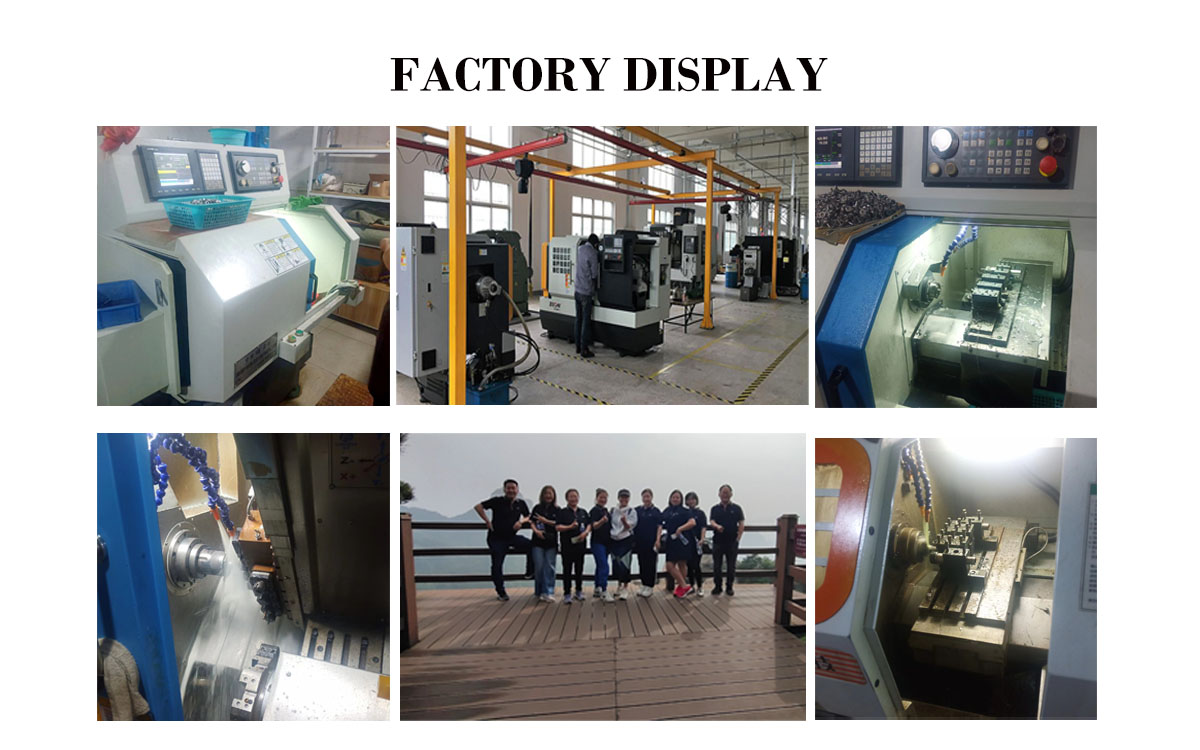
Headquartered in Baoji, Shaanxi—universally recognized as China's "Titanium Valley"—Verqo combines raw material sovereignty, a 2,000 m² specialized CNC precision facility, and rigorous in-house metallurgical testing.
Direct Access to Baoji Titanium Raw Material Hub
Direct integration into China's premier titanium industrial cluster guarantees pure sponge titanium smelting, consistent vacuum arc remelting (VAR), and verified AMS/ASTM chemistry with zero porosity or trace contamination.
Full-Spectrum In-House CNC Swiss Machining & Finishing
Equipped with modern multi-axis CNC lathes, high-precision thread rolling machines, ultrasonic degreasing stations, and specialized PVD/anodizing treatment lines under one roof to maintain end-to-end quality custody.
Rigorous Dimensional Metrology & Proof Load Verification
Every production batch is audited via optical comparators, 3D Coordinate Measuring Machines (CMM), Go/No-Go thread pitch micrometer gauges, and destructive hydraulic tensile pull benches prior to export packaging.
Engineering-First OEM/ODM Collaboration & Rapid MOQ
Experienced technical sales staff providing comprehensive DFM (Design for Manufacturability) advice, drawing approvals within 12 hours, and flexible pilot batch runs starting at just 10 to 50 pieces for custom prototypes.
Frequently Asked Questions: Sourcing Titanium Rod Ends & Hardware
Comprehensive metallurgical, engineering, and supply chain insights to assist design engineers and technical purchasing agents in selecting optimal titanium components.
Why choose Ti-6Al-4V Grade 5 over commercially pure (CP) titanium for rod ends?
Commercially Pure (CP) titanium grades (such as Grade 2) offer exceptional chemical corrosion resistance but possess a yield strength of only ~275 MPa, rendering them entirely unsuitable for structural, load-bearing mechanical linkages. Grade 5 (Ti-6Al-4V) is an alpha-beta alloy containing 6% aluminum and 4% vanadium, achieving a tensile yield strength of 828–910 MPa. This structural capability matches or surpasses high-grade carbon and 4130 steel while reducing total assembly weight by 43%.
How does Verqo prevent thread galling during installation and high-torque operation?
Titanium naturally develops a self-healing micro-thin oxide passive film that, under extreme friction and high pressure, can cause molecular micro-welding (galling) with mating components. We mitigate this through two distinct strategies: first, by rolling threads to produce a mirror-polished micro-finish that significantly reduces microscopic friction asperities; second, by recommending or pre-applying high-temperature nickel-free anti-seize paste, or applying dry-film lubricated PVD coatings on thread flanks.
Can you produce both right-hand and left-hand (reverse) thread configurations?
Yes. Tie-rods, sway bar linkages, and chassis wishbone adjustments require opposite threads for on-car turnbuckle length adjustments. We regularly machine male and female imperial threads (UNF/UNJF from #10-32 up to 1"-14) and metric fine-pitch threads (M3x0.5 up to M26x1.5). Left-hand reverse threads are precision marked with a machined identifier groove on the body shank for instant assembly line identification.
What are the standard radial and axial load ratings for your titanium Heim joints?
Radial static load capacities range from 4,500 lbs (20 kN) for compact M6/M8 motorsport rod ends up to 48,000+ lbs (213 kN) for heavy-duty 3/4" and 1" off-road suspension links. Axial load ratings are systematically rated at 15% to 25% of maximum radial capacity, depending on the internal ball retainer design and self-lubricating PTFE liner retention flange geometry. Detailed test charts are furnished upon request.
How do self-lubricating PTFE/Kevlar lined rod ends perform in wet and muddy racing?
Our injected or swaged PTFE/Kevlar composite liner bonds seamlessly with the internal spherical raceway, conforming to AS81820 standards. Unlike nylon-seated or greased joints that attract abrasive sand particles and deteriorate rapidly, the dry self-lubricating matrix transfers a microscopic low-friction barrier film directly onto the spherical ball. This ensures zero stick-slip behavior, dampens high-frequency chassis vibrations, and requires no grease fittings.
What documentation and mill certificates accompany export shipments?
Every commercial and custom shipment from Verqo is backed by full EN 10204 3.1 Material Test Reports (MTR). These verify exact chemical composition analysis via optical emission spectrometry, mechanical tensile and yield testing, elongation percentages, and heat-treat lot traceability. Dimensional inspection check-sheets, surface roughness reports, and salt spray exposure records are available upon project specification.
What are your typical production lead times and minimum order quantities (MOQ)?
For standard high-demand titanium fasteners, flange bolts, and standard-sized rod ends kept in raw billet stock, sample batches ship within 3–7 business days. Custom engineered configurations built from customer 2D/3D CAD drawings typically require 2–3 weeks for prototyping and 3–4 weeks for volume production. Our MOQ is highly adaptable: prototyping runs start from 10–50 pieces, scaling seamlessly to full OEM contracts exceeding 100,000 units.
What surface coating options are available for extreme corrosion or aesthetic needs?
We provide mirror hand polishing, micro-bead blasted matte satin, multi-spectral electrical anodizing (delivering vivid, fade-resistant gold, royal blue, burnt purple, and rainbow oil-slick hues), and advanced Physical Vapor Deposition (PVD) vacuum hard coatings. PVD options include titanium nitride (TiN - gold), titanium carbonitride (TiCN - bronze), and ultra-hard Diamond-Like Carbon (DLC - deep jet black) for supreme abrasive scratch immunity.
Accelerate Your Engineering Project with Certified Titanium Linkages
Whether you require customized CAD/CAM titanium spherical rod ends for motorsport chassis development, race-spec rotor bolts, or high-volume OEM linkage fasteners, Verqo's Baoji engineering facility delivers precision-machined perfection. Request a rapid technical quote and comprehensive hardware catalog today.