Featured Titanium Hardware & Fasteners
Explore our precision-machined Grade 5 titanium fasteners engineered for extreme thermal endurance, weight reduction, and superior corrosion resistance across automotive, motorcycle, and racing platforms.
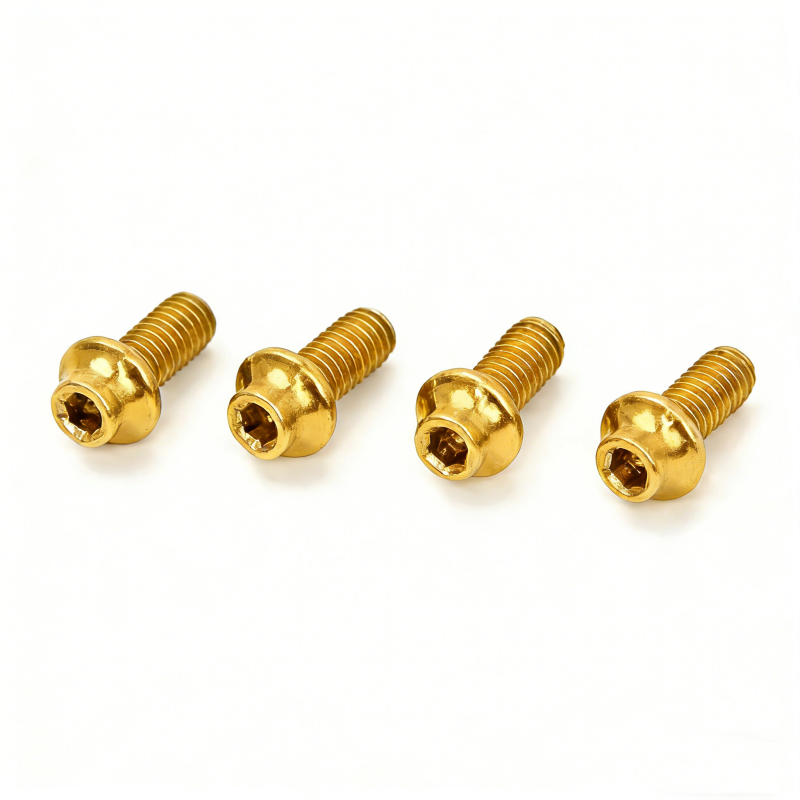
GR5 M2 M3 M4 Anodized Rainbow UFO Cone Head Titanium Screw
View Details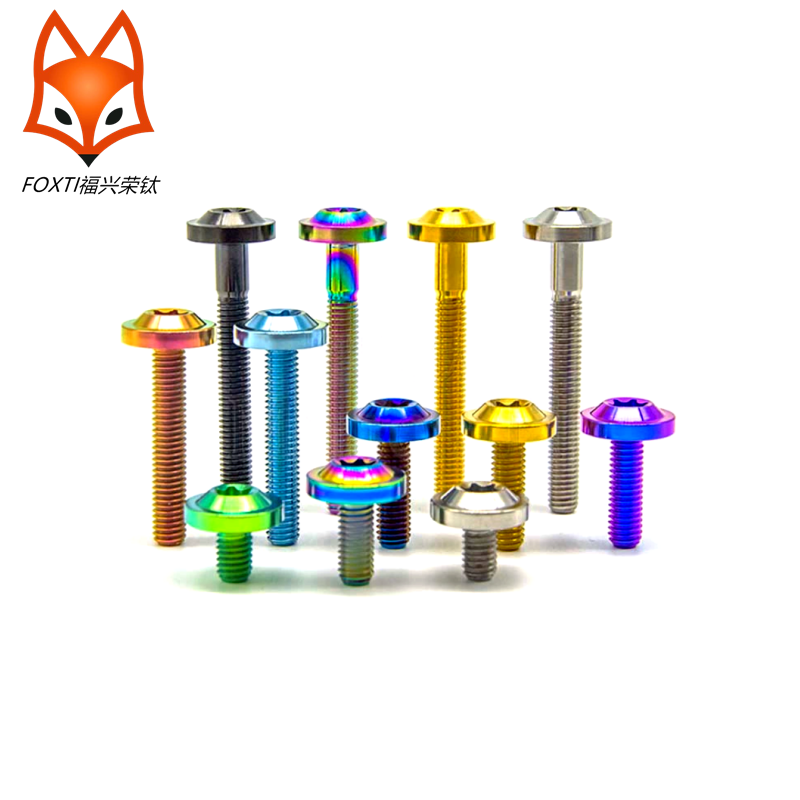
Grade 5 Titanium Alloy Torx Disc Head Bolts M6/M8/M10 Set
View Details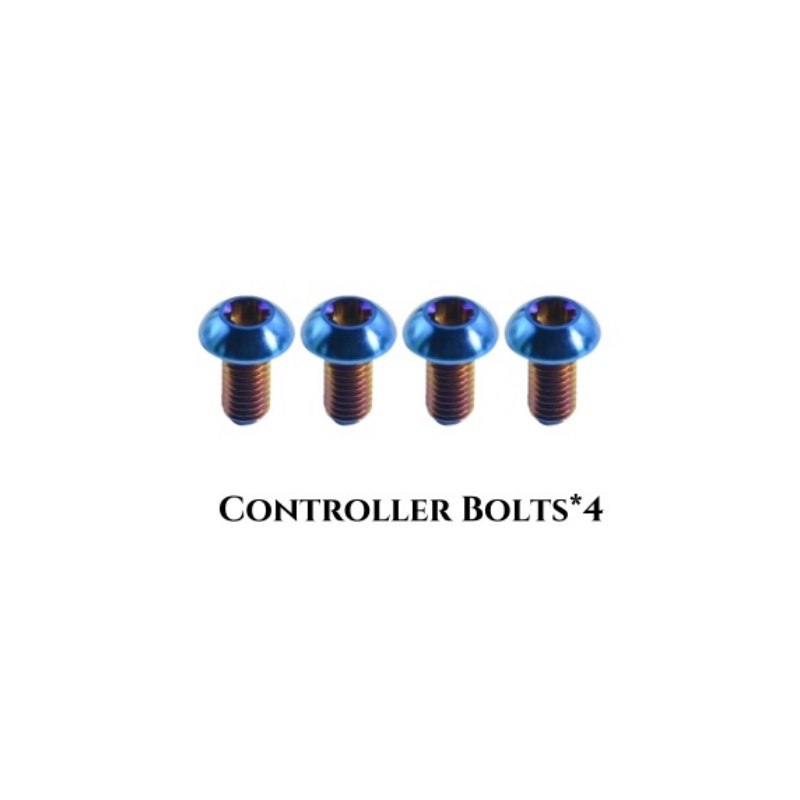
Class 10.9/12.9 Grade Vacuum Coated Titanium Controller Bolts
View Details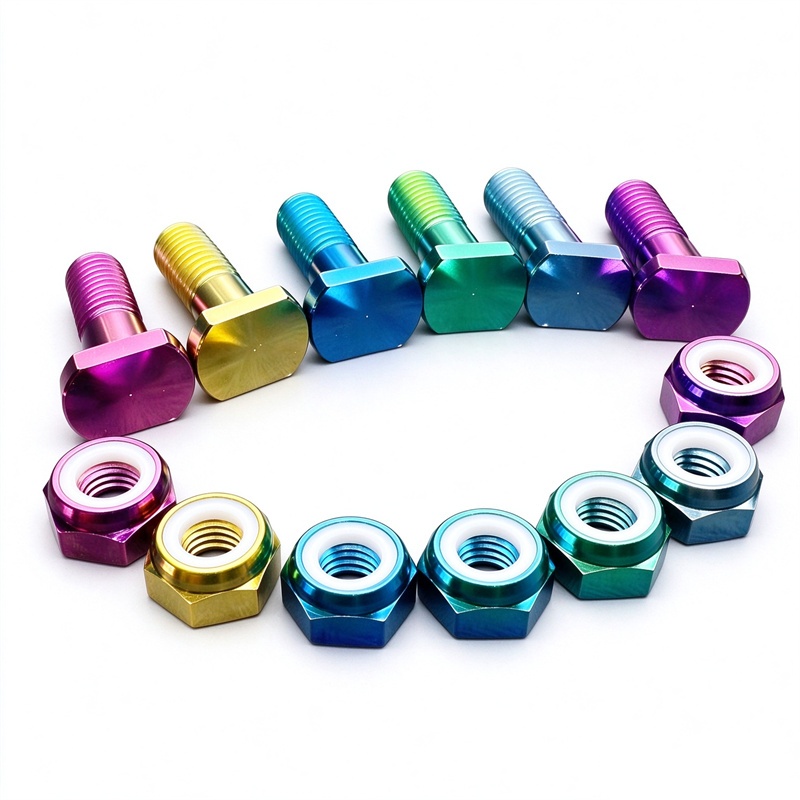
Polished GR5 Titanium Alloy Motorcycle Disc Rotor Bolt & Nut Kit
View Details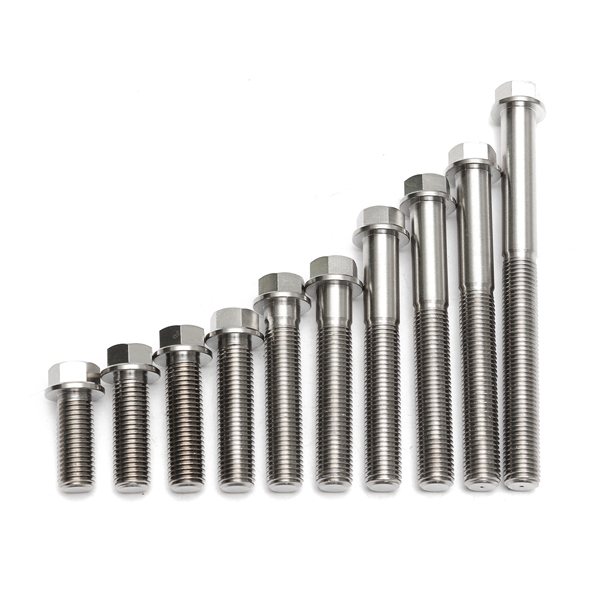
GR5 Titanium Hex Flange Bolts M6/M8/M10 Automotive Race Hardware
View Details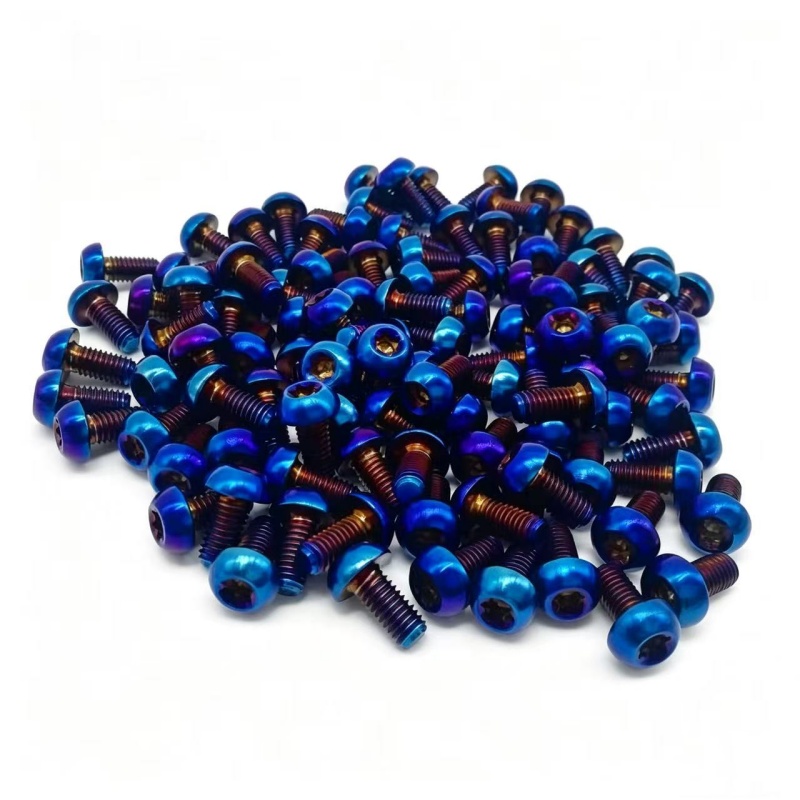
Burnt Blue Button Socket Head Titanium Alloy Bolts Class 10.9
View Details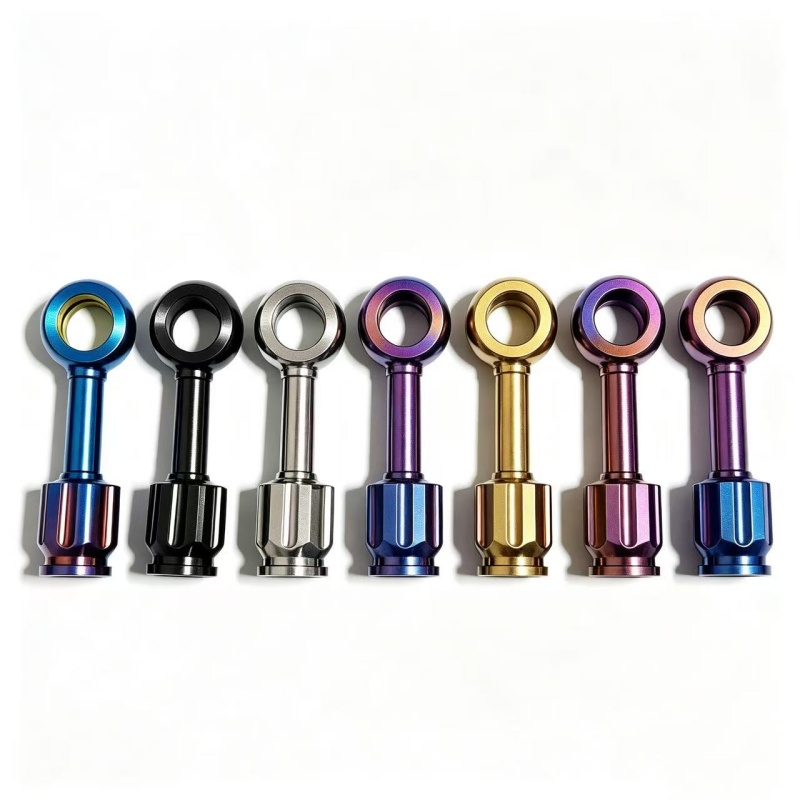
Titanium Alloy AN3 Brake Hose Crimp Connector Oil Line Fitting
View Details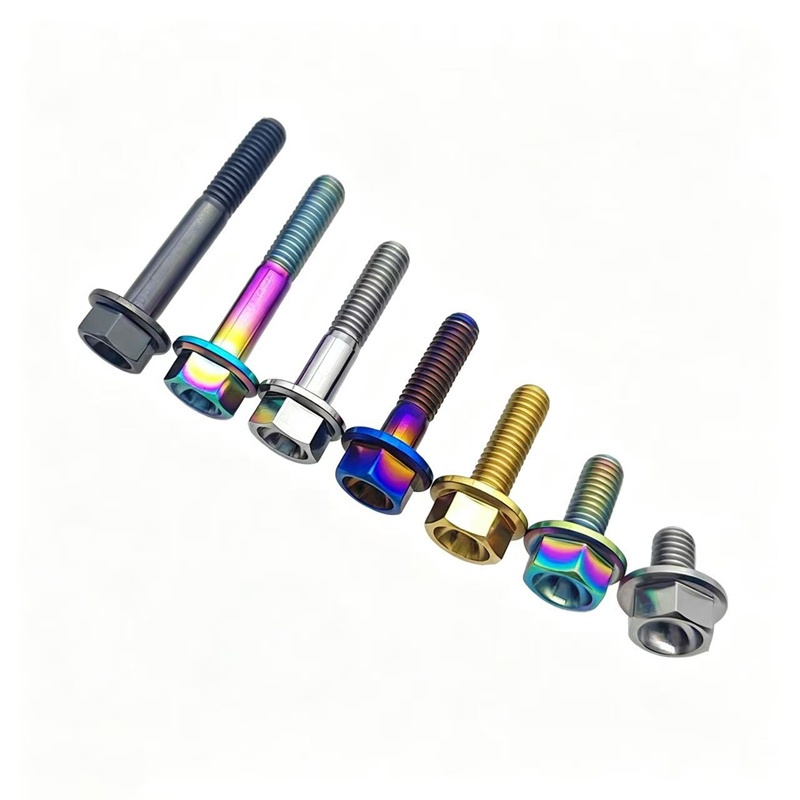
M5/M6/M8/M10/M12 Hex Head Flange Titanium Hardware Kit
View DetailsEngineering Whitepaper: Why Grade 5 Titanium Dominates High-Temperature Turbocharger & Exhaust Applications
In modern turbocharged internal combustion engines, performance tuning, and motorsport engineering, the turbocharger-to-manifold connection represents one of the most mechanically and thermally stressed junction points in the entire powertrain. Conventional OEM and aftermarket exhaust manifold studs made from carbon steel, Class 8.8/10.9 alloy steel, or standard 304/316 stainless steels frequently fail due to extreme thermal cycling, oxidation, thermal expansion mismatch, and severe corrosion (rust locking).
As a specialized manufacturer located in Baoji ("China Titanium Valley"), Verqo Titanium Products Co., Ltd. produces race-spec Grade 5 Titanium (Ti-6Al-4V) Turbo Studs designed specifically to mitigate these critical failure modes. By replacing steel studs with CNC-machined titanium hardware, automotive engineers and performance builders gain substantial performance advantages across thermal fatigue resilience, strength-to-weight optimization, and lifelong maintenance serviceability.
Key Engineering Gain: Grade 5 Titanium (Ti-6Al-4V) exhibits an yield strength exceeding 828 MPa and an ultimate tensile strength over 895 MPa—outperforming Grade 8.8 steel while delivering a 43% weight reduction and near-zero coefficient of thermal degradation up to 500°C (932°F).
Critical Mechanical Failure Modes Solved by Titanium Turbo Studs
1. Prevention of Thermal Expansion Stretching
Cast iron manifolds and stainless steel turbo housings expand dramatically under boost. Steel studs stretch past their elastic limit during heat soak, causing loose turbo flanges and blown gaskets. Titanium's balanced coefficient of thermal expansion ($8.6 \times 10^{-6}/^\circ\text{C}$) maintains consistent clamping force across severe hot-cold cycles.
2. Complete Elimination of Rust & Galling Seizure
Exhaust gas condensate, road salt, and ambient moisture rapidly oxidize steel threads, seizing nuts onto studs and snapping threads during maintenance. Titanium naturally forms a passive titanium dioxide ($TiO_2$) ceramic oxide film, making it completely impervious to atmospheric rust and chemical corrosion.
3. Rolled Thread Fatigue Resistance
Verqo employs precision CNC cold-rolling rather than cut-threading for all titanium turbo studs. Rolled threads compress the grain structure along continuous flow lines, boosting fatigue strength by over 30% compared to cut threads and resisting vibration-induced stud snapping.
Material Benchmark: Grade 5 Titanium vs. Alternative Fastener Alloys
Selecting the optimal fastener alloy requires balancing tensile strength, density, thermal expansion, and corrosion resistance. The data matrix below demonstrates why Grade 5 Titanium is preferred by professional engine builders over steel and stainless alternatives:
| Performance Parameter | Grade 5 Titanium (Ti-6Al-4V) | Inconel 718 | Class 10.9 Alloy Steel | 304 Stainless Steel |
|---|---|---|---|---|
| Density ($g/cm^3$) | 4.43 Lightest | 8.19 | 7.85 | 8.00 |
| Tensile Strength (MPa) | 895 – 1000 | 1240 – 1380 | 1040 | 515 – 620 |
| Yield Strength (MPa) | 828 – 910 | 1100 | 940 | 205 – 310 |
| Thermal Expansion ($10^{-6}/^\circ\text{C}$) | 8.6 | 13.0 | 11.7 | 17.2 |
| Corrosion Resistance | Immune to Rust | Excellent | Poor (Requires Plating) | Moderate (Galls under Heat) |
| Magnetic Property | Non-Magnetic | Non-Magnetic | Magnetic | Slightly Magnetic |
| Ideal Application Zone | Turbo Fasteners, Exhaust Studs, Lug Nuts | Extreme Race Exhaust (>800°C) | Internal Engine Components | Decorative / Low Temp Trim |
Future Trends in Titanium Turbo Stud Manufacturing & Fastening Technology
As global engine downsizing, hybrid turbocharging, and extreme-boost performance tuning accelerate, fastener requirements are evolving rapidly. Verqo Titanium is driving innovation across four core development frontiers.
1. Advanced PVD Vacuum Coating & Anti-Galling Surface Nano-Layers
Historically, titanium-on-titanium or titanium-on-steel contact posed a risk of galling at high installation torque. Next-generation titanium turbo studs utilize PVD (Physical Vapor Deposition) ceramic nano-coatings such as TiAlN (Titanium Aluminum Nitride) and DLC (Diamond-Like Carbon). These vacuum coatings increase thread surface hardness up to HV 2500, drastically reduce friction coefficients, and permit repeated torque cycles without anti-seize paste degradation.
2. Smart Hex Drive & Dog-Point Alignment Features
Modern turbo stud designs are shifting from basic double-ended threaded rods toward specialized geometries. Incorporating internal Hex/Torx socket drives at the stud nose enables precise, rapid installation with calibrated torque wrenches. Additionally, unthreaded "dog-point" pilot tips prevent cross-threading into cylinder heads and turbo manifolds during high-speed production line or tight engine-bay service work.
3. Cross-Industry Adoption: From Motorsport to Hybrid Fleets
While titanium turbo hardware was historically reserved for top-tier Formula racing, GT3 motorsport, and high-end tuning, aggressive OEM automotive weight reduction goals and high-duty commercial hybrid powertrains are broadening adoption. Reducing engine hardware mass lowers vehicle inertia and overall unsprung weight, helping automotive engineers meet stringent corporate fleet emissions and fuel economy standards.
4. 100% Automated Optical Thread Sorting & Traceability
Future B2B procurement demands zero-defect supply chains. Verqo integrates high-speed automated optical sorting systems and laser-etched lot traceability onto stud shanks. Every batch of titanium turbo studs is traceable back to raw titanium sponge ingot melting certificates, offering complete compliance with ISO 9001 and aerospace-grade quality standards.
Global B2B Procurement Outlook: Sourcing Titanium Fasteners from China
For overseas buyers, performance distributors, and automotive original equipment manufacturers (OEMs), sourcing titanium turbo studs and specialized fasteners directly from China provides unparalleled economic and technical scale. As China's titanium manufacturing ecosystem in Baoji matures, several strategic procurement trends are shaping global purchasing behavior:
Direct-Factory Co-Engineering
B2B buyers are bypassing trading intermediaries to collaborate directly with factory engineering teams. Direct interaction enables custom thread pitch adjustments (e.g., M8x1.25 to M10x1.5 step studs), bespoke stud lengths, and custom packaging tailored for retail or assembly lines.
Flexible Low-MOQ Prototyping
Modern tuning brands require agility. Leading factories now offer flexible minimum order quantities starting from 50–100 pieces for custom CNC titanium studs, enabling rapid market testing before committing to high-volume production runs.
Digital Quality Traceability
International procurement managers require rigorous documentation. Verqo provides complete Material Test Reports (MTRs), chemical composition analysis, heat treatment certs, and dimensional inspection reports with every export shipment.
Enterprise Strengths & Production Infrastructure
Located in Baoji, Shaanxi—China's world-renowned Titanium Valley—Verqo Titanium Products Co., Ltd. integrates raw material processing, precision CNC machining, custom finishing, and international trade.
Prime Titanium Hub Sourcing
Direct access to Baoji's premium Grade 5 titanium sponge and certified Ti-6Al-4V bar stock guarantees consistent raw material purity, strict chemistry control, and competitive raw material cost structures.
Multi-Axis CNC Precision
Equipped with high-precision Swiss-type automatic lathes and multi-axis CNC machining centers, achieving tight manufacturing tolerances within $\pm0.01\text{ mm}$ for threads ranging from M2 up to M26.
Comprehensive Surface Finishing
In-house finishing processes include fine hand polishing, vibrant anodizing (Gold, Blue, Purple, Rainbow, Burnt Blue) and high-durability PVD vacuum coating (Matte Black, Gloss Black, Oil-Slick).
Rigorous Quality Assurance
Every batch undergoes 100% thread ring/plug gauge check, optical profile projection, tensile strength verification, and strict surface defect inspection before export packing.
Rapid OEM / ODM Engineering
Over 10 years of specialized OEM experience translating customer 2D/3D CAD drawings or physical engine samples into production-ready titanium hardware solutions.
Global B2B Logistics Support
Dedicated B2B account managers with an average response time of under 2 hours, supporting T/T, L/C, PayPal, and expedited international air/sea freight logistics.
Frequently Asked Questions (FAQ)
Get immediate technical and commercial answers regarding titanium turbo stud specifications, custom manufacturing, ordering procedures, and quality standards.
Upgrade Your Turbocharger Hardware with Verqo Precision Titanium
Whether you require race-proven M8/M10 turbo studs, custom exhaust manifold hardware, or volume OEM manufacturing, our Baoji engineering team is ready to consult on your technical specs.