High-Performance Titanium Fastening Solutions
Precision-machined fasteners engineered from aerospace-grade titanium ingot. Explore our core lineup or request customized metric and imperial configurations.
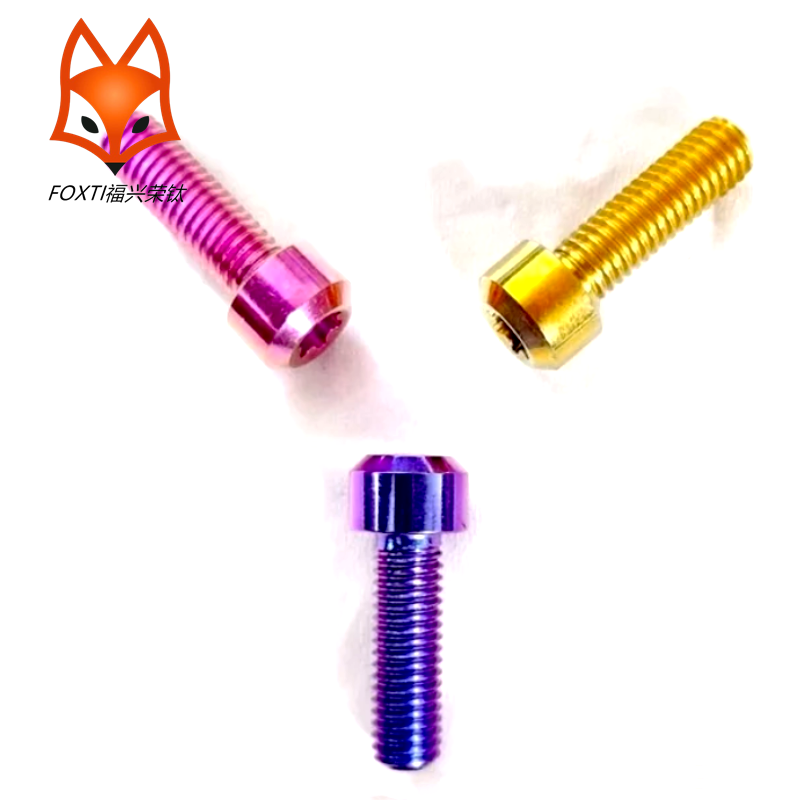
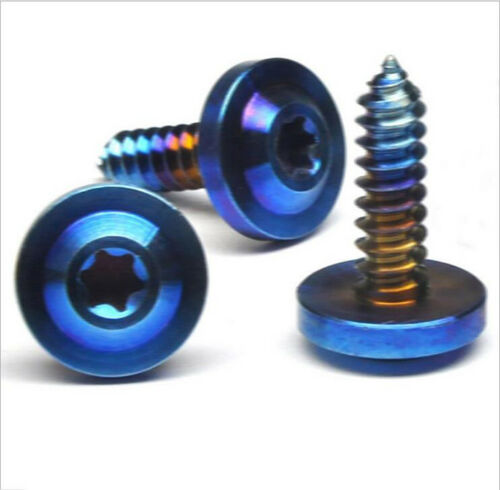
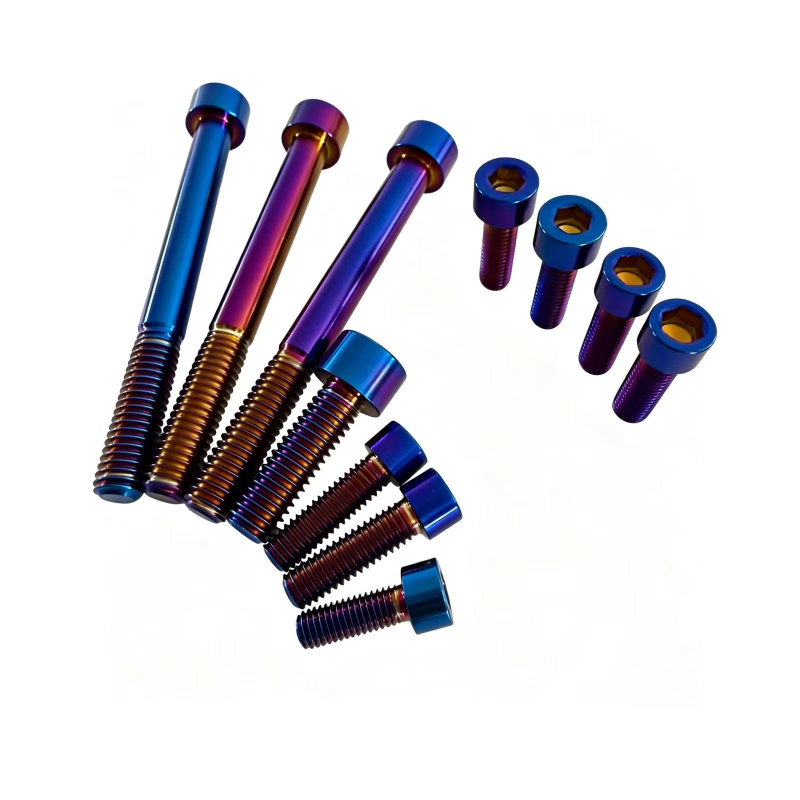
Metallurgical Integrity: CE Certified Titanium Countersunk Screws in Harsh Chloride Environments
In high-load mechanical interfaces where hydrodynamic slipstream, flush mechanical clearance, or zero-snag requirements dominate, countersunk fasteners (DIN 7991, ISO 10642, and ASME B18.6.7M) represent an indispensable structural element. However, when deploying conventional carbon steel, 304, or standard 316/316L stainless steel screws in coastal or marine installations, the interplay of high ambient temperatures, humid equatorial maritime air, and aggressive chloride ions leads to rapid micro-crevice oxidation, galvanic breakdown, and catastrophic stress corrosion cracking (SCC).
For industrial operations located along the coastline of the Belait District—especially centered around the oil and gas capital of Brunei Darussalam, Kuala Belait—the choice of fastener metallurgy determines maintenance intervals, unplanned shutdowns, and catastrophic structural failure risks. Verqo's CE Certified Titanium Countersunk Screws, predominantly manufactured from vacuum-melted Ti-6Al-4V (Grade 5, UNS R56400) and commercially pure Grade 2 (UNS R50400), deliver total metallurgical immunity to pitting, crevice attack, and microbial-influenced corrosion (MIC).
Comparative Metallurgical Matrix: GR5 Titanium vs. Conventional Marine Alloys
Understanding the exact thermodynamic behavior of structural fasteners under extreme loading and environmental exposure requires a side-by-side comparison of mechanical strength, density, and corrosion performance metrics:
| Property / Characteristic | Ti-6Al-4V Grade 5 (Verqo) | Commercially Pure Gr 2 | Marine 316L Stainless Steel | Super Duplex 2507 |
|---|---|---|---|---|
| Nominal Density (g/cm³) | 4.43 | 4.51 | 8.00 | 7.80 |
| Yield Strength Rp0.2 (MPa) | ≥ 828 | ≥ 275 | ≥ 220 | ≥ 550 |
| Ultimate Tensile Strength Rm (MPa) | 895 – 1050 | 390 – 540 | 520 – 680 | 750 – 1000 |
| Elongation at Break A5 (%) | ≥ 10% – 15% | ≥ 20% | ≥ 40% | ≥ 15% |
| Modulus of Elasticity (GPa) | 110 – 114 | 103 – 107 | 193 | 200 |
| Critical Pitting Temp (CPT in Seawater) | > 120°C (Immune) | > 80°C | ~ 15°C to 25°C | ~ 60°C to 70°C |
| Magnetic Permeability (μ) | 1.00005 (Non-magnetic) | 1.00005 | ≤ 1.02 | Ferromagnetic |
| CE & Pressure Compliance | PED 2014/68/EU Annex I | PED / Standard | Standard | Specialist |
Why Countersunk Geometries Require High-Strength Grade 5 Titanium
Countersunk fasteners present unique mechanical load concentrations. Because the 90-degree (DIN/ISO) or 82-degree/100-degree (Imperial/Aerospace) conical underhead profile transitions directly into the threaded or unthreaded shank, stress concentration factors ($K_t$) under preload tension and shear loading are significantly higher than those encountered in conventional hex head or socket cap screws. In conventional austenitic steels, excessive tightening leads to plastic deformation of the conical socket, thread galling, and sudden tensile fatigue failure across the underhead radius.
Verqo mitigates countersunk failure through precision cold-heading and CNC contour machining from pre-conditioned, centerless-ground Ti-6Al-4V bar stock. Our rolled threads (threads formed by plastic deformation rather than chip cut removal) preserve the continuous grain flow of the titanium alloy, boosting dynamic cyclic fatigue life by more than 35% compared to cut-thread alternatives. Furthermore, our CE-certified countersunk fasteners feature radiused underhead junctions and precision Torx (hexalobular / ISO 10664) or hex socket drives, ensuring maximum torque transmission without cam-out or socket wall deformation.
Localized Application Scenarios across Kuala Belait & the Greater Baram Basin
Kuala Belait serves as the primary logistical, engineering, and operational nerve center for Brunei’s upstream hydrocarbon production, marine fabrication yards, and offshore support vessel (OSV) berthing facilities along the Belait River. The localized operating climate presents a severe combination of equatorial humidity (regularly exceeding 85%), high UV indexes, ambient seawater temperatures averaging 29°C to 31°C, and heavy airborne salinity from the South China Sea. Below are the precise applications where our CE Certified Titanium Countersunk Screws solve critical engineering bottlenecks in the Kuala Belait industrial corridor:
Offshore Topsides & Flare Boom Fastening
Installed on offshore production complexes operating in the South West Ampa, Champion, and Fairley fields. Flush titanium countersunk screws secure heat-shield cladding, flare tip instrumentation access panels, and deck drain grating where zero protrusion is mandatory to avoid tripping hazards and hydrodynamic drag during heavy monsoonal sea wash.
Subsea Acoustic Sensors & Sonar Pods
Subsea autonomous inspection vehicles (AUVs) and diver-deployed downhole logging tools stationed out of Kuala Belait marine yards require completely non-magnetic, corrosion-free hardware. Our Grade 5 titanium countersunk screws secure acoustic transducers and sensor housing faceplates without magnetic distortion or galvanic blistering.
Belait River Marine Transport & Crew Boats
Aluminum-hulled crew transfer vessels navigating the brackish Belait River estuary to offshore platforms encounter severe galvanic issues when using standard copper-alloy or stainless fasteners against marine-grade 5083 aluminum. Titanium countersunk screws, combined with isolating non-conductive washers, eliminate boundary degradation on hull brackets, waterjet intake louvers, and rudder trim surfaces.
SPARK Downstream Petrochemical Refineries
At the Sungai Liang Industrial Park (SPARK) near Belait, downstream petrochemical, methanol, and chemical synthesis units utilize titanium countersunk screws in acid gas recovery skids, heat exchanger baffle plates, and analyzer probe insertion seals exposed to wet hydrogen sulfide (sour gas / H2S) and chlorinated process streams.
Offshore UAV & Drone Launch Systems
With Brunei energy operators adopting autonomous aerial drones for flare-stack visual inspection and pipeline corridor monitoring across Belait’s inland swamp routes, ultra-lightweight Grade 5 countersunk titanium fasteners are specified for airframe motor-mount bulkheads, payload gimbal enclosures, and carbon-fiber spar connectors where gram-level mass savings directly extend flight endurance.
Subsea ROV Flotation Blocks & Hydrodynamic Fairings
Heavy work-class Remotely Operated Vehicles (ROVs) based at Kuala Belait maintenance depots require flat-face syntactic foam block attachment. Any screw protruding past the fairing boundary introduces turbulent eddies and snag hazards during umbilical maneuvering around subsea Christmas trees.
Strategic Trends Shaping Fastener Procurement in the Belait Energy Sector
The industrial procurement landscape in Kuala Belait is undergoing a fundamental transformation guided by the Brunei National Vision 2035 (Wawasan 2035), digital asset-integrity frameworks, and regional decarbonization commitments. Procurement teams, offshore maintenance contractors (EPCs), and mechanical fabrication yards are migrating away from legacy practices toward advanced metallurgical solutions:
- Transition to Total Lifecycle Cost (LCC) Valuation: Historically, capital projects favored 316L stainless steel countersunk screws due to lower initial purchase costs. However, in Brunei's tropical marine environment, localized crevice corrosion beneath screw countersinks frequently demands replacement cycles within 18 to 24 months. Operating companies in Kuala Belait now factor in offshore technician mobilization, helicopter logistics, and hot-work permits, realizing that Grade 5 titanium fasteners provide a single-installation lifecycle solution exceeding 25 years with zero rust.
- Adoption of Stringent CE Marking & Traceability Standards: With international energy consortia adhering to strict safety integrity level (SIL) protocols, procurement specifications in the Belait District increasingly enforce European CE standards (EN 14399 for structural bolting, EN 10204 3.1 inspection certification) along with positive material identification (PMI) to exclude substandard counterfeit titanium alloys from the global supply chain.
- Electrification & Subsea Robotics Scaling: As asset monitoring transitions from manual diver operations to automated robotic crawlers, subsea skids, and electric autonomous underwater vehicles (e-AUVs), the demand for high-strength, low-inertia, non-magnetic fastening components has surged. Titanium countersunk screws offer the exact mechanical strength profile of Class 10.9 steel at just 57% of the weight.
- Supply Chain Resilience via Direct Manufacturer Partnerships: EPC contractors based in Kuala Belait are actively bypassing tiered regional middlemen to partner directly with primary manufacturing plants located within integrated metallurgical clusters, securing shortened production lead times, customizable screw geometry, and pre-shipment ultrasonic testing reports.
Frequently Asked Questions: Sourcing Titanium Countersunk Screws in Kuala Belait
Direct technical answers addressing the real-world operational challenges of Brunei-based procurement engineers, marine superintendents, and mechanical workshop managers.
Titanium is noble on the galvanic series. When placed in contact with active metals like aluminum 5083 or structural carbon steel in an electrolyte (such as South China Sea saltwater or humid Belait coastal air), the less noble metal will suffer accelerated galvanic attack. To isolate the joint, our engineering advisory recommends installing non-conductive dielectric isolating sleeves, PEEK or PTFE conical washers under the countersunk head, or utilizing our specialized anti-galling PVD barrier coatings combined with marine-grade fluoropolymer sealants (such as Tef-Gel or nickel-based anti-seize paste per MIL-PRF-907F).
CE certification verifies that the fasteners comply with European Directives relevant to pressurized equipment (PED 2014/68/EU Annex I, Section 3.1.5) and construction product harmonized standards. For Tier-1 engineering contractors serving Brunei Shell Petroleum (BSP), Brunei LNG, or government marine infrastructure, CE certification accompanied by an authentic EN 10204 Type 3.1 Mill Test Certificate ensures chemical traceability (vacuum melt heat number), guaranteed tensile/yield elongation, and documented Charpy V-notch impact toughness—eliminating audit non-conformities during vendor QA inspections.
Yes. While DIN 7991 and ISO 10642 stipulate a 90-degree underhead conical angle for metric threads (M2 to M26), many American-designed offshore logging assemblies and aerospace/drone platforms utilize an 82-degree (ASME B18.6.7M / B18.6.3) or 100-degree (NAS / MS aerospace specification) taper. Verqo's precision CNC machining centers can profile any proprietary underhead angle, chamfer radius, or custom socket drive (Hex, Torx, Torx Plus, or Tri-Wing) according to client CAD drawings or physical reference samples.
Because the elasticity modulus of Ti-6Al-4V (~110 GPa) is roughly half that of alloy steel (~200 GPa), torque values must be calibrated to achieve optimal bolt stretch without exceeding the yield point. Typically, Grade 5 countersunk screws lubricated with marine anti-seize should be torqued to approximately 65%–70% of equivalent Grade 8.8/10.9 steel values. For instance: M6 dry ≈ 9.5 Nm (lubricated ≈ 7.2 Nm); M8 dry ≈ 23 Nm (lubricated ≈ 17.5 Nm); M10 dry ≈ 46 Nm (lubricated ≈ 35 Nm); M12 dry ≈ 80 Nm (lubricated ≈ 61 Nm). We supply exact engineering torque tables with every batch shipment.
For priority engineering samples, urgent platform shut-down parts, or prototype orders, Verqo coordinates expedited door-to-door international express (DHL, FedEx, or SF Express International) directly into Kuala Belait via Bandar Seri Begawan (BWN Airport) within 4 to 7 business days. For volume manufacturing contracts (5,000+ units), sea freight consolidations route directly into Muara Port (Brunei’s primary deep-water container terminal), followed by bonded overland haulage along the Muara–Tutong Highway straight to client storage yards or mechanical workshops in Kuala Belait or Seria.
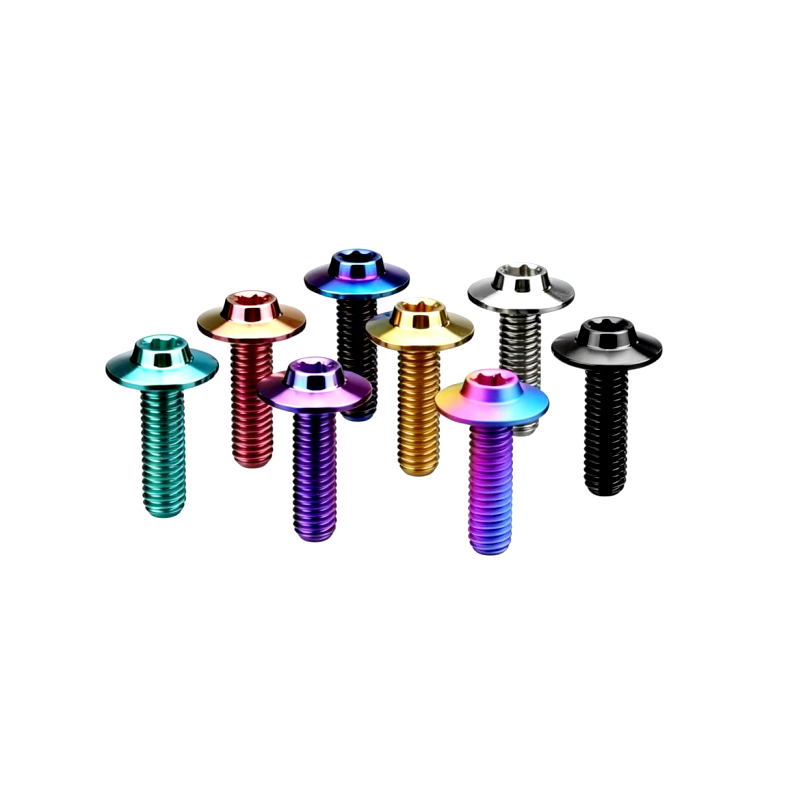
For static structural installations, standard micro-bead blasted or electropolished raw finishes provide the dense natural titanium dioxide (TiO2) passive film that ensures total corrosion resistance. For components subjected to repetitive mechanical assembly, sliding abrasion, or ROV latching, we recommend Physical Vapor Deposition (PVD) titanium nitride (TiN / Gold) or diamond-like carbon (DLC / Black), which imparts a surface micro-hardness exceeding 2,500 HV, permanently preventing thread galling and mechanical friction wear.
Enterprise Advantages: Integrated Titanium Metallurgy from Baoji to the Global Market
Verqo Titanium Products Co., Ltd. operates at the center of China’s world-renowned "Titanium Valley" in Baoji, Shaanxi Province. Established in 2015, our specialized production facility combines raw material sponge selection, vacuum consumable arc melting, precision billet forging, multi-axis Swiss-type CNC turning, cold heading, and robotic surface finishing under one unified quality management umbrella.
10+ Years of Focused OEM/ODM Mastery
Over a decade of dedicated research and production in high-tensile titanium fasteners, servicing leading automotive racing teams, subsea robotic integrators, aerospace subcontractors, and maritime maintenance fleets worldwide.
Integrated 1,001–2,000 m² CNC Facility
Equipped with high-precision 5-axis machining centers, high-speed thread-rolling machines, optical sorting units, and computerized CMM dimensional inspection benches maintaining dimensional tolerances down to ±0.005 mm.
Comprehensive Quality Verification
Every production heat undergoes optical emission spectrometry (OES) chemical verification, microstructural metallography, eddy-current flaw detection, and universal tensile yield testing before batch serialization and packaging.
Whether your procurement requirements call for standard DIN 7991 / ISO 10642 Grade 5 countersunk screws, custom thin-head flush Torx screws for downhole tools, or complete marine titanium bolt kits for offshore support vessels in Kuala Belait, Verqo offers flexible minimum order quantities (MOQs from 10 to 100 pcs), rapid prototype machining, and direct factory technical collaboration.