Featured Performance Fasteners & OEM Titanium Components
Precision-engineered bolts, studs, and custom titanium CNC hardware manufactured from certified Grade 5 (Ti-6Al-4V) aerospace bar stock, delivering 43% weight savings and superior thermal-fatigue endurance.
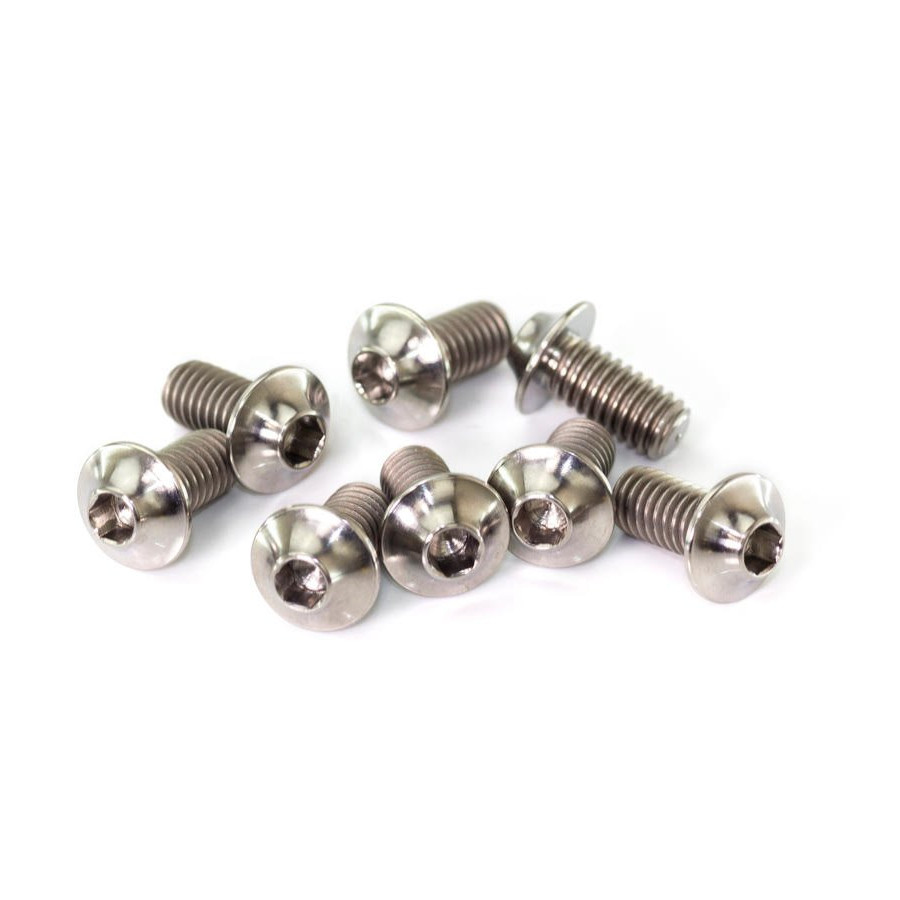
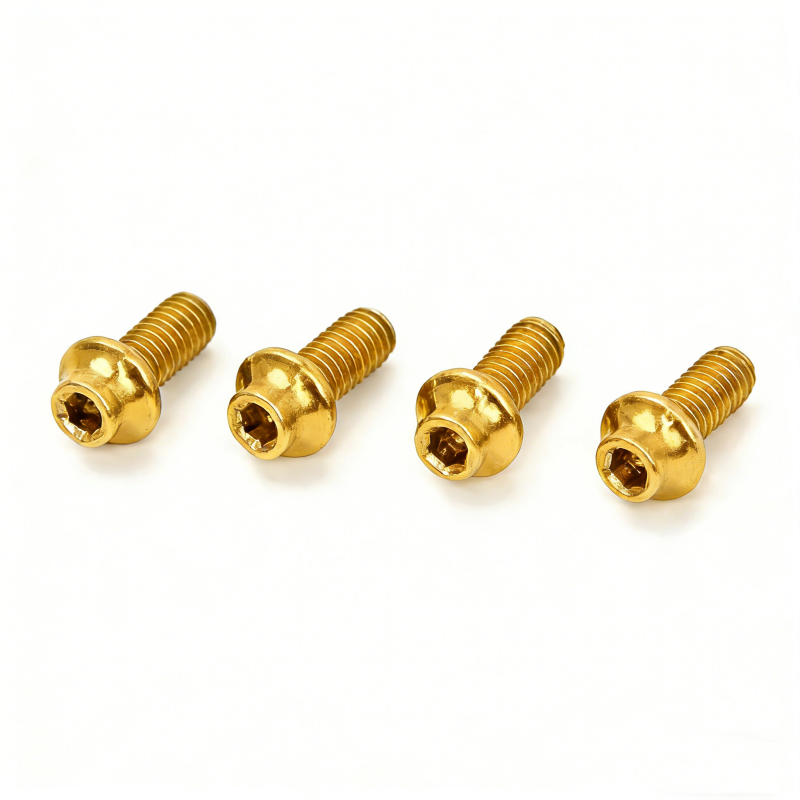
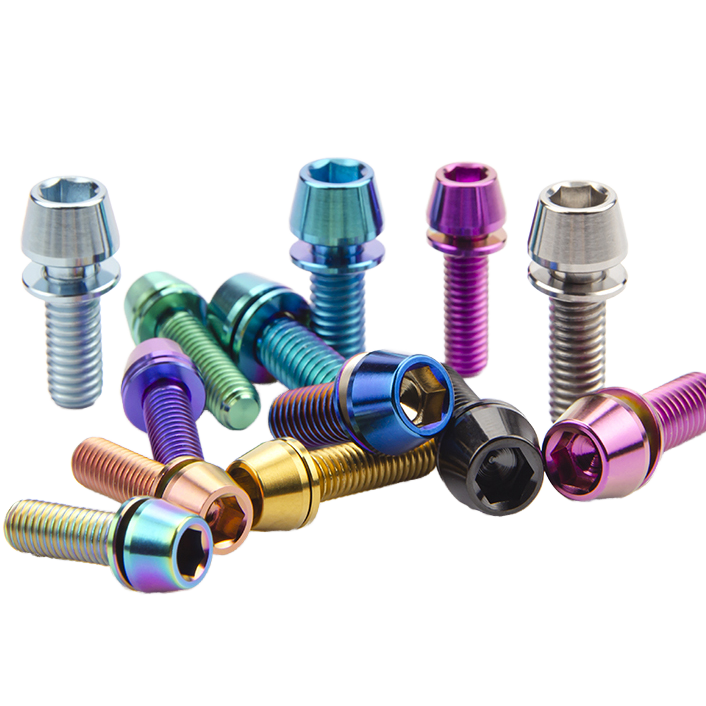
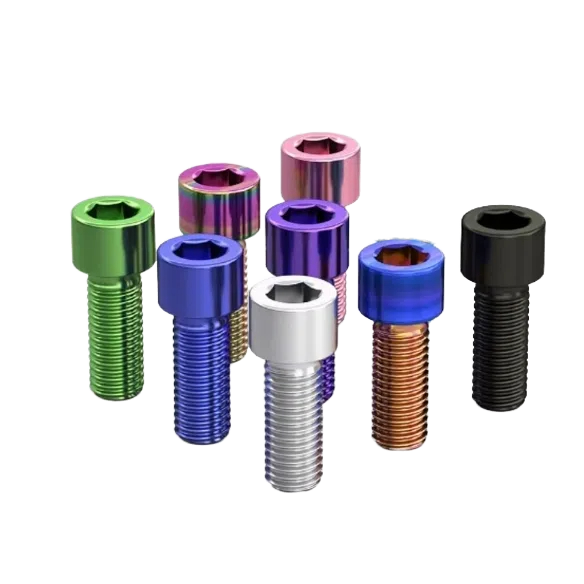
1. White Paper Analysis: Forced Induction Dynamics & Fastener Metallurgical Failure
Turbocharger assemblies are subject to the most hostile physical environments in modern automotive and internal combustion engineering. Operating at exhaust gas temperatures (EGTs) continuously oscillating between 650°C and 980°C, the interface between the exhaust manifold, the cylinder head, and the turbocharger turbine housing experiences aggressive thermal cycling, structural vibration harmonics, and severe mechanical preload variations. Conventional Grade 8.8 or Grade 10.9 zinc-plated carbon steel studs suffer irreversible degradation within these operational parameters. Heat soaking causes carbon depletion, embrittlement, stress relaxation, and catastrophic oxidation-induced thread freezing (seizing).
Furthermore, the disparate thermal expansion rates between cast iron or tubular stainless-steel exhaust headers and cast aluminum cylinder heads generate continuous shear loads along the stud shank. Under peak boost pressure, steel studs stretch past their yield point and subsequently undergo permanent plastic elongation. Once the engine cools down to ambient temperatures, the remaining clamping torque drops drastically, culminating in exhaust gas leakage, blown multi-layer steel (MLS) gaskets, turbine spool latency, and cracked manifold flanges.
Verqo Titanium's proprietary Custom OEM Titanium Turbo Studs are manufactured from vacuum-melted, certified Grade 5 Ti-6Al-4V (UNS R56400 / ASTM B348). Titanium’s low coefficient of thermal expansion (8.6 × 10⁻⁶/K compared to 11.7 × 10⁻⁶/K for carbon steel and 16.5 × 10⁻⁶/K for austenitic stainless steels) closely matches modern engine structural kinematics. Combined with an exceptional strength-to-weight ratio, high creep rupture resistance, and roll-formed precision threads that compress grain boundaries instead of severing them, our titanium turbo hardware completely eliminates cyclic fastener stretching, fatigue shear failure, and galvanic corrosion weld-up.
Engineering Data Matrix: High-Stress Fastener Metallurgy
Direct mechanical and thermodynamic comparison demonstrating why Ti-6Al-4V Grade 5 is the premier specification for forced induction manifolds and high-vibration automotive applications.
| Mechanical & Thermal Property | Ti-6Al-4V (Grade 5 Titanium) | Alloy Steel (Class 10.9) | Austenitic Stainless (A2-70 / 304) | Inconel 625 (Nickel Alloy) |
|---|---|---|---|---|
| Density (g/cm³) | 4.43 (43% Lighter) | 7.85 | 7.93 | 8.44 (Double Titanium Mass) |
| Tensile Strength (Yield, MPa) | 828 – 910 MPa | 900 – 940 MPa | 450 – 500 MPa | 460 – 550 MPa |
| Ultimate Tensile Strength (MPa) | 895 – 1,020 MPa | 1,040 MPa | 700 MPa | 880 – 980 MPa |
| Thermal Expansion Coeff. (20-100°C) | 8.6 × 10⁻⁶ / K | 11.7 × 10⁻⁶ / K | 16.5 × 10⁻⁶ / K | 12.8 × 10⁻⁶ / K |
| Thermal Conductivity (W/m·K) | 6.7 (Superior Heat Barrier) | 42.6 | 16.2 | 9.8 |
| Corrosion Resistance / Rusting | Complete Immunity (TiO₂ Passive) | Poor (Requires Plating) | Moderate (Prone to Pitting) | Exceptional |
| Thread Seizure / Galling Resistance | High with PVD / Anti-Seize | Low (Oxidation Freezing) | Very Low (Cold Welding) | Moderate |
| Primary Application Focus | Turbo Studs, Manifolds, Calipers | Cold Structural Chassis Bolting | Cosmetic Fairings / Low Stress | Continuous Extreme Industrial Furnaces |
Serving the Gwangju Automotive & High-Tech Industrial Market
How Verqo Titanium’s custom OEM production supports Gwangju’s distinct automotive assembly plants, performance tuning ecosystems, and cutting-edge industrial parks.
Kia Autoland Gwangju & Tier-1 Supply Chains
Gwangju stands as one of South Korea's premier automotive capitals, anchored by Kia Autoland Gwangju Plant (producing over 500,000 vehicles annually including the Sportage, Seltos, and commercial platforms) and Gwangju Global Motors (GGM) in the Bitgreen National Industrial Complex. Our custom OEM titanium turbo studs provide Tier-1 and Tier-2 suppliers with zero-defect fastening hardware suited for severe thermal testing, lightweight engine bay brackets, and extreme performance dyno durability validation.
Honam Motorsport Corridor & Yeongam KIC Circuit
Geographically proximate to the Korea International Circuit (KIC) in Yeongam, Jeollanam-do, Gwangju serves as the regional logistics and mechanical modification nucleus for professional drift, time-attack, and GT race cars. Competition Hyundai Elantra N, Genesis Coupe 2.0T/3.3T, and customized BMW/Audi platforms running twin-scroll aftermarket turbo kits rely on our M8×1.25 and M10×1.25 Ti-6Al-4V studs to prevent track-side manifold separation and blown turbine seals during endurance events.
Future EV Thermal Modules & Bitgreen Green-Car Complex
As Gwangju transitions aggressively toward the "Eco-friendly Car Leading City" initiative, thermal management architectures inside high-output Battery Electric Vehicles (BEVs) and hydrogen fuel cell systems require materials impervious to thermal creep and chemical corrosion. Our non-magnetic, ultra-light titanium studs and custom CNC hardware safeguard inverter mounts, high-voltage battery enclosures, and coolant turbine housings across Gwangju's emerging EV R&D centers.
2. Industrial Trends: The Shift toward Lightweight Titanium in the Honam Region
Over the past five years, the Gwangju Metropolitan Government has poured significant capital into advanced manufacturing automation, photonic sensors, and precision machinery clusters within the Hanam, Pyeongdong, and Cheomdan Industrial Complexes. As the automotive industry faces rigorous fuel economy standards, tighter emission constraints, and electrification demands, lightweighting has escalated from an exotic motorsport preference to a fundamental engineering mandate.
Traditional automotive fasteners account for up to 3% of a fully dressed internal combustion engine or battery chassis mass. Replacing iron and heavy alloy fasteners with titanium cuts component fastener mass by 43% while simultaneously delivering superior ultimate tensile performance. In turbocharged platforms, the reduction of unsprung and structural chassis weight directly enhances vibrational dampening and dynamic balance.
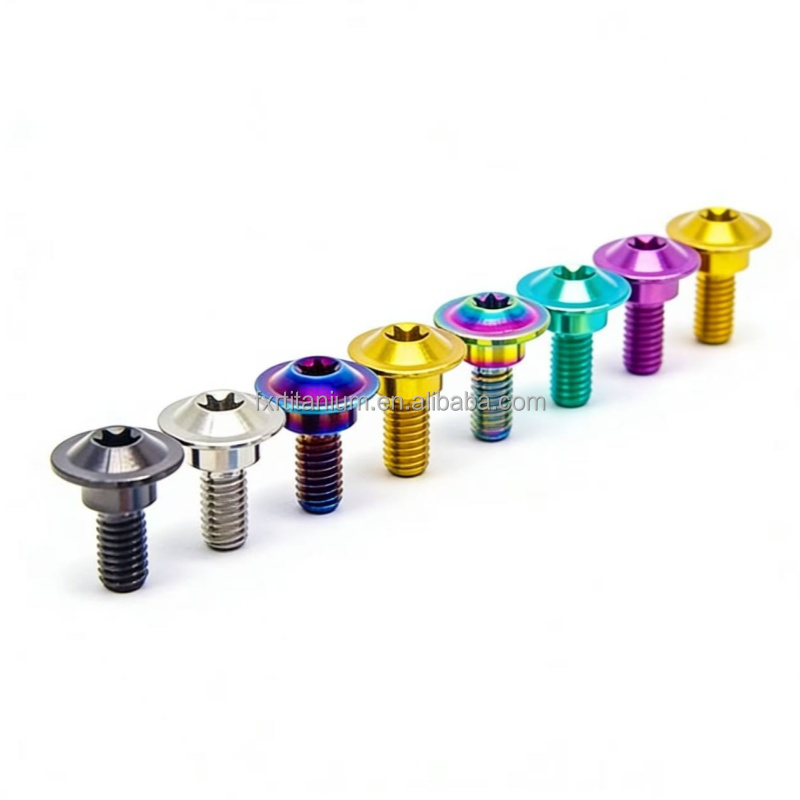
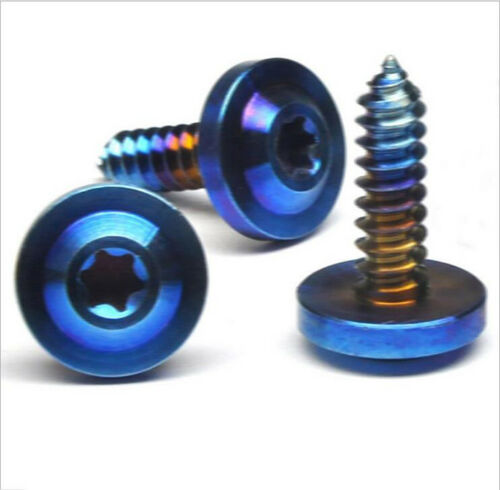
Moreover, local aftermarket custom workshops and professional speed shops in Gwangju (such as those centered around Seo-gu and Buk-gu tuning corridors) increasingly demand aesthetic and functional longevity. Zinc-coated fasteners discolor and rust rapidly under humid monsoon summers and winter road-salt conditions on Honam expressways. Verqo Titanium’s Physical Vapor Deposition (PVD) and specialized electrolytic anodizing coatings—available in Burnt Blue, Oil-Slick Rainbow, Titanium Gold, and Stealth Black—provide Gwangju builders with show-level engine bay aesthetics accompanied by aerospace structural integrity.
Why Leading Automotive & Industrial Buyers Partner with Verqo Titanium
Headquartered directly in Baoji—known worldwide as China's "Titanium Valley"—Verqo Titanium integrates sponge smelting oversight, precision CNC machining, custom cold rolling, and global logistics under one rigorous quality assurance roof.
Certified Aerospace Bar Stock
Every turbo stud batch begins with certified vacuum arc remelted (VAR) Ti-6Al-4V Grade 5 titanium. We supply complete EN 10204 3.1 Mill Test Certificates detailing chemical composition, yield strengths, and microstructural grain analysis.
Rolled Threads, Not Cut
Unlike budget machine shops that cut threads using lathe tooling—disrupting the titanium's internal grain flow—all Verqo turbo studs feature high-pressure cold-rolled threads. This yields 30% higher shear fatigue strength and superior galling immunity.
Flexible OEM / ODM Tooling
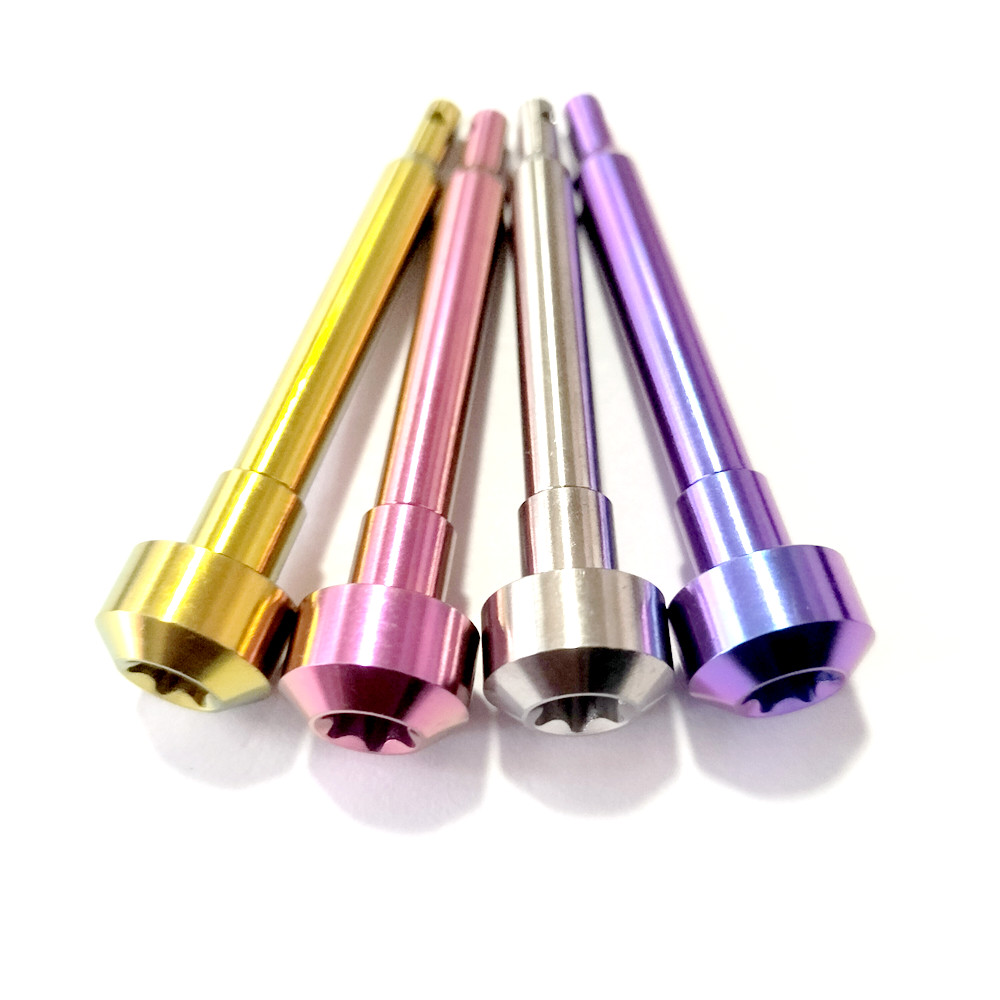
We manufacture custom step-down studs (e.g., M10×1.5 into head, M10×1.25 into turbine nut), dog-point starter tips, internal hex/Torx broaching, and custom shank tapers with rapid prototyping turnarounds from 2D/3D CAD models.
Direct Logistics to Gwangju
With consolidated air-cargo corridors to Incheon International Airport and direct maritime container lanes into Busan Port, we ensure rapid, duty-optimized delivery to Gwangju logistics hubs with an average quotation response time under 2 hours.
3. Installation White Paper: Eliminating Galling & Calibrating Preload Torque
A prevalent engineering concern among mechanical technicians sourcing titanium fasteners is thread galling (fretting corrosion/cold welding), which occurs when bare titanium threads interact under heavy clamping pressure with identical or reactive metallic contact points. Because titanium readily oxidizes to form an ultra-hard titanium dioxide (TiO₂) film, high localized friction during dry assembly can break the oxide layer, causing microscopic asperities to seize permanently.
To ensure flawless installation in Gwangju workshops and factory floors, Verqo adheres to strict production and installation best practices:
- Hex Head Broaching for Independent Stud Seating: Our titanium turbo studs feature an integrated 4mm or 5mm internal hex key drive at the nose, enabling technicians to hand-seat the stud into the cylinder head without double-nut jamming stress.
- PVD Vacuum Treatment: Applying high-density Titanium Nitride (TiN) or Diamond-Like Carbon (DLC) provides a low-friction surface barrier (friction coefficient < 0.15) that prevents direct metal-on-metal micro-welding.
- Torque Compensation with Anti-Seize Compound: Always apply a high-temperature nickel- or copper-based anti-seize paste (rated to 1,000°C) to all manifold threads. Because the lubricant reduces friction, torque values should be recalibrated to approximately 75-80% of unlubricated dry torque specs to avoid over-tensioning.
- Matching Titanium 12-Point Flange Nuts: We supply matching GR5 12-point mechanical locking flange nuts designed to disperse clamping pressure uniformly over the manifold ear, mitigating point-load cracking.
Frequently Asked Questions: Gwangju B2B Procurement
Clear, direct answers regarding standards compliance, customs handling, custom machining specs, and logistical pipelines for our South Korean and Gwangju engineering partners.
Yes. We regularly supply studs custom-machined for popular Hyundai and Kia performance platforms, including the Theta II 2.0T (Genesis Coupe, Sonata Turbo), Theta III 2.5T, Lambda II 3.3T Twin-Turbo (Stinger, G70), and Smartstream 1.6T (Avante N-Line, K5). We manufacture custom step-threads (such as M10×1.25 to M10×1.5) that thread directly into OEM cylinder heads while accepting upgraded motorsport turbo manifolds.
Every shipment arrives with full documentation to satisfy Korean industrial import inspection and ISO/IATF 16949 audit requirements. This includes standard Commercial Invoices, Packing Lists with HS Code classifications (typically 8108.90 for titanium articles or 7318 for threaded fasteners), Certificate of Origin (CO) under RCEP/China-Korea FTA for preferential tariffs, and EN 10204 3.1 Inspection Mill Certificates guaranteeing Ti-6Al-4V Grade 5 purity.
For urgent prototypes and small-to-medium batches, air express couriers (DHL, FedEx, SF International) route directly into Incheon International Airport (ICN), clearing customs and reaching Gwangju factories within 3 to 5 business days. For high-volume production orders exceeding 500 kg, sea freight departs Qingdao or Shanghai directly to Busan New Port or Gwangyang Port (very close to Gwangju), offering exceptional cost efficiency.
We support both bespoke engineering development and mass production. For standard in-stock thread profiles (e.g., M8×1.25×45mm, M10×1.25×45mm, M10×1.5×50mm), the MOQ is as low as 10 to 20 pieces. For custom OEM specifications requiring unique step-down thread pitches, dog-point guides, or custom broaching, production runs typically begin at 50 to 100 units, with rapid sample delivery provided within 7 days.
Yes. We specialize in comprehensive private-label OEM manufacturing for aftermarket performance brands and tuning distributors in Korea. We offer high-definition fiber laser engraving of brand logos, thread size markings, and batch serial numbers directly onto stud shanks or 12-point nuts. We also supply custom foam-lined retail boxes, blister packaging, and barcode labeling ready for Korean retail distribution.
Commercially Pure (CP) Grade 2 titanium possesses an ultimate tensile strength of only ~345 MPa and lacks the alloy stabilizing elements required to withstand high shear forces. Ti-6Al-4V Grade 5 contains 6% Aluminum (an alpha-phase stabilizer) and 4% Vanadium (a beta-phase stabilizer), elevating tensile strength to 895–1,000+ MPa. Utilizing Grade 2 titanium in a turbocharger manifold will result in catastrophic stretching and yield failure under engine boost vibration.
Ready to Engineer Custom Titanium Fasteners for Your Gwangju Production Line?
Whether you require race-proven M8/M10 titanium turbo stud kits, bespoke CNC powertrain hardware, or complete chassis fastener runs for OEM applications, our Baoji engineering headquarters delivers factory-direct value with sub-2-hour turnaround.