High-Performance Titanium Hardware Solutions
Direct from Baoji's precision manufacturing hub to Lyon's automotive hubs: Explore our stock inventory and custom OEM-engineered fasteners designed for extreme torsional resilience, rotational inertia reduction, and high shear endurance.
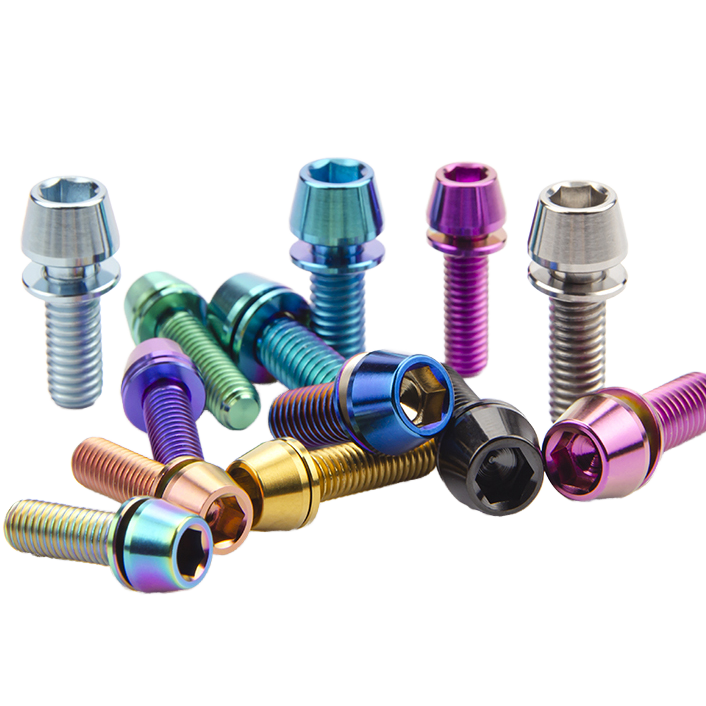
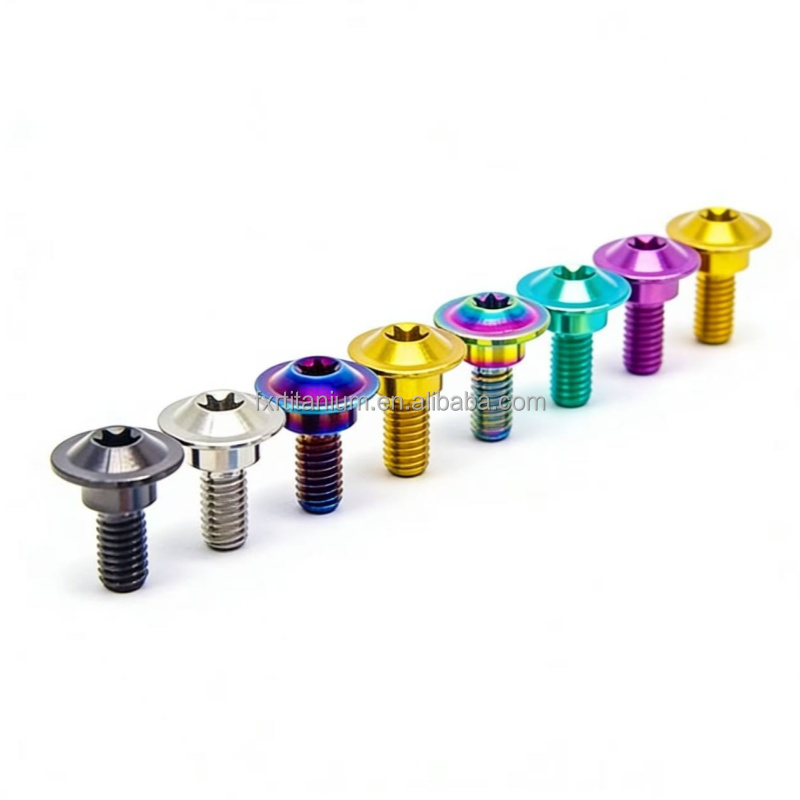
1. Engineering Fundamentals: Grade 5 Ti-6Al-4V Wheel Stud Kinematics
In high-stress motorsport, track day setups, and luxury performance vehicle engineering, wheel hub fasteners represent critical structural components. As the sole interface anchoring rotating wheel assemblies and braking rotors to the suspension hub carrier, a wheel stud is subjected to combined mechanical loadings: axial tensile clamping loads, cyclic multi-axis shear stresses induced by lateral cornering forces, and extreme thermal conduction radiating from carbon-ceramic or cast-iron brake rotors exceeding 650°C.
Traditional automotive fasteners rely primarily on heat-treated Grade 10.9 or 12.9 alloy steels (such as 42CrMo4 or 40Cr). While alloy steel demonstrates acceptable tensile strength, its high mass density (approximately 7.85 g/cm³) contributes substantial rotating unsprung mass. In contrast, Grade 5 Titanium (Ti-6Al-4V, Werkstoff 3.7165, UNS R56400) presents an optimal metallurgical alternative. With a mass density of 4.43 g/cm³, Ti-6Al-4V offers an approximate 43% reduction in fastener weight while achieving an ultimate tensile strength exceeding 950–1050 MPa when precision hot-forged and thread-rolled.
Reducing unsprung rotational mass at the wheel perimeter directly reduces the wheel hub assembly's moment of inertia ($I = m \cdot r^2$). For automotive engineers and racing crews in the Lyon basin, this conversion translates into quantifiable dynamic gains: sharper steering transient response, reduced damper hysteresis, faster braking deceleration thresholds, and minimized suspension oscillation over high-frequency road undulations.
Moment of Inertia Reduction
By shedding ~45–60 grams per stud across a 5-lug hub assembly (up to 600 grams of unsprung rotating mass across four corners), gyroscopic resistance diminishes, directly improving throttle responsiveness out of corners.
Thermal Fatigue Stability
Low thermal expansion coefficients ($\alpha = 8.6 \times 10^{-6}/\text{K}$ for Ti-6Al-4V vs. $11.5 \times 10^{-6}/\text{K}$ for steel) ensure that high brake rotor thermal soak during downhill mountain stages will not cause destructive preload loss.
Immunity to Salt Deicers
Grade 5 titanium creates an instantaneous, self-healing rutile passive oxide layer ($\text{TiO}_2$). Unlike plated or zinc-coated steel studs, it is virtually impervious to pitting, galvanic oxidation, and magnesium chloride winter deicing salts.
2. Localized Lyon & Auvergne-Rhône-Alpes Application Scenarios
Lyon is the historical economic nexus of the Auvergne-Rhône-Alpes region, a recognized center for precision mechanical engineering, advanced composite manufacturing, and motorsports innovation. Our OEM custom titanium wheel stud conversion kits and specialty fasteners are developed to fulfill rigorous technical specifications across four key regional sub-markets:
A. Asphalt Rally & Hill Climb Competitions (Rallye Lyon-Charbonnières & Mont-Dore): The regional tarmac rally ecosystem demands hardware that withstands violent directional transitions, curb-clipping impact loads, and severe thermal cycles. French hill-climb and rally teams frequently replace OEM wheel bolts with our double-ended screw-in titanium conversion studs (M14×1.25 to M14×1.5 or M12×1.5). The screw-in configuration allows swift tire compound changes in the service paddock without cross-threading risks, while titanium's higher damping capacity attenuates vibrations transmitted into hub bearings.
B. Circuit Track Day & Endurance Racing (Circuit du Laquais & Circuit de Bresse): Located within a short radius of the Lyon metropolitan area, privateers and professional racing outfits running GT3-spec platforms, Porsche 911 GT3 RS, Alpine A110, and BMW M series rely on our rolled-thread Ti-6Al-4V studs. Under extended 30-minute track stints, brake discs often reach glowing temperatures. Our cold-rolled thread root radius eliminates stress concentration notches, guaranteeing fatigue lifespans exceeding 10 million cycles under cyclic shear loading.
C. High-Altitude Alpine Grand Touring & Winter Environments: Lyon acts as the primary transit gateway to the French Alps (Chamonix, Courchevel, Val-d'Isère). High-performance passenger vehicles operating along these alpine corridors face heavy road salting with calcium and sodium chloride brine. Traditional steel lug nuts and pressed-in studs frequently seize, strip threads, or suffer cosmetic rust bleed on high-value forged alloy wheels. Our anodized and PVD-coated titanium studs prevent galvanic galvanic micro-welding when paired with aerospace-grade ceramic anti-seize paste, retaining pristine finishes across decades of seasonal driving.
D. Next-Generation Lightweight EV Conversions & Restomods: With Lyon's environmental low-emission zones (ZFE - Zone à Faibles Émissions) tightening vehicle regulations across Greater Lyon (Grand Lyon), specialized retrofitters are focusing on EV powertrain conversions and lightweight retro-modifications. Minimizing rotating mass provides higher energy regeneration efficiency during deceleration and improves battery watt-hour per kilometer metrics.
3. Metallurgical Comparison: Grade 5 Titanium vs. Automotive Steels
Procurement teams and mechanical engineers require empirical metallurgical datasets when qualifying hardware for critical chassis assemblies. The table below details mechanical, thermal, and physical metrics comparing aerospace-grade Ti-6Al-4V with Class 10.9 structural fastener steel and Grade 2 commercially pure titanium.
| Mechanical / Physical Property | Verqo GR5 (Ti-6Al-4V) | Automotive Grade 10.9 Steel | Commercially Pure Ti (GR2) |
|---|---|---|---|
| Density ($\rho$) | 4.43 g/cm³ (~43% reduction) | 7.85 g/cm³ (Baseline) | 4.51 g/cm³ |
| Tensile Strength ($R_m$) | 950 – 1050 MPa | 1000 – 1040 MPa | 345 – 450 MPa |
| Yield Strength ($R_{p0.2}$) | 880 – 920 MPa | 900 – 940 MPa | 275 – 350 MPa |
| Elastic Modulus ($E$) | 110 – 114 GPa | 205 – 210 GPa | 103 GPa |
| Specific Strength ($R_m / \rho$) | 225 kN·m/kg | 132 kN·m/kg | 88 kN·m/kg |
| Thread Forming Method | Cold-Rolled Grain Flow (CNC blank) | Hot/Cold Rolled | Typically Cut / Machined |
| Corrosion Resistance (CASS Salt Spray) | > 2,000 Hours (Zero Rust) | < 240 Hours (Zinc Coated) | > 2,000 Hours |
| Working Temperature Ceiling | 400°C continuous / 600°C peak | 300°C (temper embrittlement risk) | 250°C |
*Data compiled from ASTM B348, ISO 898-1, and certified factory optical spectrometer/tensile pull testing runs. Mill test certificates (EN 10204 3.1) provided with every Lyon shipment lot.
4. Precision Manufacturing Architecture: Why Thread Rolling Trumps Cut Threads
A primary concern for motorsport engineers when transitioning to titanium wheel studs is the thread production process. Many low-cost titanium suppliers use single-point CNC lathe threading. In high-vibration, high-torque applications, cut threads are prone to fatigue failure. Machining cut threads severs the natural metallurgical grain lines of the Ti-6Al-4V bar stock, creating microscopic jagged stress risers along the thread crest and root.
At our Baoji facility, we engineer custom wheel studs through a dedicated two-stage process:
- Stage 1: Multi-Axis CNC Turning of the Stud Blank. Bar stock undergoes precision turning on multi-axis Swiss-type turning centers, maintaining outer tolerances within $\pm 0.008\text{ mm}$ to ensure concentric alignment with hub mating surfaces.
- Stage 2: High-Pressure Cold Thread Rolling. Cylindrical dies apply controlled plastic deformation under immense hydraulic pressure. The crystalline grain flow contours continuously around the thread profiles without micro-fracturing. Cold work-hardening occurs at the root radius, increasing surface hardness by 15% to 20% and improving fatigue resistance by up to 300% relative to cut threads.
- Anti-Galling Physical Vapor Deposition (PVD) Coatings. Uncoated titanium threads subjected to dry torquing can suffer from galling or micro-cold-welding against aluminum wheel seats or steel hubs. We resolve this by applying low-friction PVD coatings (DLC - Diamond-Like Carbon, Titanium Nitride Gold, or PVD Gunmetal/Burnt Blue) that drop friction coefficients to $\mu = 0.10–0.12$, preventing thread galling and delivering consistent torque-to-preload conversion.
5. Trends in Auvergne-Rhône-Alpes Precision Automotive Sourcing
The industrial corridor spanning Lyon, Saint-Étienne, and Grenoble is undergoing rapid structural modernization aligned with EU Decarbonization direct targets and Euro 7 homologation standards. Several macro trends are reshaping how procurement directors source fasteners:
1. Transition from Unreliable Middlemen to Factory-Direct Validation: Historically, French tuning shops and tier suppliers procured titanium fasteners through multi-tiered domestic distribution agencies, paying 200–300% markups with fragmented lot traceability. Today, Lyon buyers establish direct OEM/ODM contracts with verified Baoji production facilities capable of delivering CAD-to-prototype workflows in under 7 business days.
2. Strict Standardization under ISO 9001 & Aerospace EN 9100 Practices: Fasteners in critical chassis applications must be supported by certified metallurgical provenance. Regional French buyers increasingly mandate ultrasonic flaw inspection reports, 100% optical sorting dimensional certificates, and EN 10204 3.1 chemical batch analyses certifying that gas impurities (Oxygen < 0.20%, Nitrogen < 0.05%, Hydrogen < 0.015%) remain within stringent ASTM aerospace thresholds.
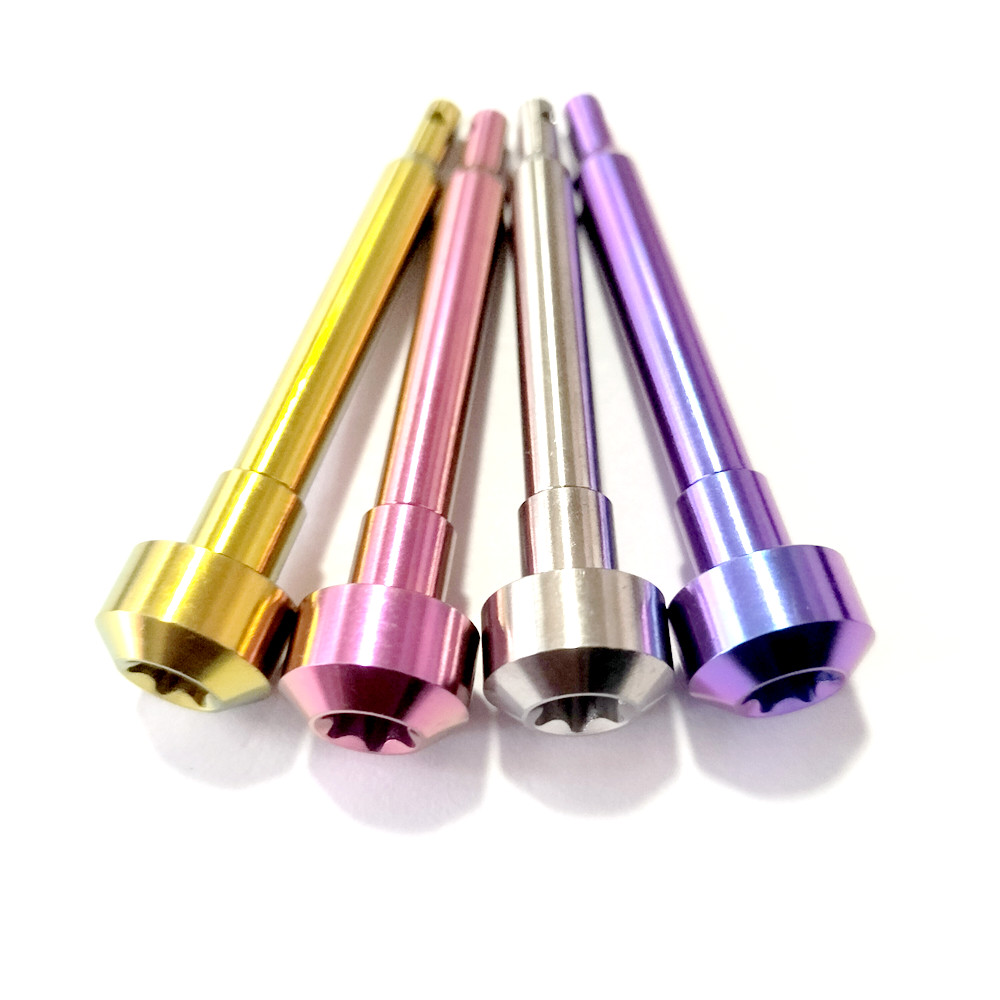
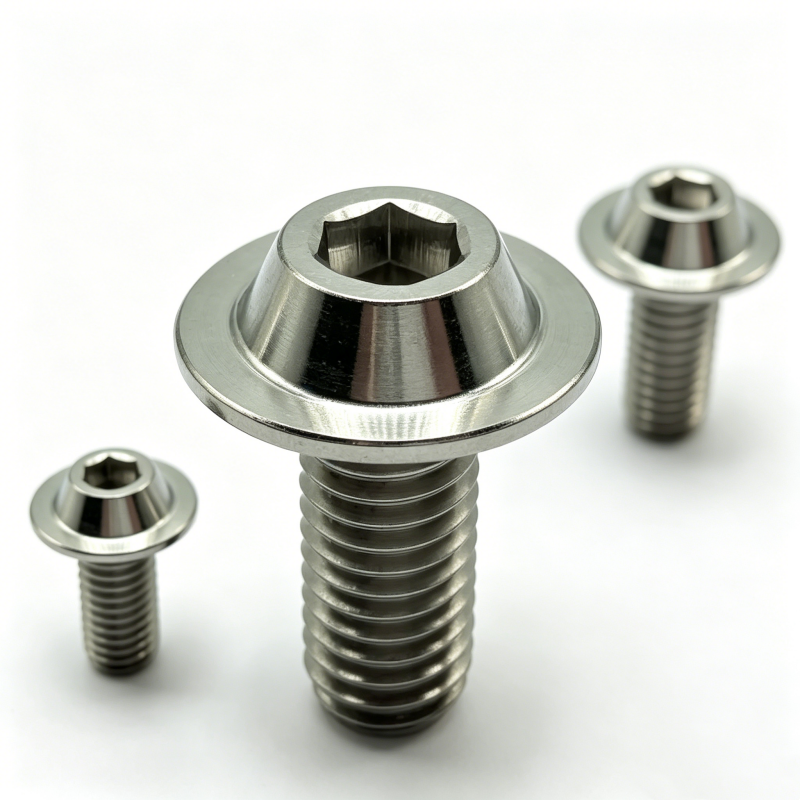
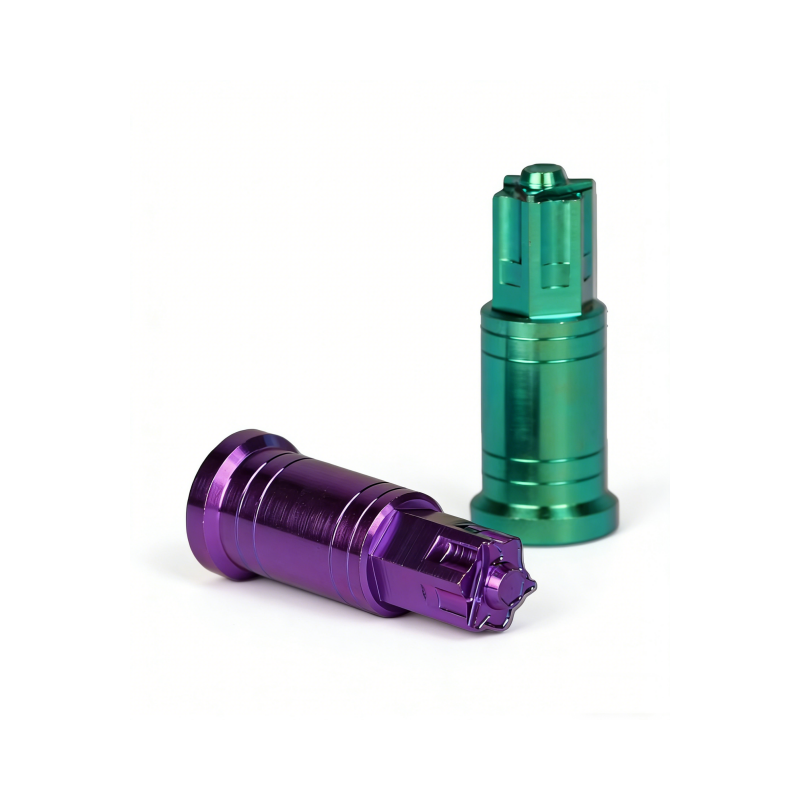
3. Bespoke Aesthetic Finishes for Show-Class Restorations & Carbon Fiber Wheels: High-end tuner vehicles and classic restorations in Lyon require tailored fastener head geometry—bullet-nose alignment tips, internal hex/Torx drive recesses for clean tool engagement, and knurled sleeves for quick hand-threading. Anodizing palettes (champagne gold, violet, burnt blue) and PVD finishes allow visual integration with custom carbon wheel barrels and performance brake calipers.
Why Lyon B2B Buyers Partner With Us
Combining the metallurgical infrastructure of China's "Titanium Valley" (Baoji) with rigorous Western European engineering standards, we offer precision manufacturing, transparent traceability, and end-to-end B2B supply chain support.
Baoji Titanium Valley Origin
Direct supply contracts with top-tier sponge titanium refiners. We utilize only 100% virgin grade Ti-6Al-4V bar stock, completely eliminating scrap melt contaminants.
Proprietary Thread Rolling
Dedicated hydraulic thread rolling machinery ensures that each M12, M14, and M16 stud possesses unbroken grain lines, yielding superior tensile-shear fatigue properties.
Flexible OEM / ODM Tooling
Low custom batch minimums starting at only 50–100 pieces for custom lengths (50mm–100mm), thread conversions (e.g. 1.25 pitch to 1.5 pitch), or custom knurl designs.
Rapid EU Air Express Logistics
Direct door-to-door DDP air freight routing into Lyon-Saint Exupéry (LYS) logistics terminals. Standard prototype delivery in 7–10 days; volume production in 15–20 days.
Frequently Asked Questions by French & European Buyers
Key technical, regulatory, and logistics answers for automotive workshop owners, racing managers, and parts distributors across Greater Lyon.
What tightening torque is required when installing Ti-6Al-4V wheel studs?
Titanium studs exhibit a lower modulus of elasticity than steel, which provides higher stretch retention under thermal load. However, the thread friction coefficient is slightly different. When using high-temperature anti-seize paste (moly-sulfide or copper/ceramic paste), an M14×1.25 or M14×1.5 titanium stud should typically be torqued to 125–135 N·m (92–100 lb-ft). We supply detailed tightening torque charts with each OEM shipment based on whether tapered, ball, or flat wheel seat interfaces are utilized.
How do you avoid galvanic corrosion between titanium studs and steel wheel hubs?
Titanium and iron alloys occupy distinct positions on the galvanic series. If an electrolyte (such as winter road brine in the Rhône-Alpes) is introduced without insulation, mild galvanic oxidation of the steel hub can occur. To counter this, our wheel studs undergo micro-arc oxidation, hard anodizing, or PVD coating. Additionally, we provide guidance on using barium-free synthetic anti-seize lubricants on the hub threads during installation to establish an impermeable dielectric barrier.
Are custom lengths and conversion thread steps possible?
Yes. Many French teams run Euro-spec hubs (Porsche, BMW, Renault Sport, Peugeot Sport) that use standard female M14×1.25 or M12×1.25 threaded hubs. We manufacture conversion studs featuring M14×1.25 on the hub-side and M14×1.5 on the wheel-side (which expands lug nut selection), complete with 75mm, 82mm, or 90mm extended overall lengths to accommodate wheel spacers.
What quality documentation and testing reports are supplied to Lyon customs?
Each delivery is accompanied by EN 10204 3.1 material test certificates documenting chemical composition spectrometry (Fe, C, N, H, O, Al, V, Ti) and tensile testing curves. In addition, optical projector dimensional inspection sheets and surface roughness (Ra < 0.4 µm) certifications are provided for EU customs and client QA acceptance.
What is the typical lead time for custom manufacturing and Lyon delivery?
Standard inventory parts (such as standard M14×1.25 75mm black PVD studs) ship within 48 hours. Custom engineering projects (custom knurls, hex key sockets, custom head stamping) complete CAD confirmation in 24 hours, sample production in 7 working days, and air freight transit to Lyon-Saint Exupéry Airport within 5–7 business days via DHL Express / FedEx.
Can you laser-etch custom workshop branding and torque specs?
Yes. Our high-precision fiber laser etching systems can etch your custom brand logo, thread pitch (e.g. M14x1.25), torque values, and lot tracking numbers onto the stud nose or lug nut perimeter without altering surface metallurgy or inducing stress concentrations.
Accelerate Your Project with an Engineering Evaluation
Send our senior engineering team your 2D blueprints, STEP files, or OEM sample parameters. We provide comprehensive DFM feedback, metallurgical validation reports, and volume quotation tier sheets within 2 hours.