950+ MPa
Tensile Strength (Cold-Rolled)
43%
Rotational Mass Reduction
≤ 2 Hours
Technical Inquiry Response
100%
Marine Salt Spray Immunity
Engineered Wheel & Structural Hardware
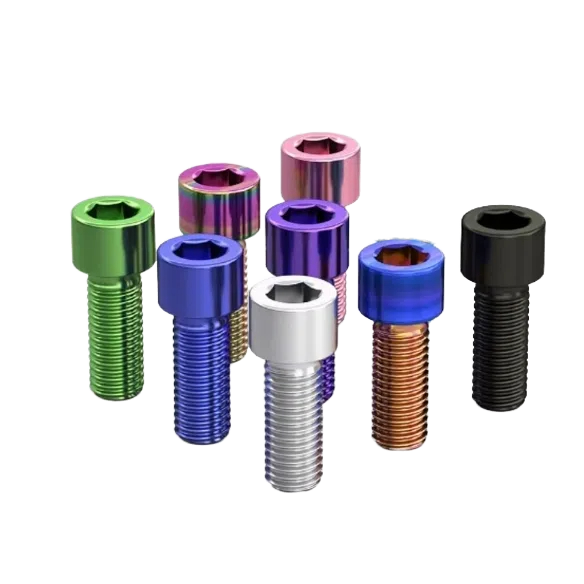
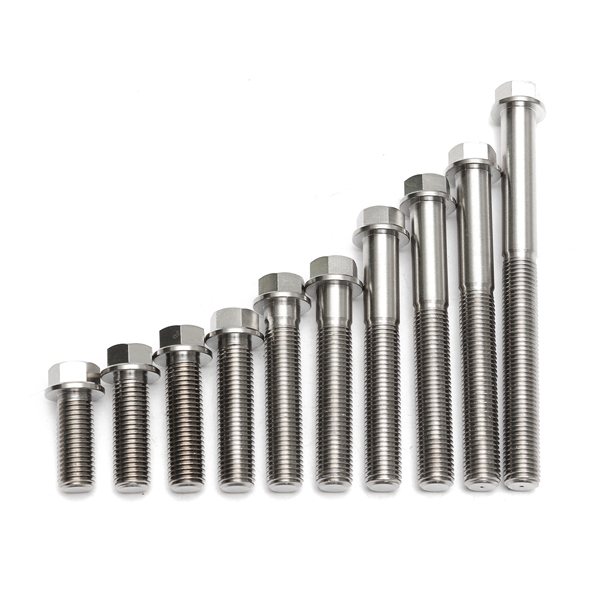
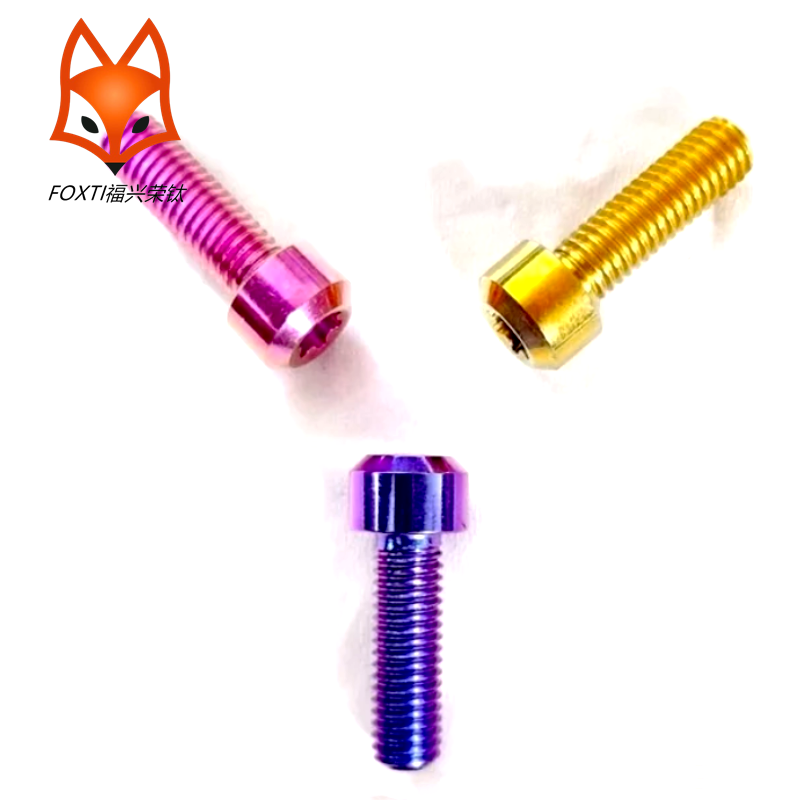
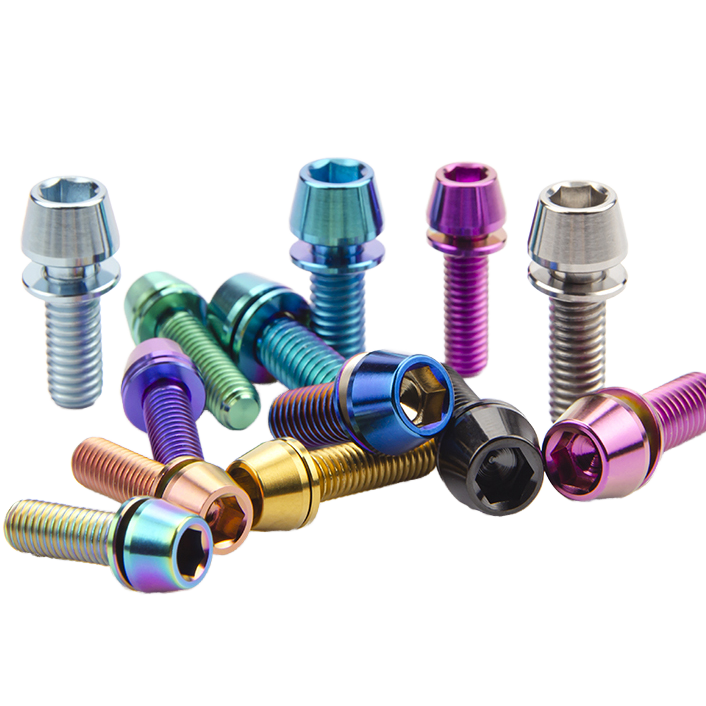
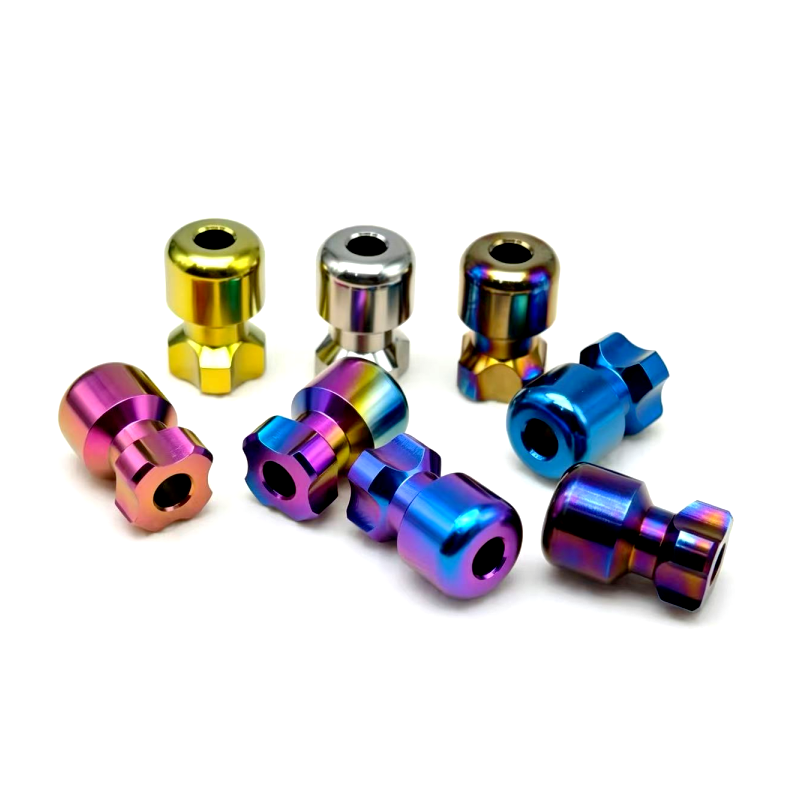
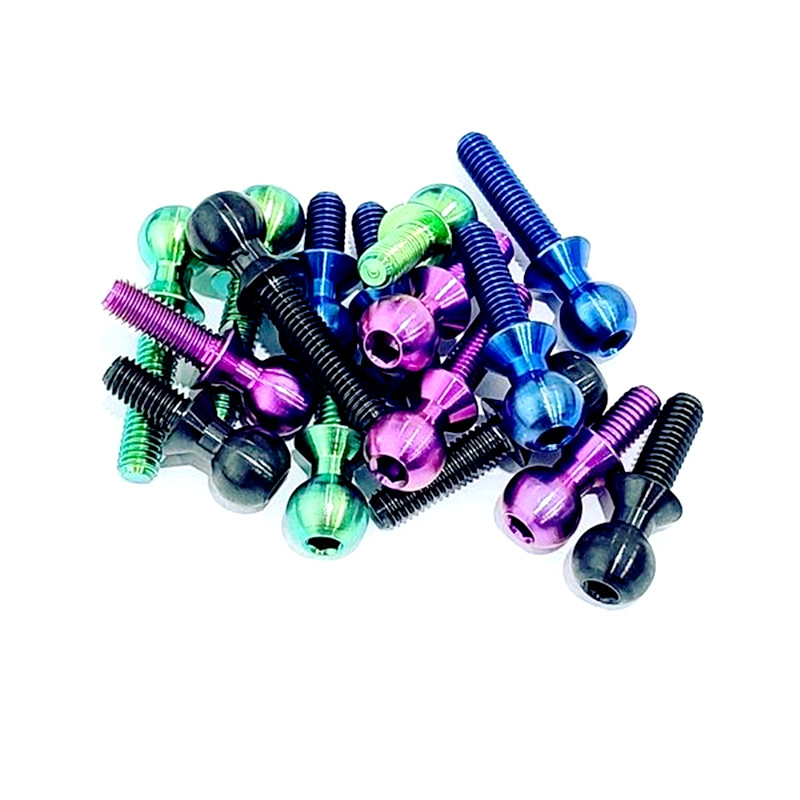
Featured Precision Titanium Fasteners & Stud Assemblies
Precision-turned from high-purity Ti-6Al-4V alloy stock. Engineered with rolled threads for ultimate fatigue resistance against shear loading.
Materials Science & Structural Mechanics
Engineering OEM Titanium Wheel Studs for High-Torque Hub Applications
A technical evaluation of why grade-certified titanium alloys are surpassing traditional carbon and chromoly steel in performance, longevity, and structural safety.
Ti-6Al-4V Metallurgical Integrity
Our wheel studs utilize Ti-6Al-4V Grade 5, an alpha-beta alloy characterized by a minimum tensile strength of 895–950 MPa. With a density of 4.43 g/cm³, it yields an exceptional strength-to-weight ratio, stripping critical unsprung rotational mass from hub assemblies without yielding under extreme shear loads.
Cold-Rolled Thread Topography
Unlike budget fasteners machined with cut threads that disrupt grain orientation, our studs utilize a dedicated cold-rolling process. This compresses the molecular grain boundaries continuously across root radiuses, reducing stress risers and improving cyclic fatigue life by over 300% under high-frequency impact.
Galling Mitigation & PVD Deposition
Titanium-to-titanium or titanium-to-aluminum thread interfaces are vulnerable to galling under friction-generated preloads. We solve this through advanced Physical Vapor Deposition (PVD) titanium nitride/carbon coatings and controlled micro-finish anodizing that stabilize thread surface lubricity.
| Mechanical & Environmental Property | Verqo Ti-6Al-4V (Grade 5) Studs | Grade 10.9 Chromoly Steel Studs | Commercially Pure Ti (Grade 2) |
|---|---|---|---|
| Specific Density | 4.43 g/cm³ (~43% reduction) | 7.85 g/cm³ | 4.51 g/cm³ |
| Yield Strength (Rp 0.2) | 828 – 910 MPa | 940 MPa | 275 – 350 MPa |
| Ultimate Tensile Strength (Rm) | 895 – 1000+ MPa | 1040 MPa | 345 – 450 MPa |
| Marine Environment Corrosion Rate | 0.00 mm/year (Self-passivating TiO₂) | High (Requires Cadmium/Zinc barrier) | 0.00 mm/year |
| Thermal Expansion Coefficient | 8.6 × 10⁻⁶ / K (Low thermal distortion) | 11.7 × 10⁻⁶ / K | 8.6 × 10⁻⁶ / K |
| Magnetic Permeability | Non-Magnetic (μ ≤ 1.00005) | Ferromagnetic | Non-Magnetic |
Regional Industrial Focus
Applied Engineering: Why Liepāja Fleets Require Titanium Fasteners
Addressing the convergence of Baltic maritime climate corrosion, specialized automotive engineering, and regional logistic requirements.
The Liepāja Port & Coastal Microclimate Impact
Liepāja's unique position as an ice-free seaport along the western Latvian coastline exposes vehicles, commercial machinery, and intermodal port haulers to relentless atmospheric chlorides and cold, damp salt-spray environments. In winter operations, the application of harsh de-icing chemicals on coastal arterial networks triggers rapid galvanic corrosion on standard zinc-plated and Dacromet-coated wheel studs.
When carbon steel studs suffer microscopic salt penetration, oxidation within hub interfaces results in thread seizure, erratic torque tension variations, and catastrophic stud embrittlement. Our Grade 5 titanium wheel hardware establishes a spontaneous, self-healing Titanium Dioxide (TiO₂) passive barrier that remains completely inert in saline, acidic, and chemical environments, eradicating stud seizure during critical wheel changes.
Motorsport, Transport & EV Trends in Western Latvia
Beyond commercial shipping through the Liepāja Special Economic Zone (SEZ), the regional focus on automotive innovation and motorsport (including rally and track circuits across the Baltic corridor) demands uncompromising hardware performance. High-performance teams and specialized workshops in Kurzeme continuously look to eliminate rotational unsprung mass.
Switching from factory OEM steel lugs to our rolled-thread titanium studs removes between 1.2 kg and 2.5 kg of unsprung mass across a vehicle's hubs. This reduction noticeably lowers moment of inertia, improves suspension dampening response through rough surfaces, and dissipates brake rotor heat significantly faster due to titanium's distinct thermodynamic characteristics.


Direct Manufacturer Competence
Why Liepāja Importers & OEMs Rely On Verqo
Direct supply straight from Baoji, China's world-renowned "Titanium Valley", backed by full trace certification and rigorous quality controls.
Baoji Supply Chain Integration
Headquartered at the source of over 60% of China's titanium raw material refining, we guarantee traceable raw billets with known melt chemistries. No re-melted scrap or unverified bar stock is ever admitted to our machining floor.
Precision OEM/ODM Tailoring (M2–M26)
Whether you require standard European thread configurations (M12×1.25, M12×1.5, M14×1.25, M14×1.5), conversion studs with unthreaded guide nose "bullet tips," or specialized spline shoulders, our engineers machine parts to strict micron-level tolerances.
Rigorous Batch-to-Batch Quality Control
Every production lot is subjected to tensile test destruction, torque failure thresholds, thread gauge micro-verifications, and salt spray exposure tests. Full EN 10204 3.1 Mill Test Certificates (MTC) are issued alongside every international commercial shipment.
Procurement Intelligence
Frequently Asked Questions for Liepāja Buyers
Direct technical and commercial answers addressing customs, mechanical specifications, and local installation conditions.
Why choose titanium studs over high-tensile 10.9 or 12.9 chromoly steel?
While Grade 10.9 and 12.9 steel fasteners possess outstanding static tensile properties, they suffer from two major liabilities: high rotational mass and severe susceptibility to corrosion-induced hydrogen embrittlement. In saline Baltic port environments like Liepāja, coated steel rapidly develops surface rust. Verqo's cold-rolled Grade 5 titanium offers equivalent tensile stability (~950 MPa) while eliminating corrosion entirely and lowering rotational inertia by 43%.
How should titanium wheel studs be torqued to avoid galling or overtightening?
Titanium fasteners should never be torqued dry onto titanium or alloy nuts. We advise applying a high-grade molybdenum disulfide or copper-based anti-seize paste to thread faces. Because anti-seize reduces thread friction, installation torque should typically be calibrated to approximately 80–85% of the vehicle OEM's dry torque specification. Detailed technical torque datasheets are packaged with each batch.
Can custom lengths, drive formats, and bullet noses be produced to CAD files?
Yes. Verqo is an OEM/ODM specialist. We machine wheel studs directly from customer-supplied STP, IGS, or PDF technical drawings. Custom thread transitions (e.g., converting a vehicle hub from an internal bolt to a M14×1.25 to M14×1.5 conversion stud), knurl patterns for press-in hub studs, internal hex/Torx installation drive sockets, and custom laser-engraved logos are standard production capabilities.
What logistics routes and terms apply for delivery into Liepāja, Latvia?
We support multiple delivery models tailored to Baltic logistics. Fast prototype and racing workshop orders are shipped via express couriers (DHL, FedEx, UPS) directly to Liepāja addresses in 4 to 7 business days. Bulk trade volume shipments are consolidated and dispatched under DAP, CIF, or DDP Incoterms via air freight or intermodal sea freight lines directly connecting through regional hubs.
What are the standard Minimum Order Quantities (MOQ) and sample lead times?
For stock profiles, MOQ begins at just 20 pieces, enabling performance garages and specialty dealers to order precise axle sets. Custom CNC turned or specialty knurled wheel stud projects typically start at 50 to 100 pieces. First-article sample prototypes are manufactured, dimensionally verified, and dispatched within 7–10 working days.
Which surface finish is recommended for Baltic winter road conditions?
While natural micro-polished titanium naturally forms a robust TiO₂ passive layer, we highly advise our PVD Black or Burnt Blue vacuum-deposited coatings for harsh winter roads in Latvia. PVD adds an ultra-thin ceramic-like layer that provides high scratch hardness and prevents micro-pitting caused by high-velocity gravel and corrosive chemical slush.
Upgrade Your Fleet or Engineering Catalog with Certified Titanium Wheel Studs
Whether you require a complete batch of custom race-spec conversion studs or high-volume OEM manufacturing for distribution in Kurzeme and the Baltic states, Verqo delivers factory-direct precision with comprehensive metallurgical assurance.
Get a Quote