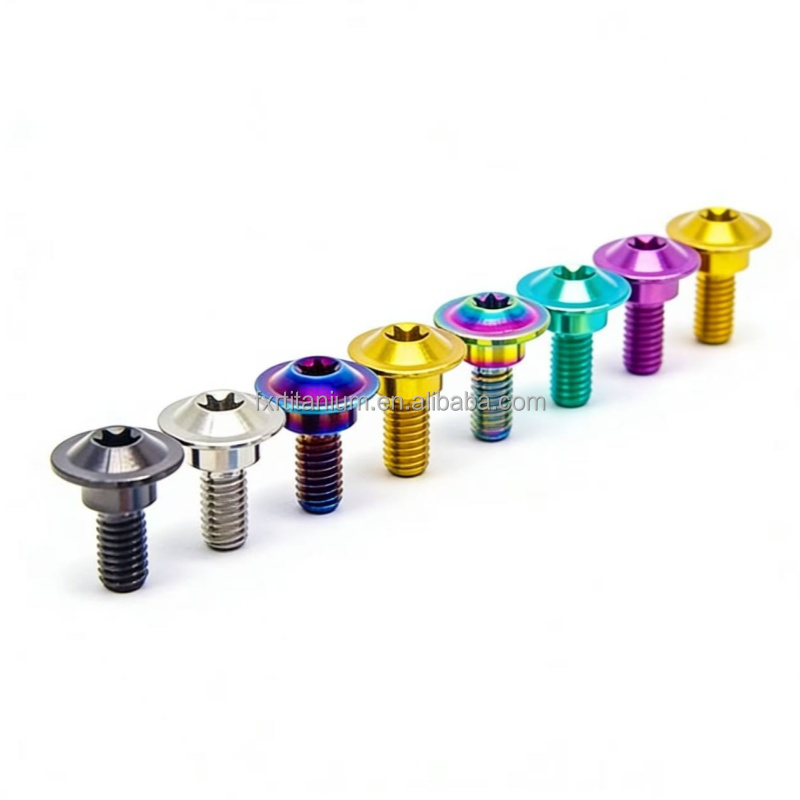
Precision Engineering Series
Specialized Titanium Hardware Showcase
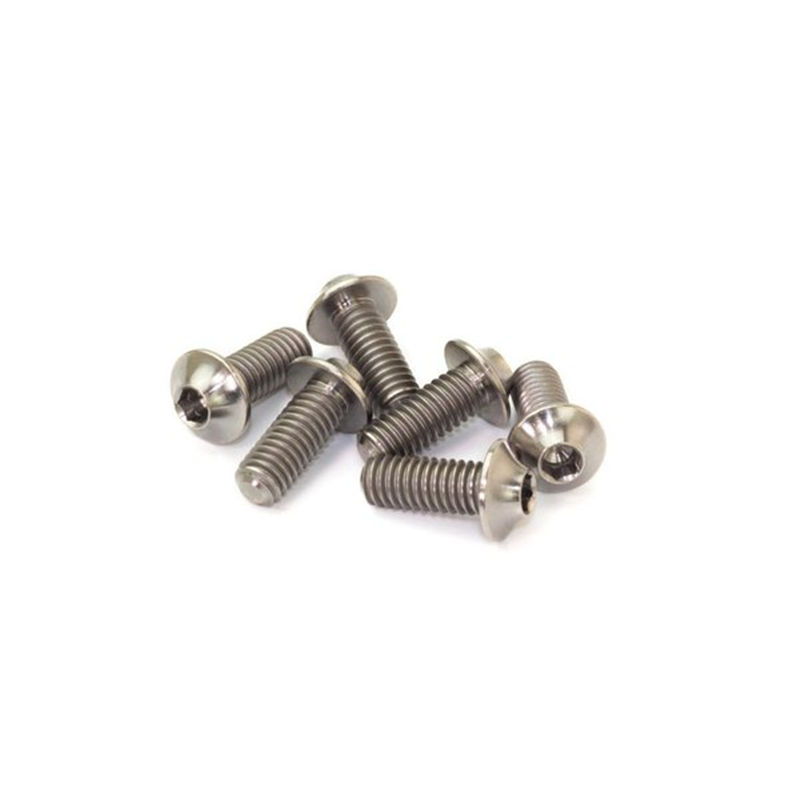
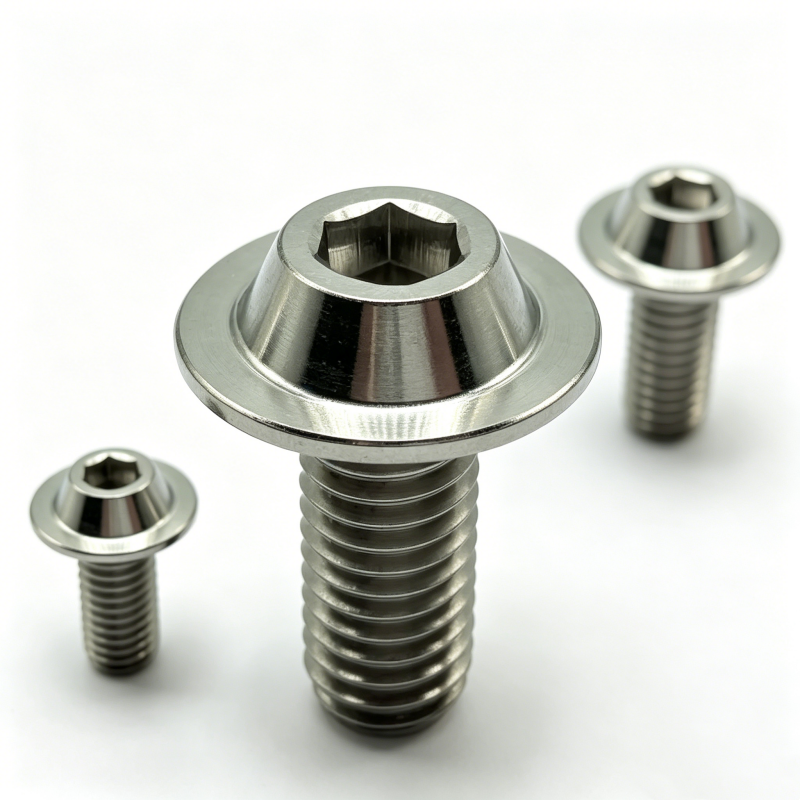
High-tensile Grade 5 (Ti-6Al-4V) components configured for low unsprung mass, exceptional shear integrity, and permanent resistance to oxidation under Northern European atmospheric conditions.
4.43 g/cm³
Density (~43% Steel Mass)
≥ 895 MPa
Tensile Yield Rating
±0.005 mm
Ball Sphericity Tolerance
≤ 2 Hours
Direct B2B Response Window
Kinematic Analysis: Why Titanium Ball Stud Geometry Dictates 1/10 and 1/8 RC Lap Times
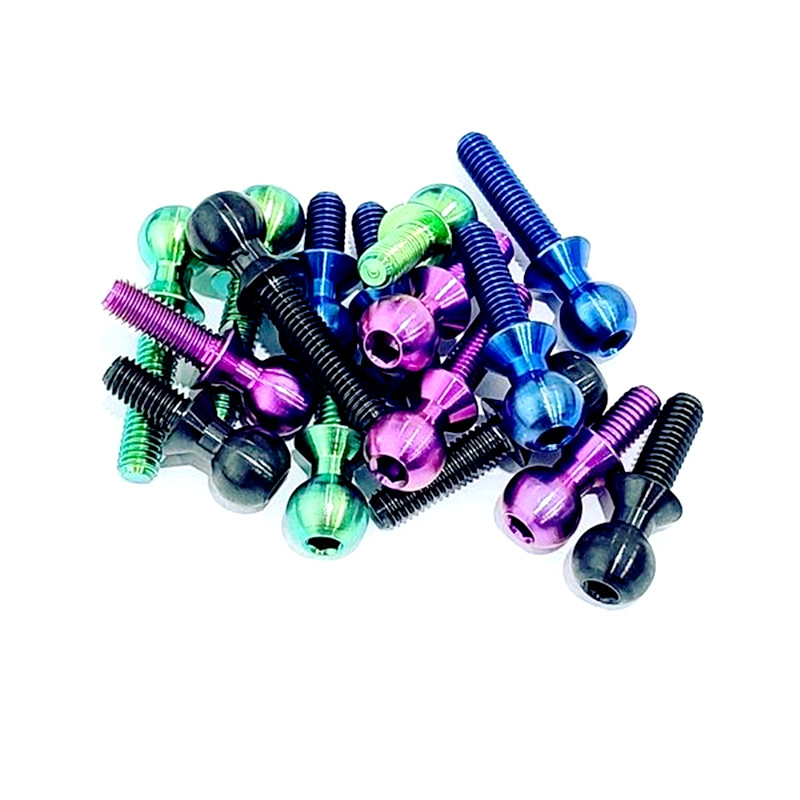
In competitive remote-controlled motorsports, the ball stud is far more than a standard passive threaded fastener; it constitutes the instantaneous roll-center pivot, steering knuckle axis, and camber-link articulation point for the entire double-wishbone suspension assembly. Across professional racing circles in Denmark and the wider Nordic circuits, suspension geometries are subjected to tremendous shock cycles during multi-directional curb strikes, high-traction carpet transitions, and washboard track features. Standard carbon steel studs present an unacceptably high unsprung mass penalty, whereas commercial aluminum alloy alternatives (such as 7075-T6) fail under high-impact shear stresses, fracturing at the neck transition fillet during heavy barrier contacts.
Our factory specializes in Grade 5 Ti-6Al-4V (Aerospace Specification ASTM B348 / AMS 4928), offering a superior strength-to-weight profile with a minimum ultimate tensile strength exceeding 895 MPa, paired with an elastic modulus (~114 GPa) roughly half that of alloy steel. This specific modulus provides a minute degree of micro-elastic damping under extreme impact spikes, protecting delicate carbon graphite suspension arms and steering hubs from catastrophic fracture without transmitting unwanted compliance into the steering rack. Every ball stud manufactured for Odense teams, hobby distribution suppliers, and micro-chassis builders features precision cold-rolled threads and optical-comparator checked sphere profiles to ensure uniform zero-slop fitment into Delrin, POM, and composite ball cups.
Zero Neck Notch Stress
Engineered with a smooth transition radius at the base of the spherical head. Eliminates typical micro-shear cracking caused by abrupt CNC step cuts under heavy angular steering loads.
Mirror-Polished Sphericity
Micro-finished to Ra ≤ 0.2 μm surface smoothness. Prevents localized friction binding, minimizes wear on nylon ball cups, and guarantees linear suspension feedback across long endurance heats.
Optimized Hex Drive Depths
Broached with accurate 1.5mm / 2.0mm inner hex sockets to full industrial depth. Avoids stripping during fast pit-lane camber and roll-center link height adjustments under race pressure.
Localized Application Scenarios in Odense & Syddanmark Circuit Environments
The municipality of Odense, situated in the heart of Funen (Fyn), serves not only as Denmark’s prominent robotics corridor but also as a hub for precision miniature mechanics and competitive RC motorsport engineering. Model clubs and private test drivers throughout the Syddanmark region operate in diverse micro-climates and surface mediums, requiring specialized metallurgy suited to specific racing conditions:
High-Grip Indoor Carpet / EOS Tracks
Indoor facilities during Danish winters demand ultra-low chassis roll angles. Titanium ball studs lower the unsprung mass at the outer knuckle, reducing rotational moment of inertia during high-frequency steering inputs on high-traction needle felt carpets.
Damp Outdoor Clay & Astroturf Buggying
Danish coastal humidity and rain lead to flash rusting on untreated carbon steel pivots within hours. Our GR5 titanium ball studs form a passive TiO2 film instantly, maintaining frictionless rotation even when drenched in wet dirt and aggressive track additives.
Autonomous Micro-Robotics & Drones
Leveraging Odense’s thriving autonomous robotics cluster, our M2 to M4 titanium spherical studs serve as ultra-durable linkage joints for compact robotic arms, miniature gimbal actuators, and sensor positioning mechanisms requiring non-magnetic properties.
Material Property Benchmark: Gr5 Titanium vs Standard Alternatives
The table below provides engineering performance indicators comparing our proprietary Gr5 Ti-6Al-4V alloy with generic automotive grade steel fasteners and commercial 7075-T6 aluminum alloys.
| Performance Indicator | Verqo Gr5 (Ti-6Al-4V) | Alloy Steel (Class 10.9) | Alloy Steel (Class 12.9) | Aluminum 7075-T6 |
|---|---|---|---|---|
| Density (g/cm³) | 4.43 (Optimal) | 7.85 | 7.85 | 2.81 |
| Ultimate Tensile Strength (MPa) | 895 – 1000 | 1040 | 1220 | 572 |
| Yield Strength (0.2% Proof, MPa) | 828 – 910 | 940 | 1100 | 503 |
| Strength-to-Weight Ratio (kN·m/kg) | 214 (High Efficiency) | 132 | 155 | 203 |
| Corrosion / Atmospheric Resistance | Permanent (Inert) | Poor (Requires Plating) | Poor (Susceptible to Rust) | Moderate (Pits over time) |
| Magnetic Susceptibility | Non-Magnetic | Ferromagnetic | Ferromagnetic | Non-Magnetic |
| Failure Mechanism in Ball Stud Neck | Ductile Yield (No Sudden Break) | High Stress Fracture | Brittle Shear Snap | Rapid Fatigue Cleavage |
Procurement & Technology Trends across the Scandinavian RC Sector
The high-end model racing market in Northern Europe has transitioned away from generic, mass-packaged hardware kits. Specialized racing workshops, club teams, and regional distributors in Denmark, Sweden, and Germany now prioritize specific technical features:
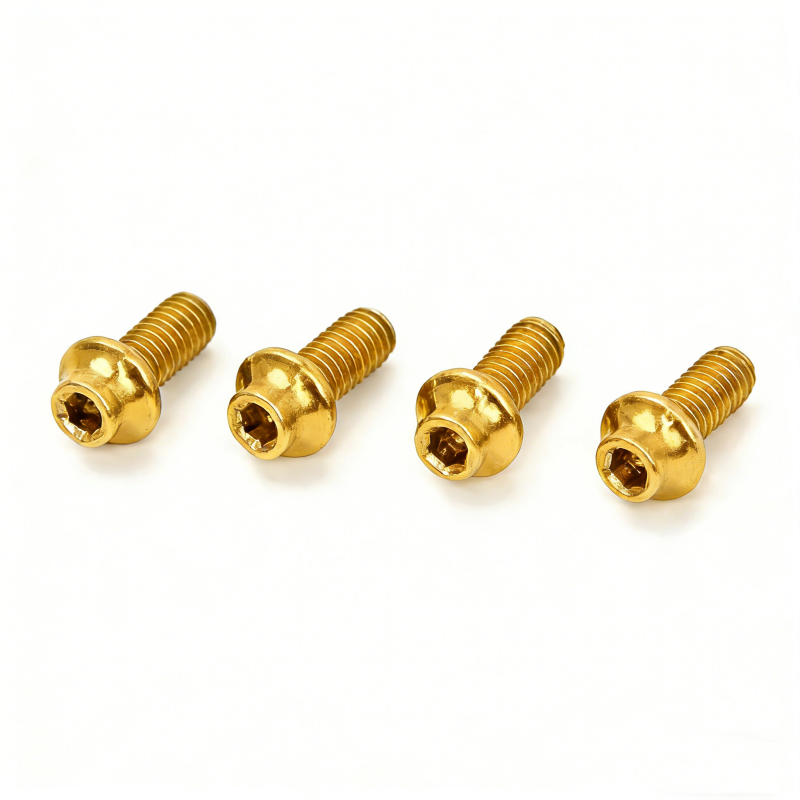
1. Shift Toward PVD (Physical Vapor Deposition) Low-Friction Coatings: Danish track conditions—particularly fine carpet lint and dry astro silica sand—act as dynamic grinding compounds inside suspension linkages. By depositing sub-micron layers of Titanium Nitride (TiN Gold) or Diamond-Like Carbon (DLC Black) onto our titanium ball studs, surface hardness exceeds HV 2200. This dramatically curtails micro-abrasion, prolonging link tolerance and saving drivers from mid-season geometry drift.
2. Standardization on Fine Incremental Metric Heights: Modern suspension design demands millimeter-fraction roll-center tuning. Rather than stacking multiple unstable aluminum washers under the ball stud base, Odense tuners prefer integrated flange step heights (e.g., 4.5mm ball diameter with 1mm, 2mm, 3mm, and 4mm integrated base collars). Our CNC facility accommodates direct production runs of customized neck heights, reducing joint flex and stack tolerances.
3. Sustainable, Reusable Fastening Hardware: Scandinavian buyers consistently favor durability over disposable components. While soft steel studs corrode and strip their hex heads after two teardowns, Gr5 titanium fasteners endure endless rebuilds across multiple competition seasons, substantially reducing lifecycle costs for privateer racers and club teams.
Verqo Factory Credentials: Direct from China's "Titanium Valley"
Headquartered in Baoji, Shaanxi Province—globally acknowledged as the premier hub for titanium ingot refining and aerospace titanium machining—Verqo Titanium Products Co., Ltd. brings over a decade of dedicated OEM/ODM experience directly to your supply chain. We eliminate unnecessary intermediary markups, guaranteeing material traceability, consistent metallurgy, and certified precision for global buyers.
100% Certified Gr5 Raw Material
We machine exclusively from ultrasonic-inspected, vacuum-melted Ti-6Al-4V bar stock. Chemical composition and mill test certificates accompany every production batch for complete traceability.
Multi-Axis Swiss CNC Centers
Equipped with high-precision citizen-type Swiss-turning machinery, executing ball-turning, socket broaching, and thread single-point chasing in one clamping cycle for total concentricity.
Advanced Anodizing & PVD
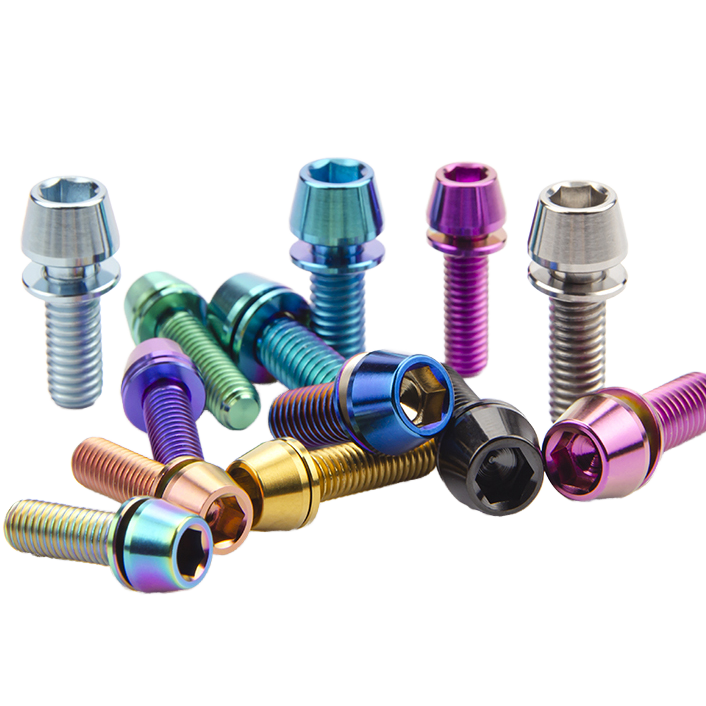
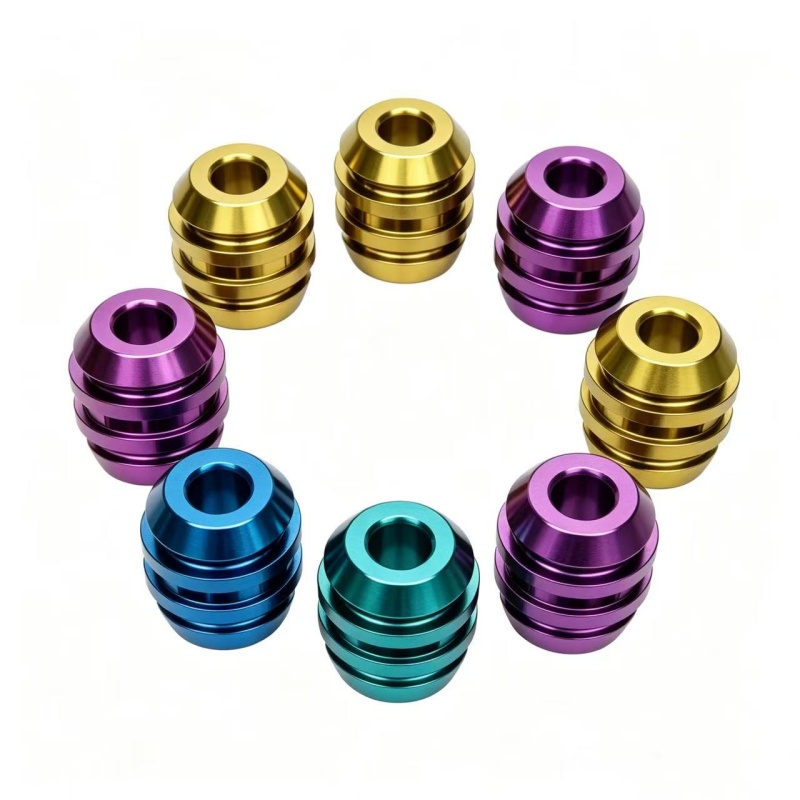
In-house specialized electrolytic anodizing (Purple, Blue, Burnt Gold, Rainbow) and vacuum PVD coating systems produce consistent color depth without compromising micro-tolerances.
Rapid B2B Sample Prototyping
Custom thread profiles (M2, M2.5, M3, M4, M5, M6 or UNF/UNC threads) turned from CAD drawings or physical samples within 7 business days for Danish engineering evaluation.
Flexible Order Scales
Whether you require a pilot prototype batch of 50 ball studs for team chassis testing or 100,000 units for branded OEM kits, our tiered pricing and production scheduling adapt smoothly.
Express Scandinavian Logistics
Standard air-express delivery windows to Odense and Copenhagen within 4 to 6 business days via DHL, FedEx, or UPS, packed in secure anti-scratch shock-absorbing compartments.
Frequently Asked Questions: Sourcing Titanium Ball Studs for Odense & EU Buyers
Here are direct answers addressing technical specifications, logistics, Danish customs, and mechanical integration for hobby suppliers, brand distributors, and precision robotics workshops:
Q1: How does Gr5 titanium prevent galling when threaded into aluminum bulkheads?
Titanium can exhibit galling when torqued dry into 7075-T6 aluminum or another titanium component under high friction. We recommend a minimal drop of synthetic PTFE grease, anti-seize paste, or medium-strength anaerobic thread locker (e.g., Loctite 243). This seals the thread interfaces while maintaining consistent torque tension across repeated race teardowns.
Q2: What are the standard ball stud diameters available for 1/10 and 1/8 scale RC?
Our standard production lines cover 4.0mm, 4.3mm, 4.8mm, 5.0mm, 5.5mm, 5.8mm, and 6.0mm ball head diameters, with thread shanks ranging from M2 to M6, as well as 4-40 UNC imperial options for American chassis platforms. Custom overall lengths and integrated step collars can be machined directly from your CAD step files.
Q3: What are the customs duty considerations and shipping durations to Odense, Denmark?
Shipments to Denmark (EU) fall under standard industrial fastener TARIC codes (typically 8108.90 for titanium articles). We provide full export declarations, commercial invoices, and packing slips. Door-to-door express transit to Odense (via DHL Express / FedEx Priority) generally clears Danish customs at Billund or Copenhagen within 3–5 working days.
Q4: Can you produce custom ball studs with hex broaching at the top of the sphere?
Yes. Many modern RC designs feature an upper 1.5mm or 2.0mm inner hex through the top of the ball pivot, allowing tuners to adjust height using a hex driver even when restricted by close-proximity shock towers. Our CNC Swiss lathes broach these drives concentric to the shank within ±0.01mm.
Q5: What is the Minimum Order Quantity (MOQ) for custom-colored anodized batches?
For catalog stock sizes, MOQ starts as low as 20 to 50 pieces. For custom CNC dimensional specifications or specialized PVD finishes (e.g., Neochrome rainbow or DLC Black), minimum runs typically begin at 100 to 200 pieces, offering maximum affordability for regional teams and hobby storefronts.
Q6: Do your titanium ball studs withstand outdoor dirt and winter salt conditions?
Absolutely. Unlike high-carbon steel studs which readily pit and corrode when exposed to outdoor humidity, salt, or track chemicals, Grade 5 titanium is completely impervious to saltwater attack and outdoor weathering. It will never rust, freeze inside composite sockets, or lose its mirror surface finish.
Upgrade Your Chassis Linkages with Aerospace Grade 5 Titanium
Whether you require high-volume production for commercial retail distribution across Denmark or bespoke suspension linkages for elite racing chassis, our engineering team in Baoji's Titanium Valley is ready to assist.