Featured Precision Fasteners & Motorsport Components
Engineered to DIN, ISO, and race-grade aerospace standards for automotive workshops, custom engine tuners, and high-performance rebuilders in Prizren.
Metallurgical Superiority in High-Temperature Exhaust Environments
Automotive exhaust manifolds operate under the most unforgiving physical and mechanical parameters in modern internal combustion powerplants. Located immediately adjacent to the cylinder head exhaust ports, exhaust manifold studs undergo continuous, severe thermal cycle stress, alternating between ambient temperatures and operating environments in excess of 800°C. In conventional automotive assemblies, factory-installed Grade 8.8 or Grade 10.9 zinc-plated carbon steel studs suffer from progressive microstructural embrittlement, oxidation scaling, and coefficient mismatch against aluminum cylinder heads.
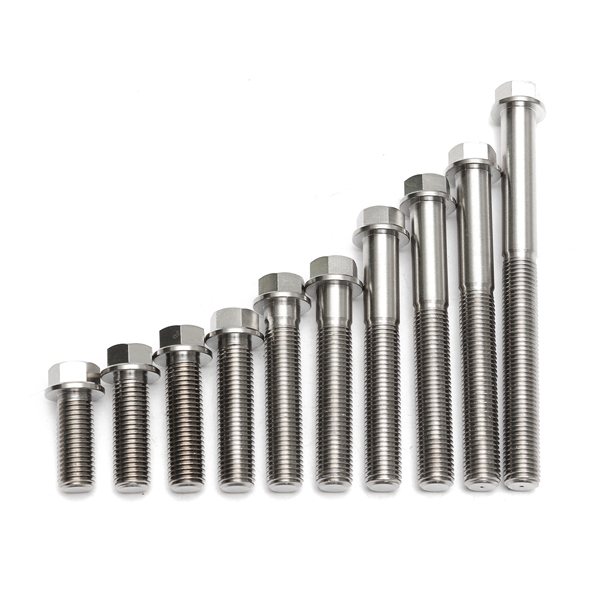
In contrast, our Grade 5 Titanium (Ti-6Al-4V / ASTM B348) manifold stud kits provide a comprehensive engineering upgrade. Featuring a dual-phase alpha-beta crystalline structure, Ti-6Al-4V delivers an exceptional minimum tensile yield strength of 828 MPa, combined with a thermal expansion coefficient ($\alpha = 8.6 \times 10^{-6}/\text{K}$) that harmonizes seamlessly with high-grade aluminum heads ($\approx 22 \times 10^{-6}/\text{K}$) compared to rigid steel fasteners. This metallurgical compatibility virtually eliminates the common failure mode of exhaust gas blowout caused by relaxation of clamping load during intense thermal expansion phases.
Shear Fatigue Elimination
Repeated thermal expansion differentials between heavy cast-iron or stainless manifolds and light alloy cylinder heads impose severe lateral shear loads on standard studs, inevitably snapping OEM fasteners flush with the block.
Zero Galvanic Seizing
Titanium instantly generates a chemically inert, self-healing titanium dioxide ($TiO_2$) passive layer. This barrier prevents galvanic bridge reactions, ensuring the studs never rust-weld or freeze permanently into aluminum cylinder heads.
Precision Rolled Threads
Unlike cheaper aftermarket hardware turned with conventional lathe-cut threads, our exhaust studs feature cold-rolled Class 6g threads, preserving unbroken grain structures to yield a 300% increase in fatigue endurance limits.
Localized Application Scenarios in Prizren and Southern Kosovo
Situated strategically along the historic trade axis connecting the Kosovo plains with Albania via the Morinë corridor and North Macedonia through the Sharr mountain passages, Prizren represents a critical automotive transit, logistics, and mechanical reconditioning hub in the Western Balkans. The extreme geographic topography surrounding the Prizren district—characterized by steep mountain gradients, high alpine passes, and prolonged high-load driving—places severe thermal stress on both commercial transport fleets and consumer powertrains.
During the intense winter months in the Prizren municipal region, local road management utilizes aggressive salt-based chemical de-icers. When vehicles operate under continuous high load ascending the Sharr Mountain corridors toward Prevalla, exhaust temperatures spike significantly, followed immediately by exposure to sub-zero slush. This rapid temperature cycling and chemical exposure accelerates galvanic corrosion on traditional steel manifold fasteners, leading to catastrophic stud breakage, manifold warping, and exhaust gas leaks that compromise turbocharger spool dynamics and cabin air safety.
Alpine Commercial Fleets
Light commercial vehicles and regional logistics sprinters traversing Prizren-Gjakova-Pristina routes rely on titanium studs to stop persistent manifold warping and recurring downtime caused by failed factory studs.
Tuning & Turbo Builds
Kosovo's passionate performance aftermarket focuses on high-boost turbo conversions (VAG 1.8T/2.0 TFSI, BMW M57/B58). Titanium studs resist high exhaust backpressures and prevent flange gaps.
Engine Remanufacturing
Specialist mechanical repair shops along transit avenues in Prizren utilize titanium studs as permanent remediation when extracting snapped OEM fasteners from scarred cylinder heads.
Balkans Racing Teams
Hill climb and circuit racers competing across the regional Balkan Championship series trust our Grade 5 hardware to secure turbochargers and headers under sustained high-temperature racing loads.
Automotive Engineering & Aftermarket Trends in the Prizren Corridor
The automotive repair ecosystem in Prizren and the surrounding Dukagjini valley is experiencing an accelerated technological modernization. Historically dominated by low-cost remanufactured components and generic zinc-plated fasteners, auto service centers are systematically pivoting toward lifetime-guaranteed, aerospace-grade materials. This shift is driven by three measurable market dynamics:
1. Escalating Labor and Machine Shop Costs: In Prizren, extracting a broken carbon steel exhaust stud that has seized inside an aluminum cylinder head requires either specialized EDM extraction or hours of labor-intensive precision machining. Mechanics and fleet managers recognize that the upfront investment in Grade 5 Titanium studs represents massive long-term savings by eliminating stud drill-out labor entirely.
2. Surge in Direct Diesel Tuning and Turbo Retrofitting: Kosovo maintains one of the highest concentrations of European turbo-diesel vehicles per capita. As local tuning specialists push boost pressures higher on modified common-rail platforms, exhaust gas temperatures frequently climb past the thermal yield envelope of original factory fasteners, rendering titanium hardware an essential prerequisite for reliability.
3. Institutional Supply Chain Integration: Automotive supply houses in Prizren are increasingly consolidating procurement by dealing directly with verified factory origins like Baoji, bypassing middle-tier distributors in Central Europe. This direct-to-factory model delivers competitive pricing structures, flexible OEM package branding, and rapid fulfillment schedules via modern Adriatic intermodal routes.
Material Comparison: Exhaust Hardware Performance
| Mechanical & Physical Property | Grade 5 Titanium (Ti-6Al-4V) | OEM Carbon Steel (Gr 8.8 / 10.9) | Commercial 304 Stainless Steel |
|---|---|---|---|
| Density & Weight ($g/cm^3$) | 4.43 (43% Lighter) | 7.85 (Standard Heavy) | 7.93 (Heavy) |
| Ultimate Tensile Strength ($R_m$) | ≥ 895 - 950 MPa | 800 - 1040 MPa | 500 - 700 MPa |
| Yield Strength ($R_{p0.2}$) | ≥ 828 MPa | 640 - 940 MPa | 205 MPa (Very Low) |
| Thermal Expansion Coeff. ($\times 10^{-6}/K$) | 8.6 (Matches Head Better) | 12.0 (High Expansion Delta) | 17.3 (Extreme Expansion Risk) |
| Corrosion / Salt Resistance | Impervious ($TiO_2$ Passivated) | Poor (Galvanic Pitting / Rust) | Moderate (Prone to Galling) |
| Anti-Galling Properties (with paste) | Exceptional Release Lifecycle | Seizes / Rusted Weld | Extremely High Risk of Galling |
| Continuous Temperature Threshold | Up to 600°C (Peaks > 800°C) | Degrades > 400°C | Sensitizes > 450°C |
Precision Manufacturing and Quality Infrastructure
Headquartered in Baoji, Shaanxi Province—internationally recognized as China's Titanium Valley—Verqo Titanium Products Co., Ltd. has spent over a decade perfecting high-precision titanium fasteners and CNC components. Housing over 1,500 square meters of specialized manufacturing facilities, our plant integrates full-cycle manufacturing from raw vacuum-melted titanium sponge ingot processing to cold heading, hot forging, high-speed multi-axis CNC milling, thread rolling, and vacuum surface finishing.
100% Certified Ti-6Al-4V
Every production heat undergoes optical emission spectroscopy and ultrasonic inspection. Complete Mill Test Certificates (MTC) according to EN 10204 3.1 accompany every international batch shipment.
High-Speed CNC Thread Rolling
Our studs feature precision rolled threads rather than machined cuts, delivering burnished thread roots that resist notch sensitivity under severe thermal cycling.
PVD Vacuum Coating & Anodizing
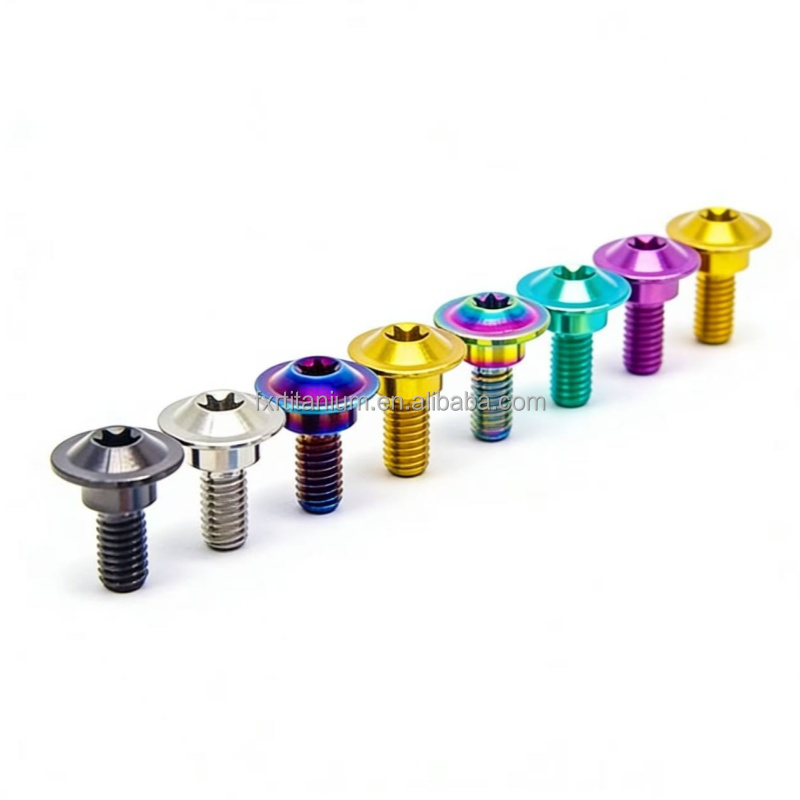
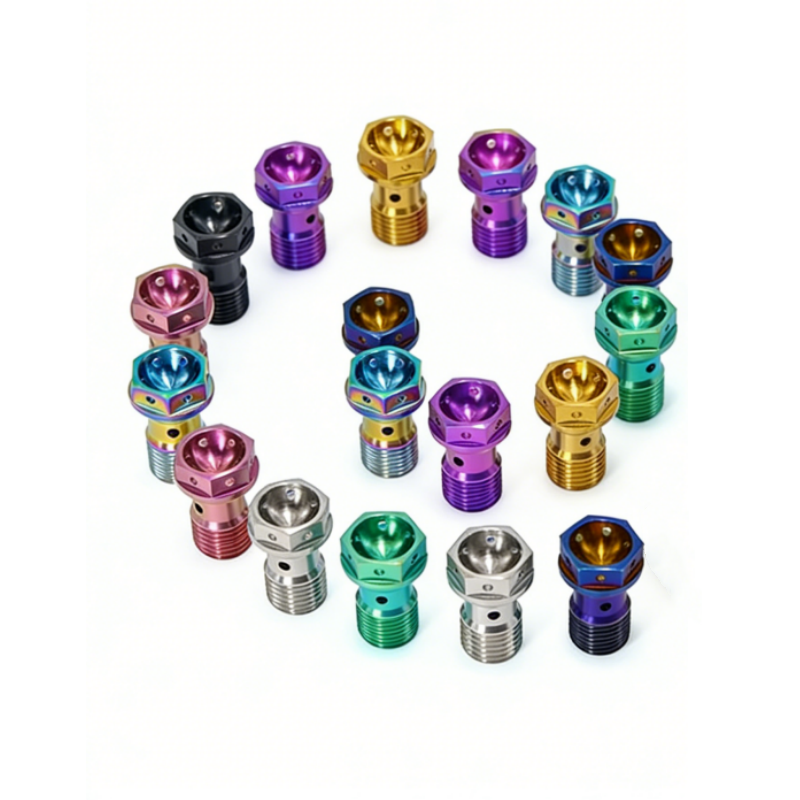
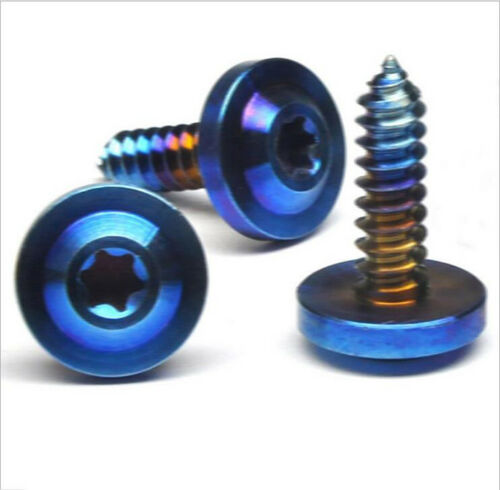
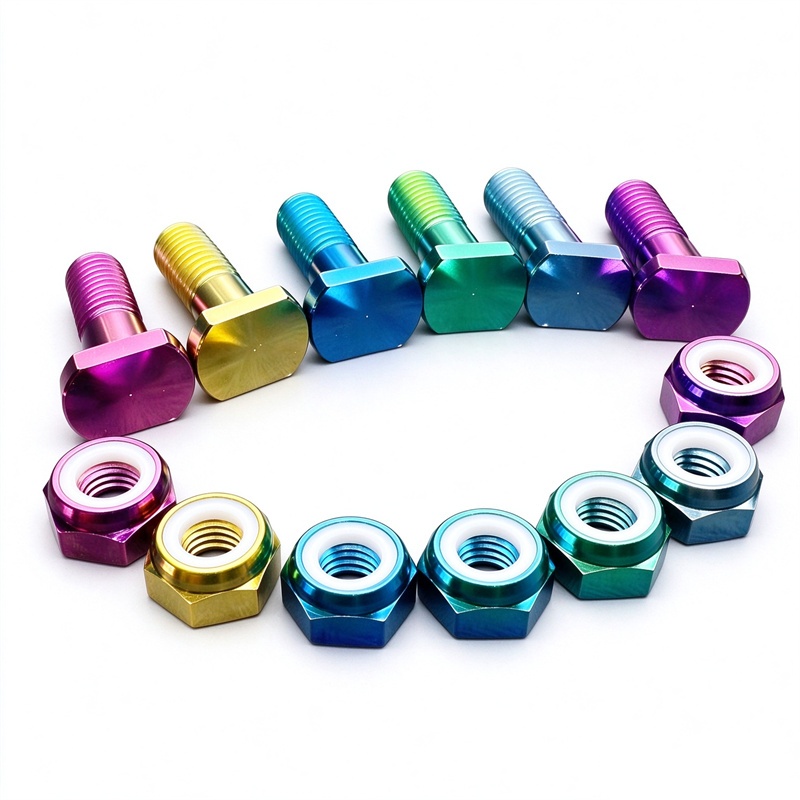
Offering raw polished, burnt-blue heat treated, PVD high-wear black titanium nitride, and vibrant custom anodized finishes for extreme environmental durability.
Frequently Asked Questions for Prizren & Regional Buyers
Critical engineering, trade, and logistics questions answered for importers, workshops, and distributor partners in Kosovo.