Precision Titanium Bolts & CNC Fastening Solutions
Tested under severe shear, rotational fatigue, and sub-zero conditions. Sourced directly from our Baoji manufacturing plant with strict EN 10204 3.1 chemical and physical traceability.
Engineering Standards for Austrian Alpine & Industrial Environments
Why Austrian Tier-1 engineering consultancies and extreme-environment manufacturers replace standard DIN 933/DIN 912 carbon and stainless fasteners with Verqo Grade 5 Titanium.
Austrian Industrial Compliance & DIN/ISO Equivalence
Austrian procurement departments operating across Steiermark, Upper Austria, and Vorarlberg demand absolute dimensional precision conforming to DIN 933 (full thread hexagon), DIN 931 (partial thread), and DIN 912 / ISO 4762 (hexagon socket head cap). Our GR5 titanium hex fasteners are fabricated from cold-headed or multi-axis CNC milled Ti-6Al-4V bar stock meeting ASTM B348 and aerospace AMS 4928 standards.
Unlike standard austenitic A2-70 or A4-80 stainless steels, Verqo Ti-6Al-4V exhibits a minimum yield strength of 828 MPa and an ultimate tensile rating surpassing 895 MPa, matching property class 10.9 steel while saving 43% in unsprung dynamic weight. Each production heat provides fully certified 3.1 chemical inspection certificates detailing nitrogen, oxygen, and hydrogen thresholds to eliminate hydrogen embrittlement hazards.
Sub-Zero Ductility & De-Icing Salt Stress Resilience
Fasteners installed in the Austrian Alps—spanning cable cars in Tyrol, hydro turbines in Salzburg, and off-road mobility equipment—must withstand cyclic freeze-thaw stresses down to -40°C. Conventional carbon bolts develop ductile-to-brittle transitions in severe alpine winters, risking catastrophic shear cleavage.
Grade 5 titanium features an alpha-beta crystal lattice that retains high fracture toughness (KIC values ≥ 55 MPa√m) even at cryogenic thresholds. Furthermore, continuous exposure to aggressive road de-icing agents like magnesium chloride (MgCl2) and calcium chloride (CaCl2) causes stress corrosion cracking (SCC) and pitting in standard alloys. Titanium generates an instantaneous, self-healing TiO2 passive film, offering lifelong immunity to chloride-induced galvanic degradation.
Comparative Property Matrix: Grade 5 Titanium vs. Conventional European Fastener Alloys
| Property Parameter | Verqo GR5 (Ti-6Al-4V) | Austenitic Stainless (A4-80) | Carbon Alloy Steel (Class 10.9) | Aerospace 7075-T6 Aluminium |
|---|---|---|---|---|
| Density (g/cm³) | 4.43 | 8.00 | 7.85 | 2.81 |
| Yield Strength Rp0.2 (MPa) | 828 – 910 | 600 | 940 | 505 |
| Tensile Strength Rm (MPa) | 895 – 1,000 | 800 | 1,040 | 570 |
| Weight Reduction Advantage | ~43% vs Steel | Baseline (Heavy) | Baseline (Heavy) | ~64% vs Steel (Low Yield) |
| Alpine Chloride Ion Resistance | Absolute Immunity (TiO2 film) | Susceptible to Crevice SCC | Severe Rusting (Needs Zinc Flake) | Galvanic Pitting Prone |
| Charpy Impact at -40°C (J) | 28 – 34 (No brittle transition) | 35 – 45 | 15 – 20 (Brittle drop risk) | 10 – 14 |
| Elastic Modulus (GPa) | 114 (Superior elasticity & damping) | 193 | 210 | 72 |
Localized Austrian Applications for Hexagon Fasteners
Precision-matched for regional engineering clusters across Graz, Linz, Vienna, and Innsbruck.
Automotive Clusters in Graz & Steiermark
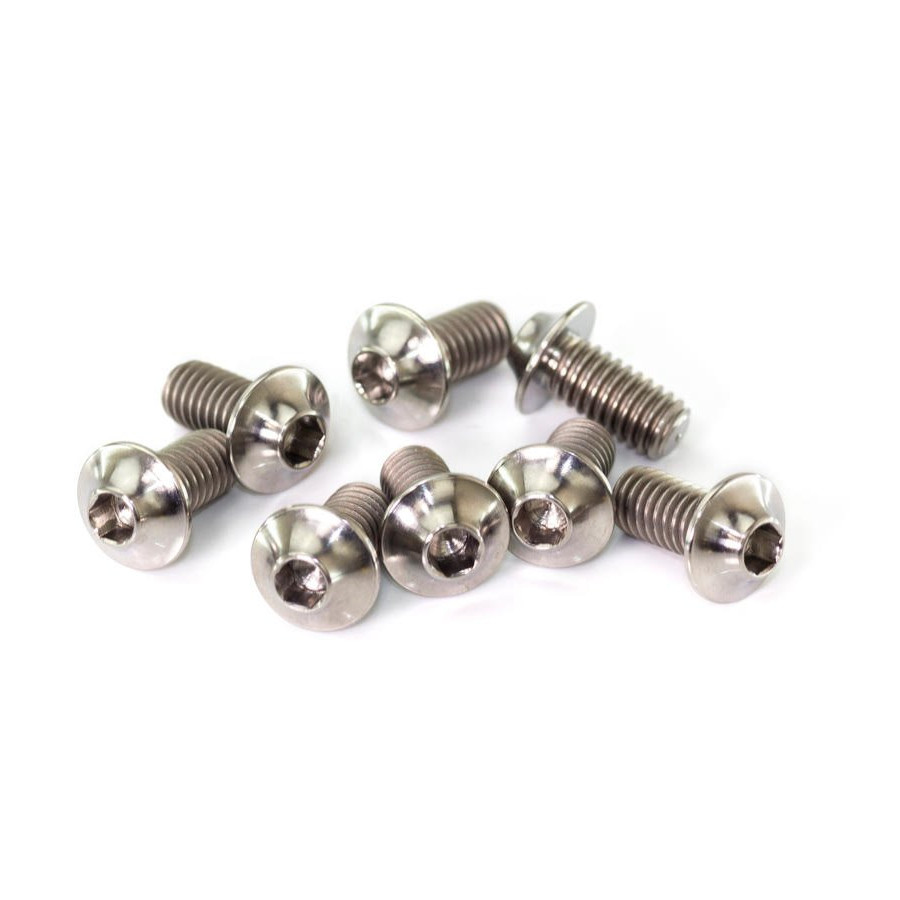
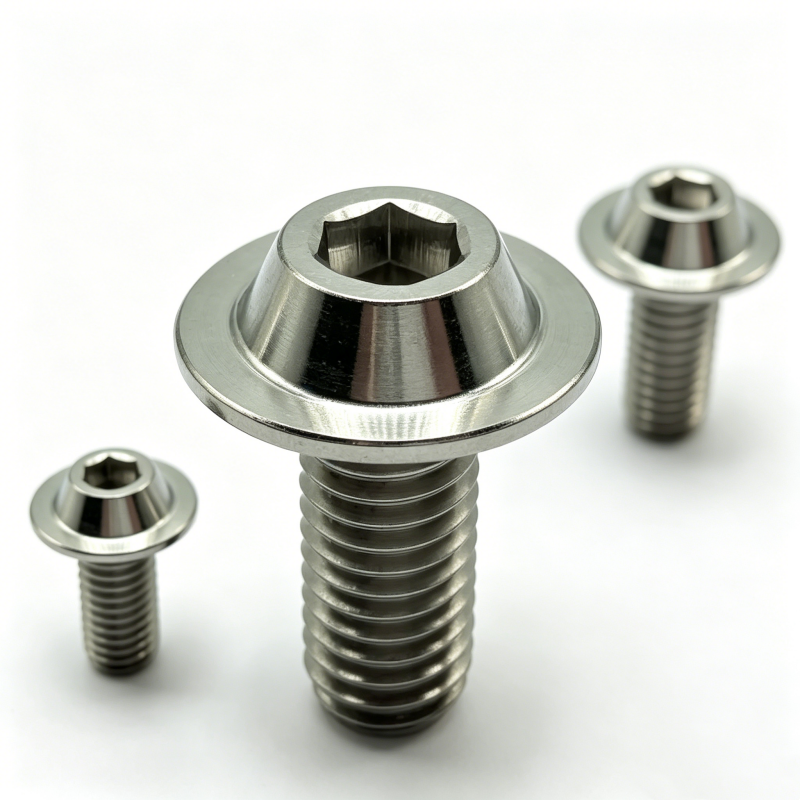
Austria’s automotive hubs specialize in high-end vehicle assembly and custom driveline engineering. Our Grade 5 M6, M8, and M10 drilled hex flange bolts and 12-point racing studs reduce unsprung mass in suspension hubs, brake caliper mounts, and turbocharger manifolds, withstanding high thermal cycles without bolt relaxation.
Alpine Cable Car & Ski Lift Infrastructure
Tyrol and Vorarlberg require structural and electrical fastening systems that endure high dynamic tension and cyclic wind buffeting across exposed alpine summits. Titanium hex bolts eliminate heavy anti-corrosion maintenance cycles in ropeway gondola grips, safety braking sensors, and automated de-icing systems.
Run-of-River & Alpine Hydro Turbines
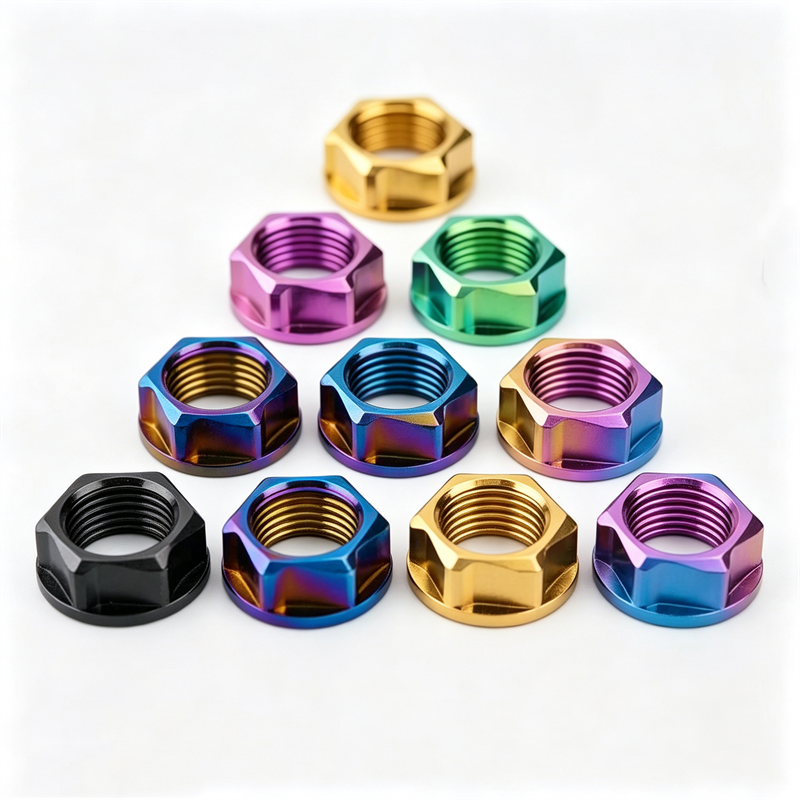
Salzburg and Carinthia generate significant hydro-electric power through Pelton and Francis turbines. Water silt erosion and cavitation cause crevice failure in low-grade alloys. Our titanium flanged locking nuts and custom CNC hex bolts ensure zero corrosion and sustained thread tension in submerged intake valves and control linkages.
Emerging Procurement Trends Across Austrian Industry
How evolving supply chains, light-weighting directives, and eco-standards influence fastener selection.
Lightweighting for High-Performance EV Platforms
Austrian contract manufacturers are actively stripping grams from next-generation commercial EVs and electric motorcycles. Titanium hex hardware achieves substantial rotational inertia reduction on drive shafts, battery casing enclosures, and subframes, assisting in meeting EU zero-emission fleet metrics.
Direct Sourcing from Baoji Titanium Valley
Rather than dealing with intermediary European stockists who impose massive price markups, Austrian purchasing managers are establishing direct relationships with verified Baoji original manufacturers. This guarantees batch consistency, custom CNC dimensioning, and flexible B2B order scaling from prototype to series volume.
Transition from Wet Paint to PVD Vacuum Coating
Austrian technical regulations increasingly disfavor high-VOC coatings and hexavalent chromium plating. Our specialized Physical Vapor Deposition (PVD) titanium nitride (TiN) and titanium carbonitride coatings deliver surface hardness ratings exceeding 2,500 HV without environmental hazards, maintaining pristine aesthetic colors in alpine conditions.
Frequently Asked Questions by Austrian Engineers & Buyers
Direct answers addressing technical standards, customs clearance, surface anti-galling, and order minimums.
?What titanium grades do you use for your industrial hexagon bolts?
Our standard manufacturing specification utilizes genuine aerospace-grade GR5 (Ti-6Al-4V) titanium alloy, delivering a minimum tensile strength of 895 MPa and yield strength ≥ 828 MPa. For chemical processing plants in Linz requiring enhanced resistance to highly oxidizing acids, we also manufacture custom batches in commercially pure Grade 2 (unalloyed) and Grade 7 (palladium-enhanced Ti-0.15Pd).
?How do you prevent thread galling during high-torque installations?
Titanium threads have a natural tendency toward friction pick-up (cold-welding) when mated against identical metals or dry stainless steel. We resolve this by offering micro-smooth thread rolling (surface roughness Ra ≤ 0.4 μm) and specialized PVD anti-friction coatings. We always provide installation guidelines recommending molybdenum disulfide or copper-free anti-seize paste calibrated to achieve accurate clamping preload.
?Can you manufacture non-standard threads or fine pitches common in Austria?
Yes. Alongside coarse metric DIN threads, our CNC machining centers regularly produce fine-pitch fasteners including M10×1.0, M10×1.25, M12×1.25, and M14×1.5, in addition to imperial UNC and UNF thread standards for motorsport or vintage engine rebuilds. Special thread profiles can be executed precisely according to customer-supplied STEP, IGES, or DWG drawings.
?What is the Minimum Order Quantity (MOQ) for Austrian B2B accounts?
We believe in assisting both agile R&D teams and high-volume assembly lines. Standard stock catalog bolts (such as standard M6/M8 hex and socket cap screws) can be ordered with small batch MOQs starting at 10 to 20 pieces. Custom CNC parts built to print typically begin at 50 to 100 units depending on size, finish, and complexity.
?What surface treatments and finishes are available for delivery to Europe?
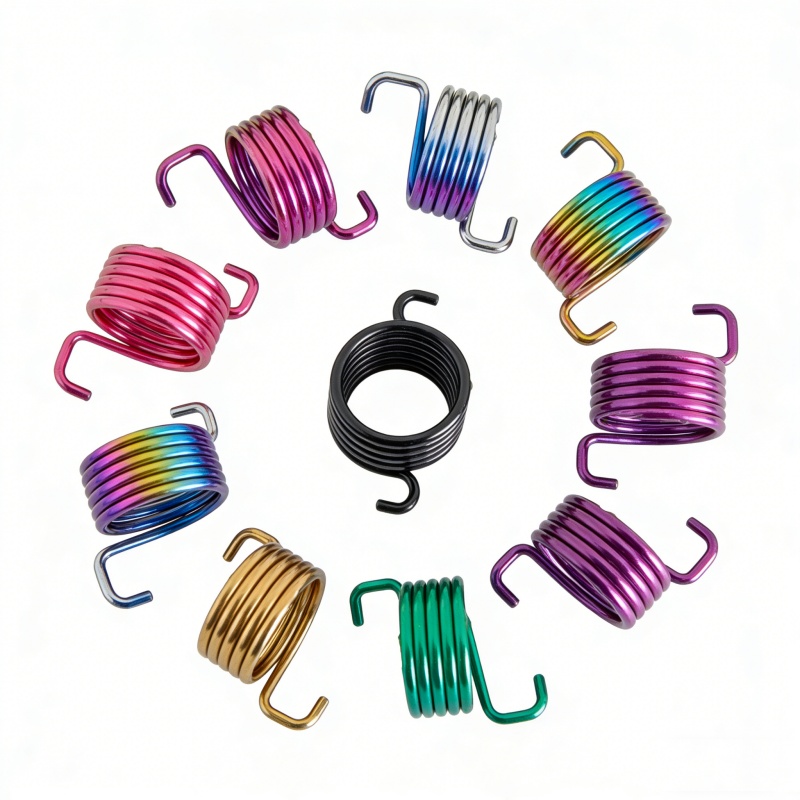
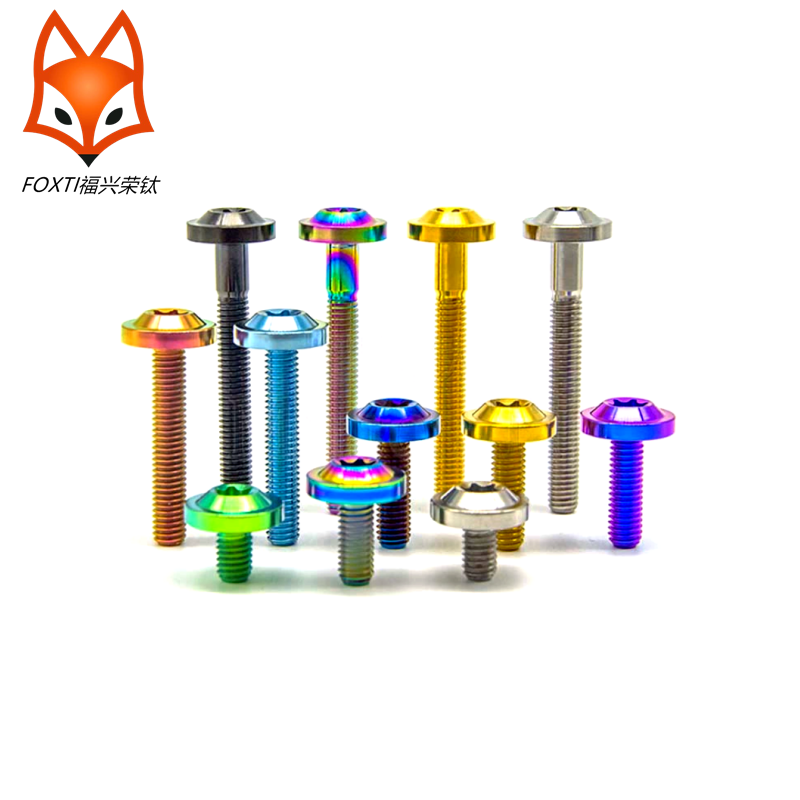
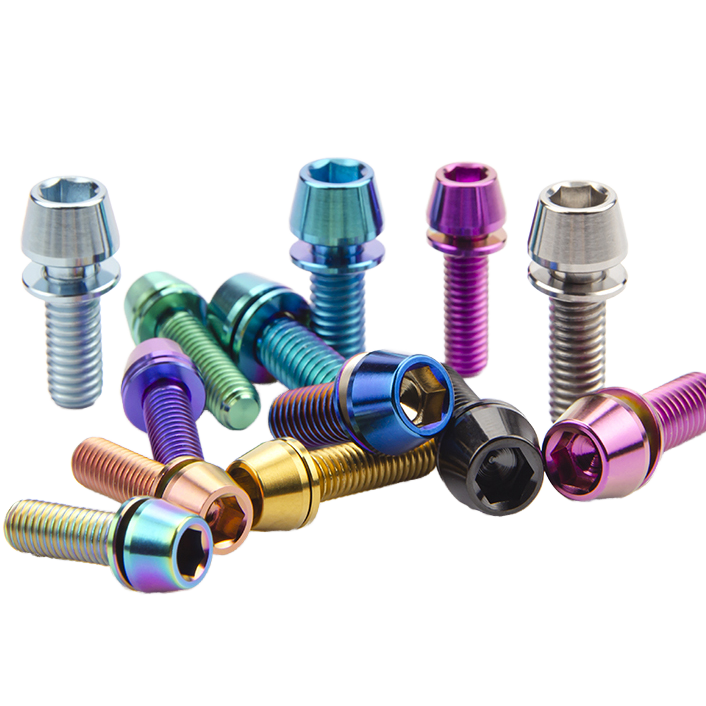
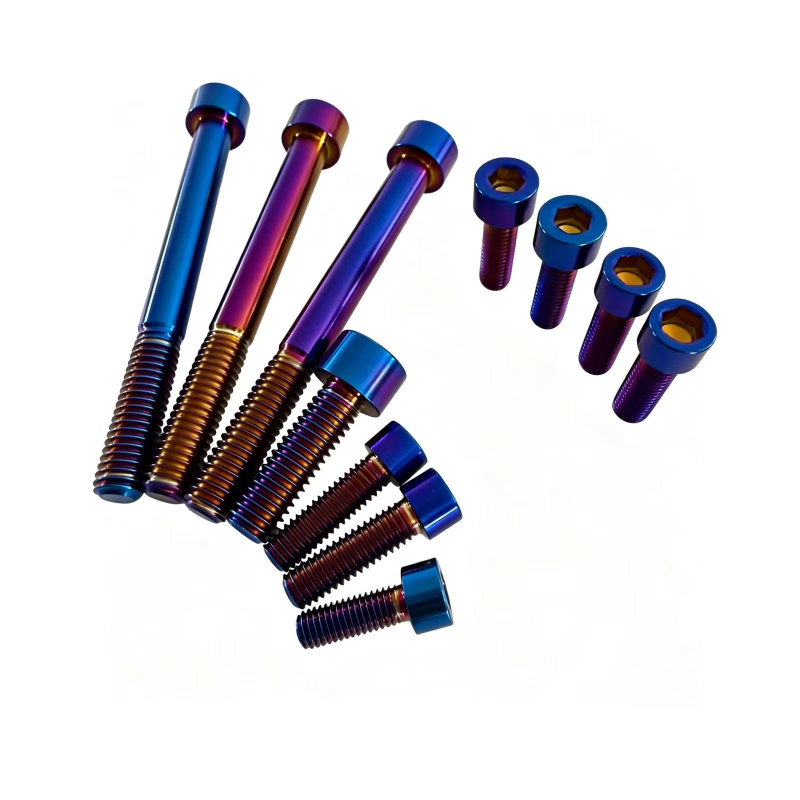
We provide mirror-polished natural finish, high-voltage electrolytic anodization (brilliant gold, royal blue, deep purple, burnt blue, and rainbow), and industrial PVD vacuum deposition (deep diamond-like carbon DLC black, titanium gold, and oil-slick neo-chrome). Custom branding, lot numbers, and property class marks are applied via precision fiber laser marking.
?How are Austrian import customs duties and VAT handled from China?
We supply complete export trade documentation, including Commercial Invoices with accurate HS codes (typically 8108.90 for titanium articles), Packing Lists, and EN 10204 Type 3.1 Mill Test Certificates. Goods clear Austrian customs smoothly via Austrian Customs Office (Zollamt Österreich) under DDP or DAP terms, with payment facilitated via corporate T/T, L/C, or PayPal.
Ready to Engineer Your Titanium Hardware Solution?
Submit your CAD drawings or dimensional specifications. Our engineering desk provides instant feasibility analysis and pricing.