Ti-6Al-4V Gr5
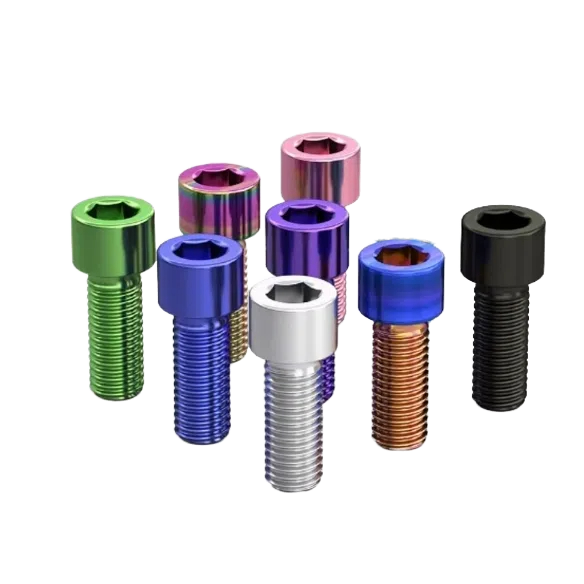
Explore our foundational Grade 5 aerospace-grade hardware, CNC machined linkages, and multi-functional titanium components engineered for direct integration into Philadelphia industrial and EDC tool ecosystems.
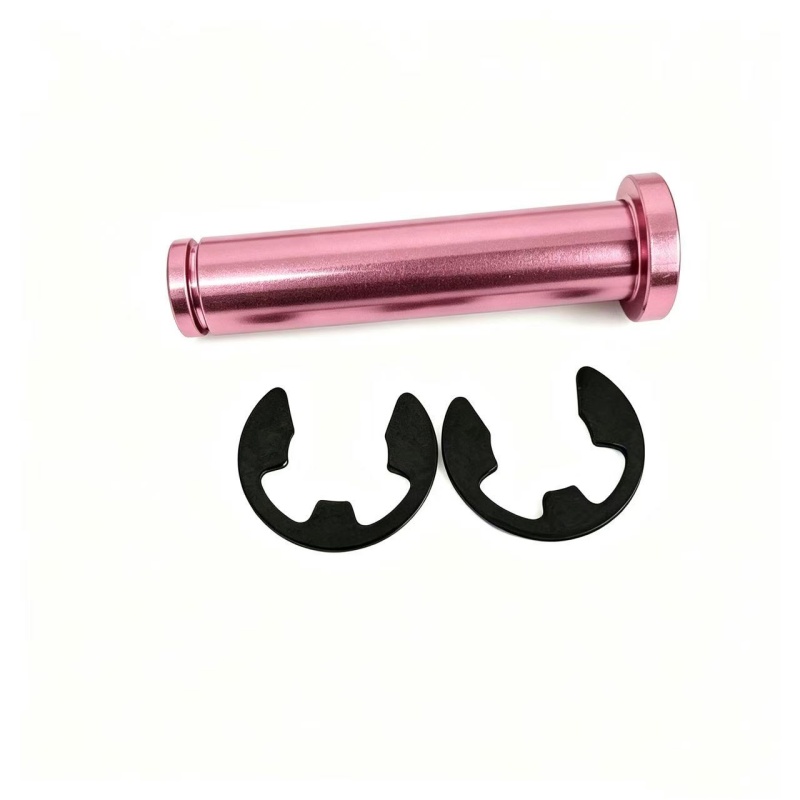
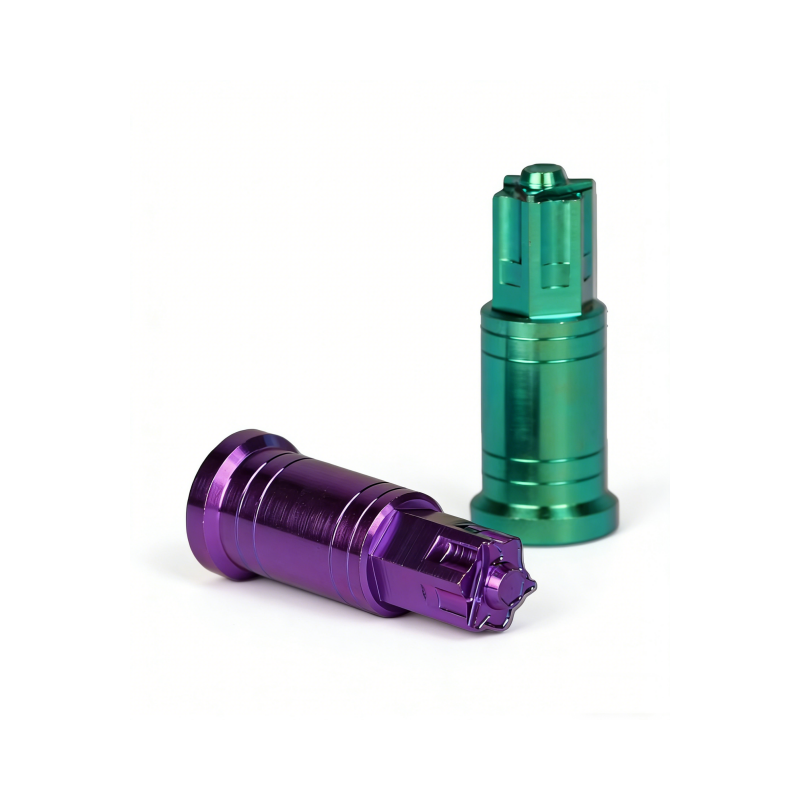
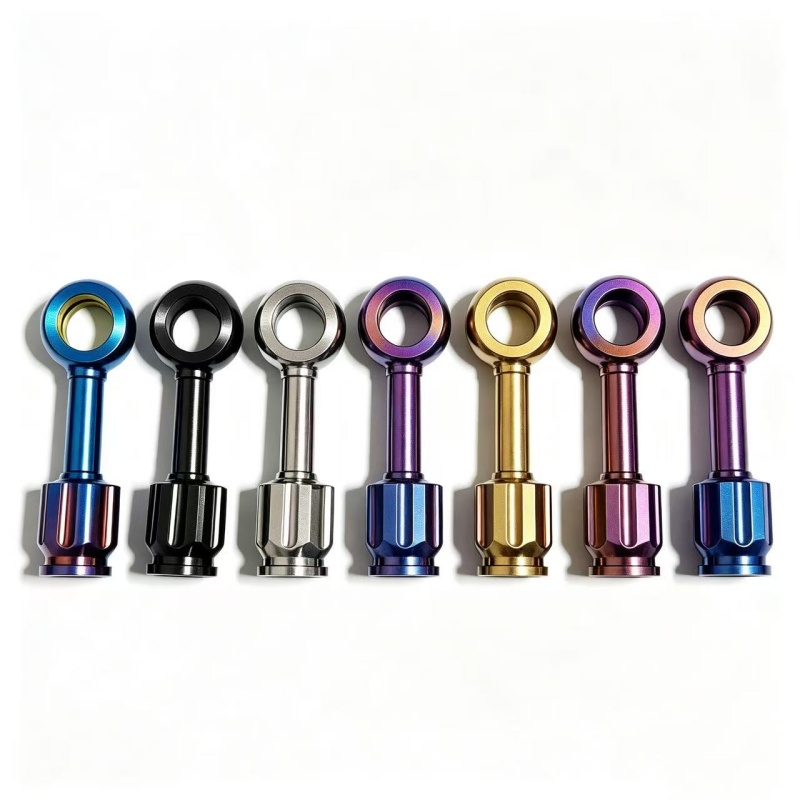
A rigorous engineering breakdown comparing Ti-6Al-4V Grade 5 against structural steels, brass non-sparking alloys, and unalloyed titanium in high-stress leverage applications.
Standard high-carbon utility pry bars (such as 1045 or 4140 steel) possess an elastic modulus around 200 GPa. In contrast, annealed Grade 5 titanium demonstrates an elastic modulus of approximately 113.8 GPa. When subjected to severe fulcrum moments, a titanium pry bar deflects elastically to absorb dynamic shock without sustaining plastic deformation, providing superior mechanical damping in tactical prying and heavy machinery staging.
For naval marine environments and medical diagnostic suites, magnetic permeability is an uncompromising design constraint. With a relative magnetic permeability ($\mu_r$) virtually equal to 1.00005, Ti-6Al-4V is completely non-ferromagnetic. Furthermore, spontaneous development of a stable rutile/anatase titanium dioxide ($TiO_2$) passivation layer ensures indefinite resistance against pitting in brackish Delaware River estuarine water and saline spray.
In petrochemical processing plants and fuel bunkering depots across Greater Philadelphia, traditional drop-forged steel tools present catastrophic friction-spark risks. While beryllium-copper tools are soft and hazardous to re-grind, Grade 5 titanium offers a hard, lightweight, non-sparking mechanical alternative under low-velocity mechanical scraping, significantly mitigating Class I, Division 1 explosion risks.
| Alloy Specification | Yield Strength (MPa) | Tensile Strength (MPa) | Density (g/cm³) | Rockwell Hardness | Corrosion Susceptibility | Non-Magnetic Status |
|---|---|---|---|---|---|---|
| Titanium Ti-6Al-4V (Grade 5) | 828 – 910 | 895 – 1000 | 4.43 | 36 – 41 HRC | Zero (Immune to Salt Spray) | 100% Completely Non-Magnetic |
| Commercial Pure Titanium (Grade 2) | 275 – 350 | 345 – 450 | 4.51 | 80 – 88 HRB | Zero (Immune) | 100% Non-Magnetic |
| AISI 4140 Chrome-Moly (Heat Treated) | 655 – 720 | 850 – 1020 | 7.85 | 28 – 34 HRC | High (Requires Zinc/Phosphate) | Ferromagnetic (> 1000 μr) |
| D2 High-Carbon Tool Steel | 1500 – 1650 | 1700 – 1900 | 7.70 | 58 – 62 HRC | Moderate (Prone to Pitting) | Ferromagnetic |
| Beryllium Copper (C17200 AT) | 750 – 880 | 880 – 980 | 8.25 | 36 – 42 HRC | Low to Moderate Oxidation | Non-Magnetic |
Engineered for the rigorous operating environments of Southeastern Pennsylvania, South Jersey, and Northern Delaware maritime, aerospace, pharmaceutical, and tactical manufacturing hubs.
Naval ship maintenance, retrofit operations, and dry-dock barge repair require robust pry bars that withstand persistent salt spray, bilge immersion, and hydraulic exposure without pitting. Verqo titanium pry tools and Grade 5 securing pins eliminate galvanic rust and ensure explosive hazard mitigation on commercial tugs and military auxiliary support craft navigating the Delaware Bay.
Along the Delaware River petrochemical spine, including Marcus Hook and Paulsboro energy logistics terminals, safety protocols require spark-resistant, explosion-safe manual entry tools. Our Grade 5 titanium bars are utilized for flange alignment, valve cover servicing, and pipe-shoe prying where ferrous tools present sparks and traditional bronze tools bend under sustained load.
Contractors operating along the I-95 corridor and Boeing Rotorcraft manufacturing centers in Ridley Park require non-ferrous ground-support hand tools for composite layup release, airframe component unseating, and tooling maintenance. Titanium pry bars do not scratch hardened tool steel dies or leave metallic residue that induces galvanic corrosion on carbon fiber reinforced polymers (CFRP).
At research installations like Penn Medicine, Drexel Nanotechnology labs, and King of Prussia biopharmaceutical cleanrooms, technicians frequently conduct maintenance inside high-field Magnetic Resonance Imaging (MRI) bays and cryostat chambers. The negligible magnetic signature of titanium pry bars prevents sudden projectile attraction in multi-Tesla magnetic environments.
Southeastern Pennsylvania Transportation Authority rail technicians frequently maneuver third-rail covers, signal cabinets, and pantograph contact elements. Our high-tensile titanium pry bars combine low physical carry weight on track inspections with non-magnetic safety profiles, preventing dangerous magnetic inductions near energized traction substations.
Pennsylvania boasts a robust domestic market for Every Day Carry (EDC) multi-tools and SWAT breaching gear. Verqo provides white-label contract machining for regional tactical tool purveyors in Bucks, Montgomery, and Chester counties, delivering pocket-sized titanium pry bars with wire strippers, bottle openers, jimping grips, and personalized laser-annealed insignias.
How technical directors and MRO purchasing managers in Pennsylvania are transforming hand tool specifications through weight optimization, supply chain resilience, and advanced surface engineering.
Industrial health and safety audits across Pennsylvania manufacturing operations have highlighted repetitive strain injuries (RSI) associated with heavy iron toolboxes carried during field maintenance. At 4.43 g/cm³, a solid Grade 5 titanium pry bar weighs nearly half of an identical steel tool while offering equal tensile strength (895 MPa).
This massive weight savings directly improves technician agility across multi-story industrial scaffolds, marine catwalks, and aerial lift operations in Philadelphia harbor terminals. Forward-thinking safety directors increasingly specify titanium pry tools to enhance ergonomic scores and minimize fatigue-related dropped-tool risks.
Procurement teams are no longer satisfied with plain raw metallic finishes. In EDC tactical markets and high-visibility industrial settings, Physical Vapor Deposition (PVD) titanium carbo-nitride (TiCN) and diamond-like carbon (DLC) coatings provide surface hardness values exceeding 2500 HV. Color-coded electrical anodization facilitates rapid tool segregation in cleanrooms and aircraft bays.
Modern pocket pry tools incorporate complex geometries: stepped hex cutouts, deep jimping grooves, integrated pocket clips, and nail-puller beveled wedges. Verqo utilizes high-speed Wire EDM slicing from thick titanium plate followed by 5-axis CNC contour milling to ensure sharp chisel tips without thermal embrittlement.
Combining primary mill access in China's "Titanium Valley" (Baoji, Shaanxi) with international export quality standards, micro-tolerance machining, and direct engineering collaboration.
Headquartered in Baoji, the epicenter of global titanium sponge and billet refining, Verqo procures genuine vacuum-arc remelted (VAR) Ti-6Al-4V bar stock. Our localized feedstock advantage eliminates intermediary commodity markups, passing pure cost efficiency directly to OEM brand partners across North America.
Our 1,001–2,000 m² production complex operates multi-axis CNC milling centers, precision thread rolling machinery (M2–M26 capacity), and automated wire-cut EDM lines. We execute tight dimensional tolerances down to ±0.01 mm on intricate pry bar fulcrums, bevels, and integrated hardware sockets.
Every shipment is accompanied by complete mill test certificates (MTC) certifying chemical composition per ASTM B348 / AMS 4928 standards. From initial ultrasonic billet inspection to coordinate measuring machine (CMM) dimensional verification, our 100% QA regimen guarantees absolute zero defect tolerance.
Technical and logistical queries addressed for Mid-Atlantic procurement officers, custom knife/tool makers, and military maintenance contracting officers.
Commercial Pure (CP) Grade 2 titanium possesses an ultimate tensile strength of only ~345–450 MPa. In a leverage tool such as a pry bar, Grade 2 will bend permanently under heavy fulcrum loads. Grade 5 (Ti-6Al-4V) is an alpha-beta alloy boasting an ultimate tensile strength above 895 MPa and yield strength over 828 MPa, ensuring elastic recovery and resistance against catastrophic snapping.
Titanium does not produce pyrophoric sparks in the manner of high-carbon steel tools. When struck against ferrous metal or concrete at moderate speeds, it exhibits exceptionally low spark potential. While specialized ATEX copper-beryllium tools remain common for static zones, Grade 5 titanium offers substantially higher strength, half the weight, and zero toxic beryllium inhalation hazards during fabrication or re-grinding.
Yes. With over 10 years of OEM and ODM engineering experience, we accept STEP, IGES, DXF, or native SolidWorks files. Our engineering staff conducts immediate design-for-manufacturability (DFM) reviews to optimize tool paths, reduce cycle times, and verify corner radii for maximum prying leverage before initiating CNC prototypes.
We provide full-spectrum surface treatments including stonewashing, micro-bead blasting, polished mirror finishing, Type II decorative anodizing (gold, violet, bronze, burnt blue, electric cyan), and premium vacuum PVD coatings (matte black DLC, rainbow neo-chrome, titanium nitride gold). Fiber-laser marking can engrave company logos, serial numbers, and fractional inch/metric scales.
We maintain exceptionally flexible MOQ structures. Standard stock blanks and pre-machined tool components can begin as low as 10 to 20 units for testing. Custom ground-up OEM pocket tools or specialized industrial utility bars typically require 50 to 100 units, accommodating small-batch boutique tactical brands and specialized naval contractors.
Rapid CNC prototyping takes 5 to 7 business days. Mass production runs of 500 to 2,000 units require approximately 15 to 22 calendar days. Air cargo shipments via DHL, FedEx, or UPS reach Philadelphia International Airport (PHL) within 4 to 6 business days, complete with automated DDP customs clearance and pre-cleared tariff documentation.
Titanium can exhibit friction-induced cold welding (galling) when mated bare against other titanium surfaces under severe torque. When designing pry bars with integrated pocket clips or bit drivers, we incorporate PVD ceramic barrier coatings or apply molybdenum-disulfide/fluoropolymer thread treatments to ensure silky smooth action and zero thread seizure.
We offer secure commercial B2B payment terms including wire transfer (T/T), Letter of Credit (L/C) for enterprise volume orders, and PayPal for rapid sample dispatch. All transactions are supported by comprehensive inspection reports and trade assurance protocols.
Submit your CAD models, technical dimensional prints, or project specifications. Our senior metallurgical and CNC engineering specialists provide comprehensive DFM evaluations and transparent quotations within 2 hours.