Featured Precision Hardware & Matched Washer Assemblies
Precision-turned from Aerospace Grade 5 Ti-6Al-4V bar stock. Specifically configured for dynamic load distribution, racing chassis optimization, and industrial assemblies throughout the German industrial sector.
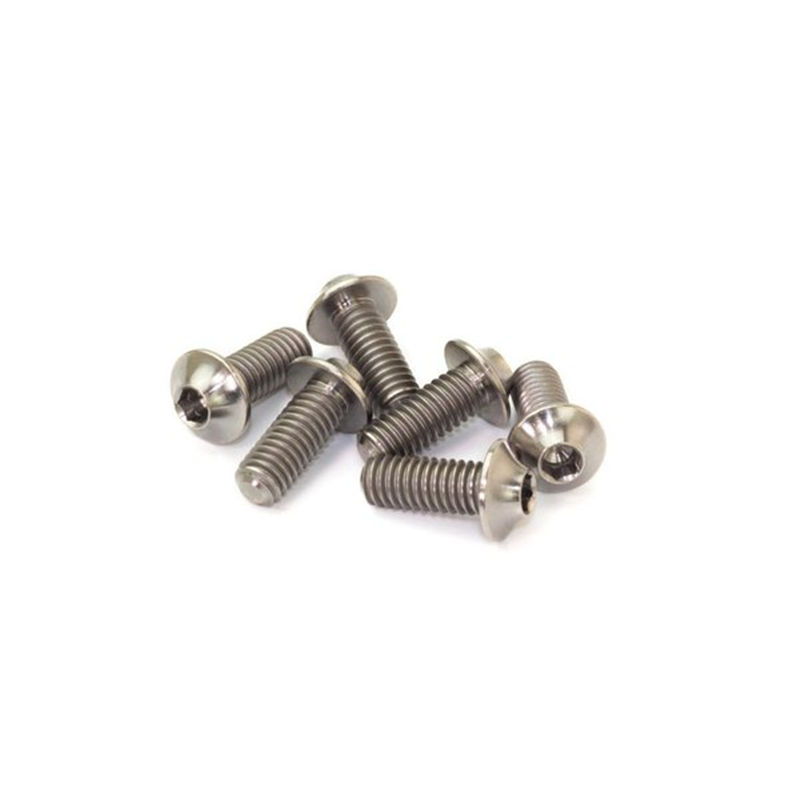
FOXTI LS496 M3 Metric Anodized UFO Cone Head Titanium Screw
View Specifications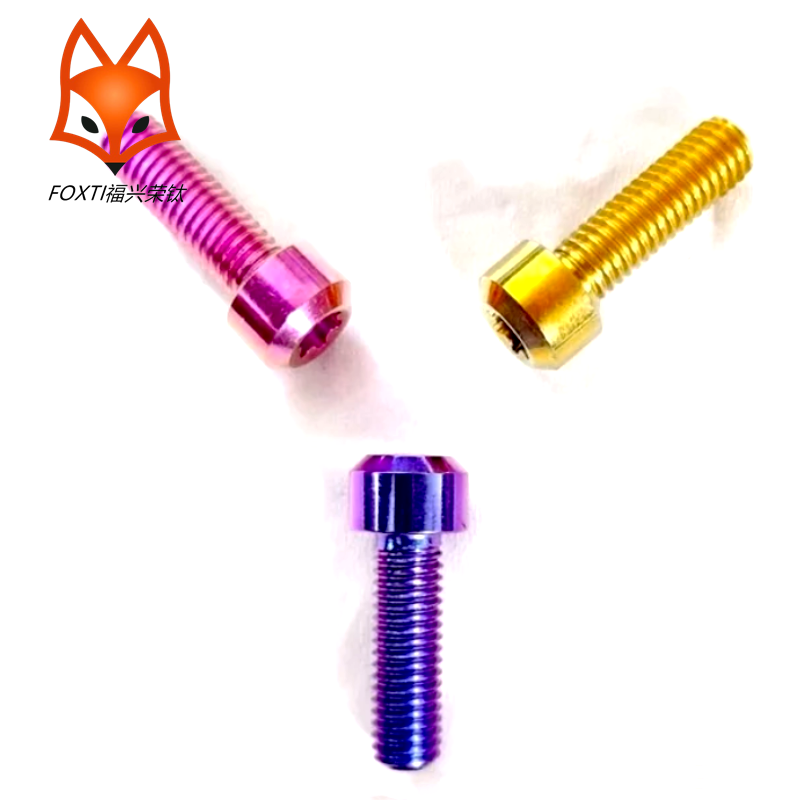
Customized SHSC Head Small Motorcycle Modification Bolts ISO Standard
View Specifications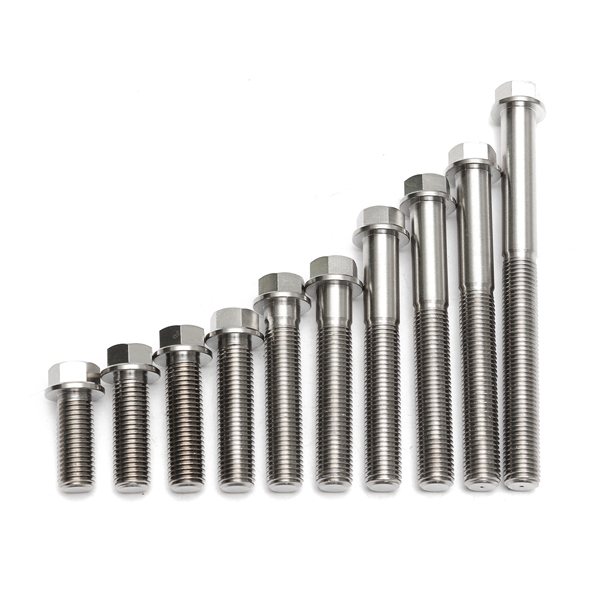
Factory Price M6/M8/M10 GR5 Hex Flange Bolts with Integrated Washer Head
View Specifications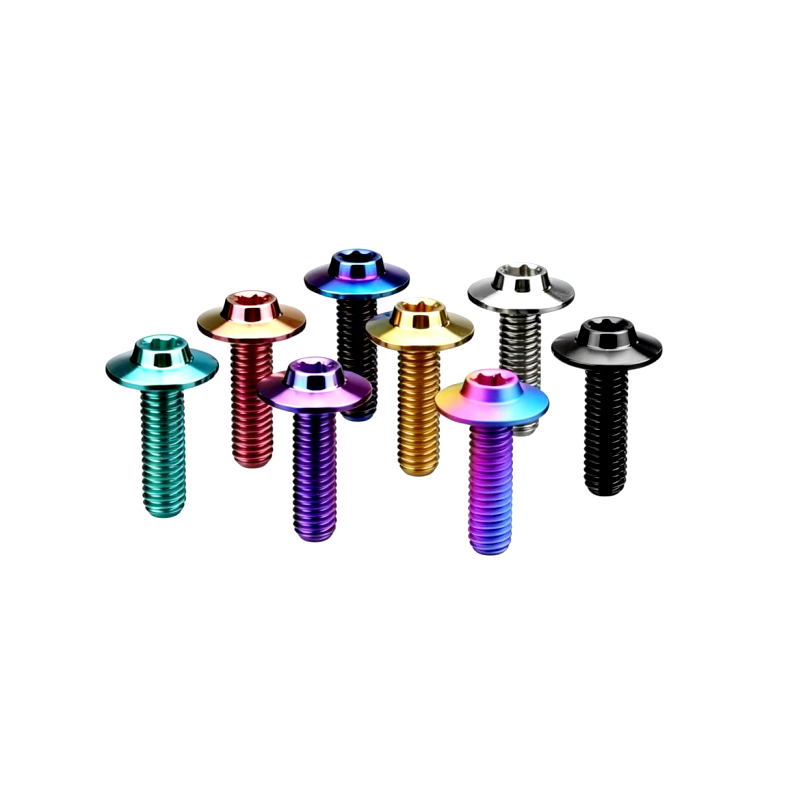
Grade 5 M6 Umbrella Torx Head Bolts with Broad Surface Bearing Area
View Specifications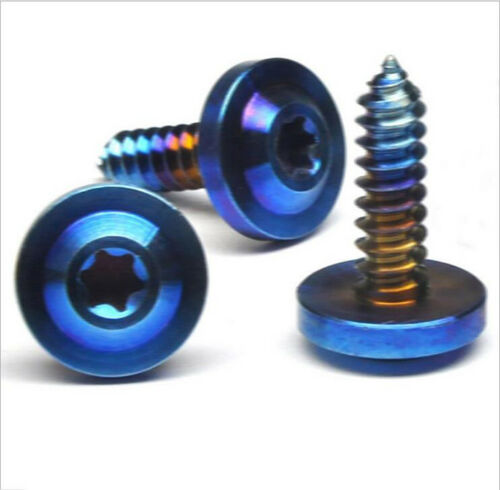
Titanium Coated Precision Body Bolts with Conical Load Dissipation
View Specifications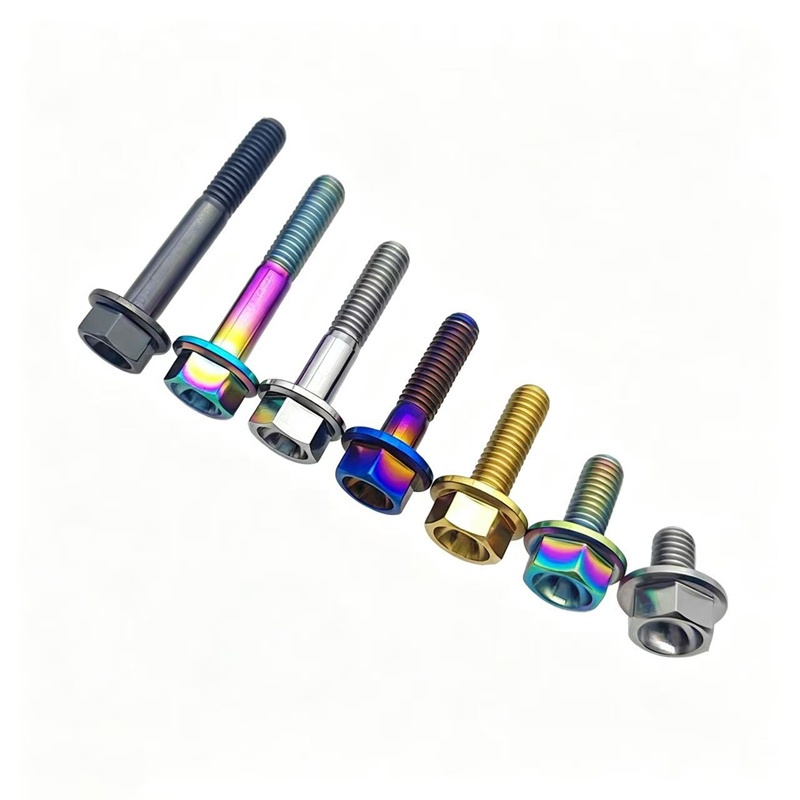
Factory Director M5-M14 Hex Head Flange Titanium Bolts Heavy Structural
View Specifications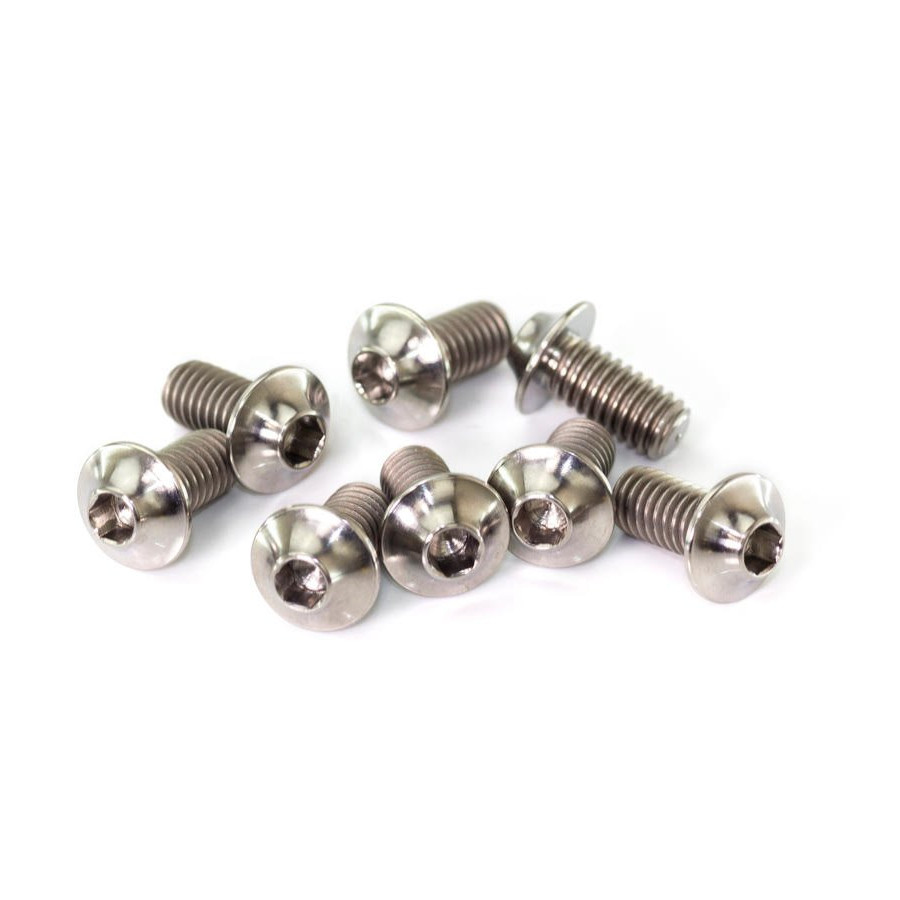
GR5 M3 Anodized Polished Metric High Strength UFO Cone Head Screws
View Specifications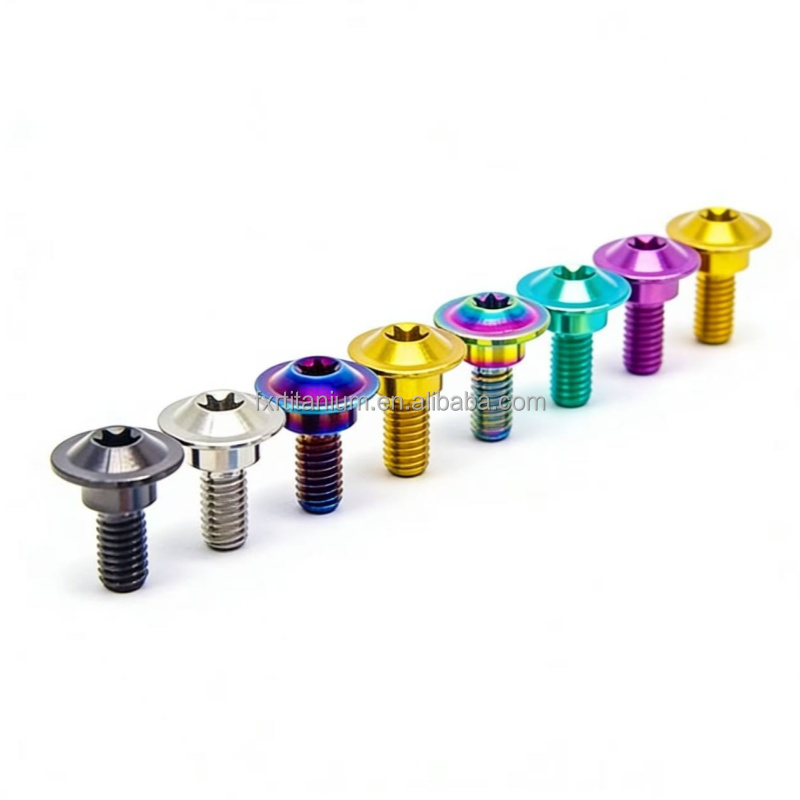
Anodized M5 M6 Disc Head Step Titanium Alloy Screws with Isolation Collar
View SpecificationsTechnical Whitepaper: Engineering Criteria for Titanium Washers & Fastener Sets in German Industrial Applications
In precision mechanical engineering, automotive lightweighting, and chemical plant construction across the Federal Republic of Germany (FRG), fastening assemblies represent critical structural nodes rather than incidental hardware. While substantial research has historically focused on the tensile capacity of high-strength bolts, the critical interface element—the washer—governs joint integrity, surface pressure equilibrium, clamping load preservation, and electrochemical isolation. For German purchasing engineers and Konstruktionsleiter (Design Directors), sourcing premium Grade 5 (Ti-6Al-4V) titanium washer sets from specialized factories provides an indispensable answer to modern Industry 4.0 and lightweighting directives.
1. Mechanics of Load Distribution: Preventing Embedment and Bolt Loosening
Under high preloads ($F_M$), bolt heads concentrate substantial compressive stress upon the parent material. In engineering assemblies common to Germany's automotive clusters (Baden-Württemberg, Bavaria) where magnesium, cast aluminum alloys (AlSi10Mg), or carbon-fiber-reinforced polymers (CFRP) are ubiquitously utilized, the surface pressure ($p$) frequently surpasses the compressive yield strength ($p_{G}$) of the clamped substrate. This leads to Setzerscheinungen (embedment relaxation), precipitating rapid loss of preload and ultimate joint failure under operational dynamic fatigue.
Precision-machined GR5 titanium washers act as rigid surface pressure spreaders. By executing Finite Element Method (FEM) analysis across the bearing interface, a DIN 9021 titanium washer expands the effective contact diameter from $d_w$ to $3 \times d$, lowering interfacial stress according to the classic contact pressure formulation:
Because Ti-6Al-4V boasts an elastic modulus of approximately 110 GPa—roughly half that of carbon or alloy steel (210 GPa)—titanium washers exhibit superior elastic compliance. They act as micro-spring damping discs that store strain energy, compensating for thermal expansion mismatches when operating under extreme temperature deltas, such as in turbocharged engine bays or cryogenic valve assemblies.
2. Material Science Matrix: GR5 Titanium vs. Conventional German Fastener Alloys
To quantify the engineering rationale for specifying titanium washer sets, the table below contrasts Verqo GR5 Ti-6Al-4V against baseline European fastener materials:
| Mechanical / Chemical Property | Ti-6Al-4V (Grade 5 / 3.7165) | Commercial Pure Ti (Grade 2 / 3.7035) | Stainless Steel (1.4404 / 316L / A4-80) | Alloy Steel (Class 10.9 / 42CrMo4) |
|---|---|---|---|---|
| Density ($\rho$, g/cm³) | 4.43 | 4.51 | 7.98 | 7.85 |
| Tensile Strength ($R_m$, MPa) | ≥ 895 – 1000 | ≥ 345 – 450 | ≥ 800 | ≥ 1040 |
| Yield Strength ($R_{p0.2}$, MPa) | ≥ 828 | ≥ 275 | ≥ 600 | ≥ 940 |
| Modulus of Elasticity ($E$, GPa) | 110 – 114 | 103 – 105 | 193 – 200 | 210 |
| PREN (Pitting Resistance Equivalent) | > 45 (Immune in ambient sea water) | > 40 (Superior) | 23 – 25 (Vulnerable to pitting) | < 10 (Rapid oxidation) |
| Thermal Expansion Coeff. ($\mu\text{m/m}\cdot\text{K}$) | 8.6 (Closest match to CFRP) | 8.9 | 16.5 (High risk of thermal strain) | 11.5 |
| Magnetic Permeability ($\mu_r$) | 1.00005 (Practically non-magnetic) | 1.00005 | 1.005 – 1.015 | Ferromagnetic (> 100) |
3. Localized Application Scenarios Across German Industry
Procurement requirements across Germany are deeply specialized by geographical industrial hub. Verqo manufactures and exports specialized titanium washer kits and matched fastener elements calibrated to the specific structural protocols of each region:
Motorsport & E-Mobility
Stuttgart, Munich, Ingolstadt: Unsprung mass reduction at brake caliper mounts, suspension rocker pivots, and battery enclosure structural covers. Titanium conical and flat washers mitigate galvanic degradation against autoclave-cured carbon tub chassis.
Aerospace & Defense
Hamburg, Bremen, Donauwörth: Cabin structural assemblies, hydraulic brackets, and avionics bays requiring strict adherence to LN and DIN EN aerospace standards. Extreme strength-to-weight optimization coupled with resistance to Skydrol hydraulic fluid.
Offshore & Chemical Plants
North Sea Wind, Ludwigshafen, Marl: Electrolysis reactors, chlor-alkali production stacks, and subsea cable fixtures. Stable inert $\text{TiO}_2$ passive film guards against chloride stress corrosion cracking where stainless steels pit within months.
Precision Robotics & Medical
Baden-Württemberg & Saxony: High-speed pick-and-place end-effectors, ultra-clean semiconductor handling stages, and non-magnetic MRI imaging fixtures requiring zero electromagnetic interference and zero particulate shed.
4. Macro Trends Influencing German Fastener Procurement (2025–2030)
The landscape of fastener sourcing in Germany has transformed significantly, driven by regulatory frameworks, material shifts, and decarbonization mandates:
- CFRP/Titanium Material Harmonization: As German automotive manufacturers shift towards multi-material lightweight car bodies (aluminum/CFRP), austenitic steel washers are rendered obsolete due to catastrophic galvanic corrosion potential with carbon fibers. Titanium possesses nearly identical electrochemical potential to graphite, making GR5 washers the required baseline barrier to avoid expensive non-conductive plastic isolation grommets.
- VDA 6.3 & IATF 16949 Audit Pressures: German OEMs increasingly require factory-direct audit traceability from billet melting to final CNC finishing. Verqo maintains comprehensive spectrographic melt tracing, ultrasonic flaw inspection, and dimensionally audited QA logs matching German expectations.
- Carbon Footprint & Direct-to-Factory Procurement: German supply chain management has systematically pivoted away from local middlemen charging heavy stockholding markups. By establishing direct export protocols with Baoji titanium manufacturers, German procurement directors trim 30–45% of procurement expenditure while enforcing direct engineering control over custom tolerance bands.
5. Engineering Installation Best Practice: Anti-Galling & Torque Calibration ($K$-Factor)
A frequent issue documented by the Verein Deutscher Ingenieure (VDI 2230 Guideline) during titanium joint assembly is thread galling (Kaltverschweißung). Titanium forms a spontaneous, microscopic oxide film ($\text{TiO}_2$) that, under high dry clamping pressures, can rupture, causing direct metal-to-metal contact and adhesive shear seizure.
Frequently Asked Questions from German Procurement & QA Engineers
Do your titanium washer sets comply with German DIN and international ISO standards?
+What inspection certification accompanies export shipments to Hamburg or Frankfurt?
+How do you resolve customs clearing, TARIC classification, and EU REACH compliance?
+Is there a risk of galvanic corrosion when titanium washers contact carbon fiber or aluminum?
+What surface treatments and aesthetic finishes are possible for visible assemblies?
+Verqo Titanium Advantage: China's Titanium Valley Direct to European Industry
Operating directly from Baoji, Shaanxi Province—internationally recognized as "China's Titanium Valley"—Verqo Titanium Products Co., Ltd. bridges raw material ingot melting, bar extrusion, multi-axis precision CNC turning, and surface chemistry engineering into a single unified manufacturing ecosystem. For German buyers, this integrated supply pipeline ensures:
Certified Material Stocks
We source only high-purity virgin sponge titanium; no secondary scrap remelt. Full melt tracing from ingot to vacuum arc remelt (VAR) ensures absolute metallurgical purity.
Multi-Axis CNC Precision
Equipped with modern Swiss-type automatic lathes and 5-axis machining stations. Internal washer bore tolerances held reliably within H11, and thickness parallelism within 0.015 mm.
Flexible German OEM Kitting
Custom packaging solutions tailored for German production lines: vacuum skin-packing, barcoded blister trays, or complete pre-assembled bolt-plus-washer kits matched to your BOM.
Rapid B2B Engineering Response
Average quote and technical feasibility assessment returned within 2 hours. Rapid prototype sample batches dispatched via DHL Express to Germany in 5 to 7 working days.
Request Custom Titanium Washer Sets & Fasteners
Submit your DIN specification, technical drawing (.step / .pdf), or bill of materials. Our engineering sales team will provide an immediate feasibility study, volume price matrix, and EN 10204 3.1 material test compliance roadmap.